
Essays · Modern Art
Mark Rothko. Rothko Chapel.
A room for standing still.
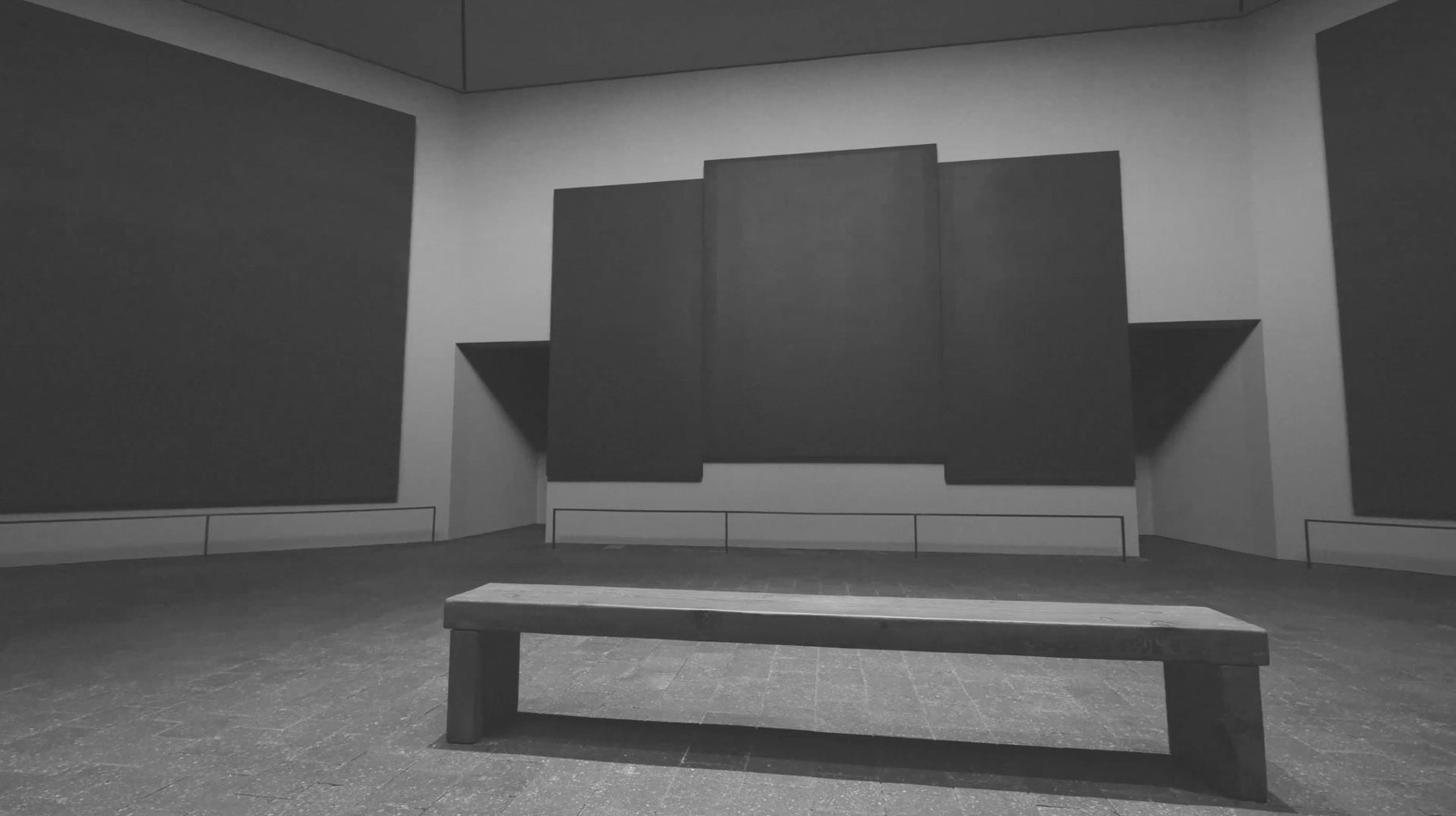
Rothko Chapel · Rothko Chapel
Fourteen paintings, one room
The Rothko Chapel is a chapel in Houston, Texas, belonging to no single faith. In 1964 the collectors John and Dominique de Menil commissioned Mark Rothko to create a sacred space for the city. It opened in 1971. The architects were Philip Johnson, Howard Barnstone and Eugene Aubry.
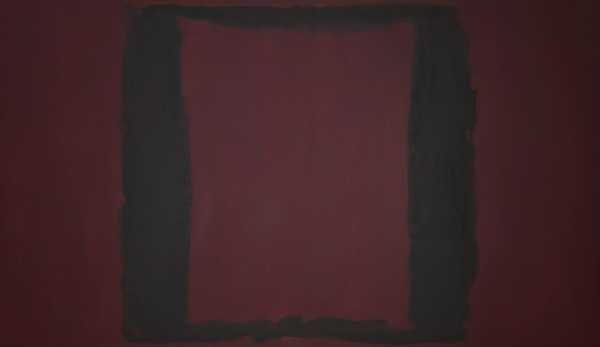
Inside are fourteen large paintings by Rothko. Seven show hard-edged black rectangles on a deep maroon ground. The other seven are fields of purple that shift very quietly in tone. Rothko spent more than two years working and testing, and finished the suite in 1967.
The room is octagonal, the paintings hung around its walls, light falling from above. Natural light mattered to Rothko. Only daylight could show the full range of his palette, the blacks that are not quite black, the purples that almost dissolve into the wall.
The patrons and the painter
The idea began with a journey. In the summer of 1952 the de Menils visited churches in France where Fernand Léger and Henri Matisse had made some of their greatest work, and the site where Le Corbusier was about to build his chapel at Ronchamp. Dominique de Menil later recalled what they saw there: what a master can do for a religious building when given a free hand.
They chose Rothko after seeing the paintings he had made for the Four Seasons restaurant in New York in the late 1950s, the Seagram Murals. In a 1966 letter to them, Rothko wrote that the scale of the task exceeded everything he had imagined, and that it was pushing him beyond what he thought he could do.
Born in Russia, Rothko was one of the great American painters of the mid twentieth century. He is often placed with Abstract Expressionism and Color Field painting, though he always rejected both labels. He died in 1970, before he could see his paintings installed in the chapel.
A place for every faith
Dominique de Menil wanted the chapel to turn toward the sacred without imposing the setting of any one religion. It keeps a collection of holy texts from many traditions: the Bible, the Quran, the Bhagavad Gita, the Khordeh Avesta. Around a hundred thousand people of every faith visit each year from all over the world.
Outside, above the reflecting pool, stands Barnett Newman's Broken Obelisk, dedicated to the Reverend Dr. Martin Luther King Jr. Its story is not a smooth one. In 1969 the de Menils offered to help the city of Houston buy the sculpture, to be placed near City Hall and dedicated to the recently murdered civil rights leader. The city accepted the money but refused the dedication. The de Menils withdrew, bought the work themselves, set it before the chapel and dedicated it to King at the 1971 opening.
Since then the chapel has been both a place of stillness and a place of gathering, where people come to sit alone and also to speak about justice. The two do not conflict. Both begin by stopping.
When the water came in
A room that lives by the light of the sky must also bear that sky. In July 2024 the heavy rain and winds of Hurricane Beryl caused a leak in the chapel roof. Water damaged part of the ceiling, several walls and four of Rothko's panels.
The chapel closed from July to December that year. The affected panels were taken to an off site facility for restoration, led by the conservators Whitten & Proctor. On 17 December 2024 the chapel reopened, without the triptych from its east wall.
Perhaps the gap teaches something too. Rothko's paintings always needed a room, a light, a person who stays long enough. With a part missing, the room is still there, still silent, still waiting.
Modern Art