
Essays · Olfactory Art
Martynka Wawrzyniak. Smell Me.
A portrait that needs no face.
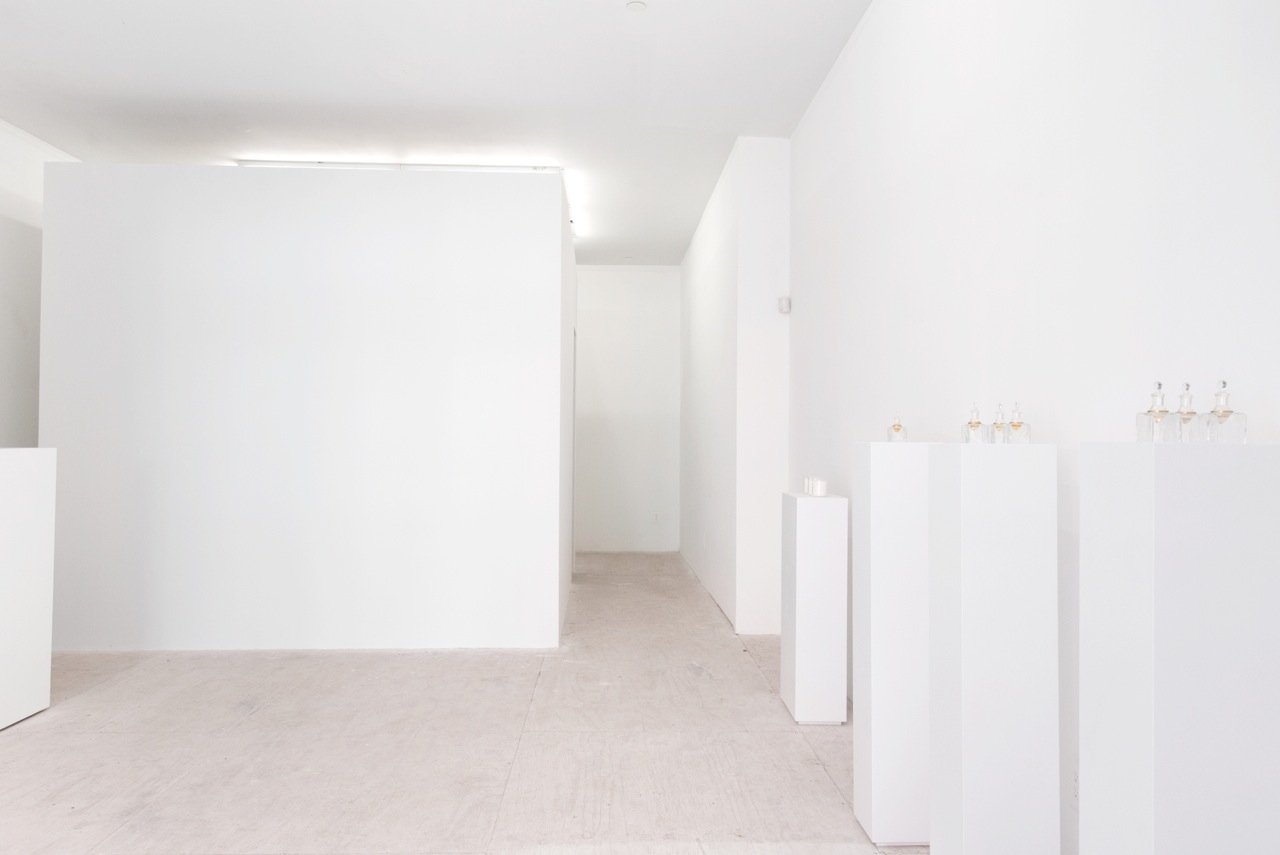
Installation view at Envoy Enterprises · Martynka Wawrzyniak (official site)
A portrait to step into
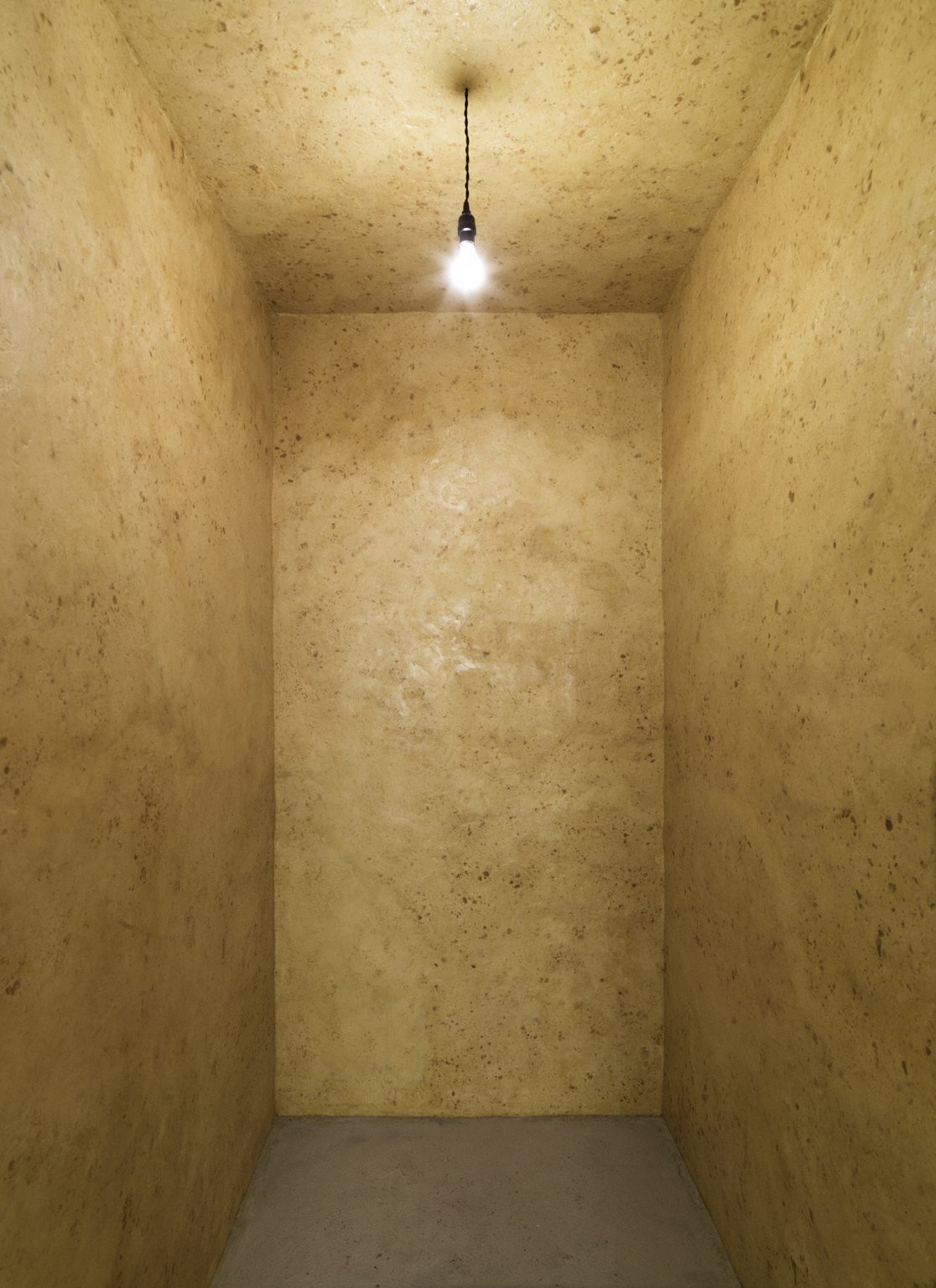
In 2012 Martynka Wawrzyniak opened Smell Me, a solo show at Envoy Enterprises in New York. There was no painting of the artist on the wall. No photographic portrait. The main thing in the room was a scent chamber.
Visitors entered it alone. Inside, the air carried Wawrzyniak's smell: her sweat, her tears, her hair, rebuilt and diffused. There was nothing to look at. Only someone absent, appearing through the nose.
Outside the chamber stood the rest of the work. Ten teardrop shaped vials on stands of blown glass, each holding an original organic essence taken from the artist's body. Three candles set in 250 ml beakers. According to the artist's site, their wax was paraffin scraped from her body.
Everything borrowed the look of a laboratory. Vials, beakers, stands. The portrait was not painted. It was measured, extracted, bottled.
A year of extraction
Smell Me took a year to make. Wawrzyniak worked with chemistry students at Hunter College in New York, supervised by Professor Donna McGregor. She went through long sessions to collect sweat, tears and hair, then tested extraction methods with the team to hold on to the most concentrated smell of each.
That was the documentary, biological part. The second part was reconstruction. Perfumer Yann Vasnier of Givaudan synthesised the smells so they could be diffused in the chamber. Dawn Goldworm, scent director of 12.29, also worked on the project.
So the smell in the chamber was not real sweat rising from a jar. It was a reconstruction built from analysis of what the artist's body produced. Much as a painted portrait is not a face, yet is painted from one.
Wawrzyniak describes the vials as bottled performances of biological functions. Crying is a performance. So is sweating. The work keeps what the performance leaves behind.
Why a portrait in smell
The history of the portrait is a history of the eye. Face, posture, clothing. The sitter chooses how to be seen. The painter chooses the light. The viewer stands at a safe distance.
Smell Me removes that distance. To smell a person you have to come very close. In ordinary life, only intimates get that close. Wawrzyniak invites strangers into exactly that space.
She also chose the very smells modern culture wants hidden. Sweat is deodorised. Tears are wiped. Hair is washed with something that smells of something else. A whole industry exists to replace the body's smell with an acceptable one. Smell Me gives back what was replaced.
And because smell has no image, this portrait cannot be judged the way a face is judged. Not beautiful, not plain, not young, not old. Only a person, as that person's body is.
What remains
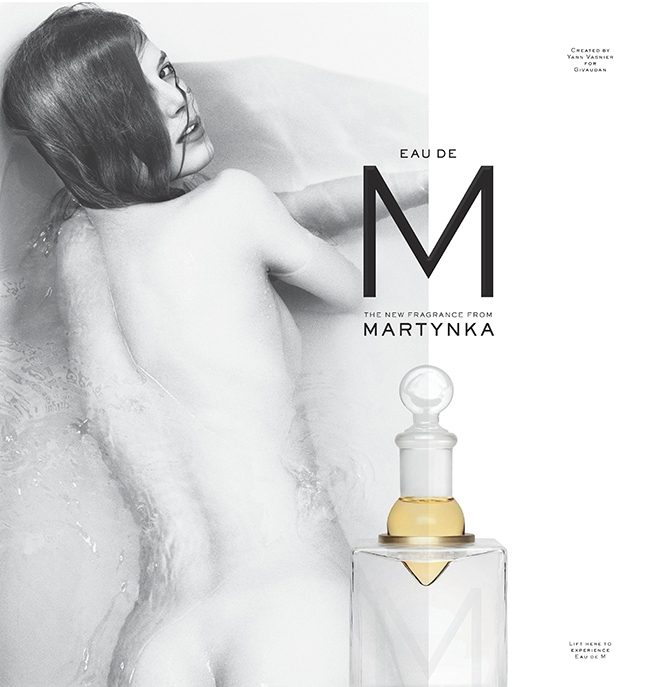
The essences did not stay in the gallery. Two years later Wawrzyniak took the sweat essence from this project and placed it in the pages of a fashion magazine, as an advertisement for a perfume that did not exist. That work is Eau de M, and it asks a very different question.
Smell Me stays with the first question: how do we know a person? By the face they choose to show us, or by what they cannot control, what their body releases when they cry, when they are hot, when they sleep?
The work does not answer. The chamber lets one person in, lets them stand a while, then lets them out. They leave not knowing what Wawrzyniak looks like. But if they meet that smell again somewhere, they might recognise her.
Olfactory Art