
Essays · Olfactory Art
Japan. Incense Box with Scene from The Tale of Genji.
A scent already on the skin. A question with no answer.
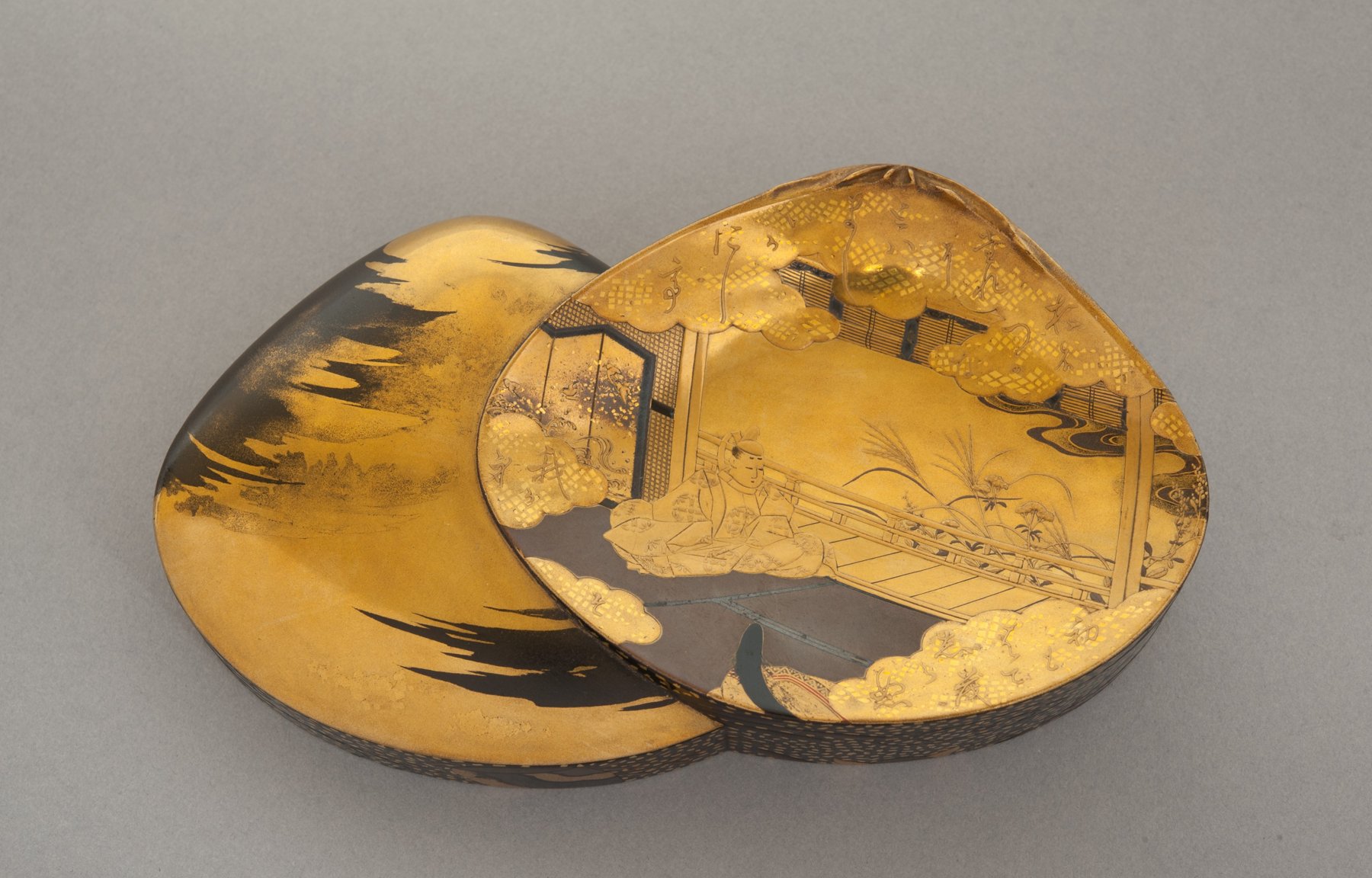
The Metropolitan Museum of Art, Gift of Mrs. George A. Crocker (Elizabeth Masten), 1937 (Open Access, public domain) · The Metropolitan Museum of Art
Two shells in lacquer
The Metropolitan Museum of Art in New York holds an incense box made in Japan in the second half of the nineteenth century. It is about 13 cm long, just over 7 cm wide and about 5 cm high. It entered the museum in 1938, part of the same gift from Mrs. George A. Crocker as many other lacquer boxes.
Its shape is two interlocking shells. According to the museum, it imitates the painted clamshells used in kai-awase, the shell matching game of the Japanese aristocracy. Players had to find the two halves of the same shell among many that looked alike.
The surface uses several gold and silver lacquer techniques: raised takamaki-e, flat hiramaki-e, togidashimaki-e polished back to the surface, and cut gold and silver foil. On it is a scene from The Tale of Genji.
Chapter forty two, the Fragrant Prince
The scene belongs to chapter 42 of The Tale of Genji, Nioumiya, often translated as the Fragrant Prince. By this chapter Genji has died. The story moves to the next generation and two young men.
The first is Kaoru. To the world he is Genji's son. The second is Prince Niou, Genji's grandson. They are friends and rivals.
What sets them apart in the tale is scent. Kaoru is born with a natural scent, so strong that people know he has passed by the scent he leaves. Niou lacks the gift. He makes up for it by perfuming his robes day and night with the finest incense, trying to equal his friend. Both names point to smell: Kaoru means fragrant, and Niou is a word for scent drifting outward.
Few chapters in classical literature put scent at the centre like this. One carries scent from within, the other from without. One scent unchosen, one chosen.
A poem in golden clouds
On the box, among stylised clouds, a poem is written in very fine gold lines. According to the museum, it is voiced by Kaoru.
Kaoru is publicly recognised as Genji's son, yet he doubts the circumstances of his birth. The poem asks whom he might ask, and why he cannot know his own beginning or end. The reader knows what Kaoru does not: his real father was someone else, and the secret was kept.
Placing this poem on an incense box is a deliberate choice. Whoever opens it to take out incense reads the question of a character for whom scent is the only thing he is sure belongs to him.
The shell shape deepens the question. In kai-awase a shell stands for a true match: each half has only one other. Kaoru is the one who cannot find the other half of his own story.
One small object, three pastimes
Looked at closely, the box joins three aristocratic pastimes. Shell matching, through its shape. Heian literature, through its scene and poem. And incense, through its use: holding incense for gatherings where scent was listened to.
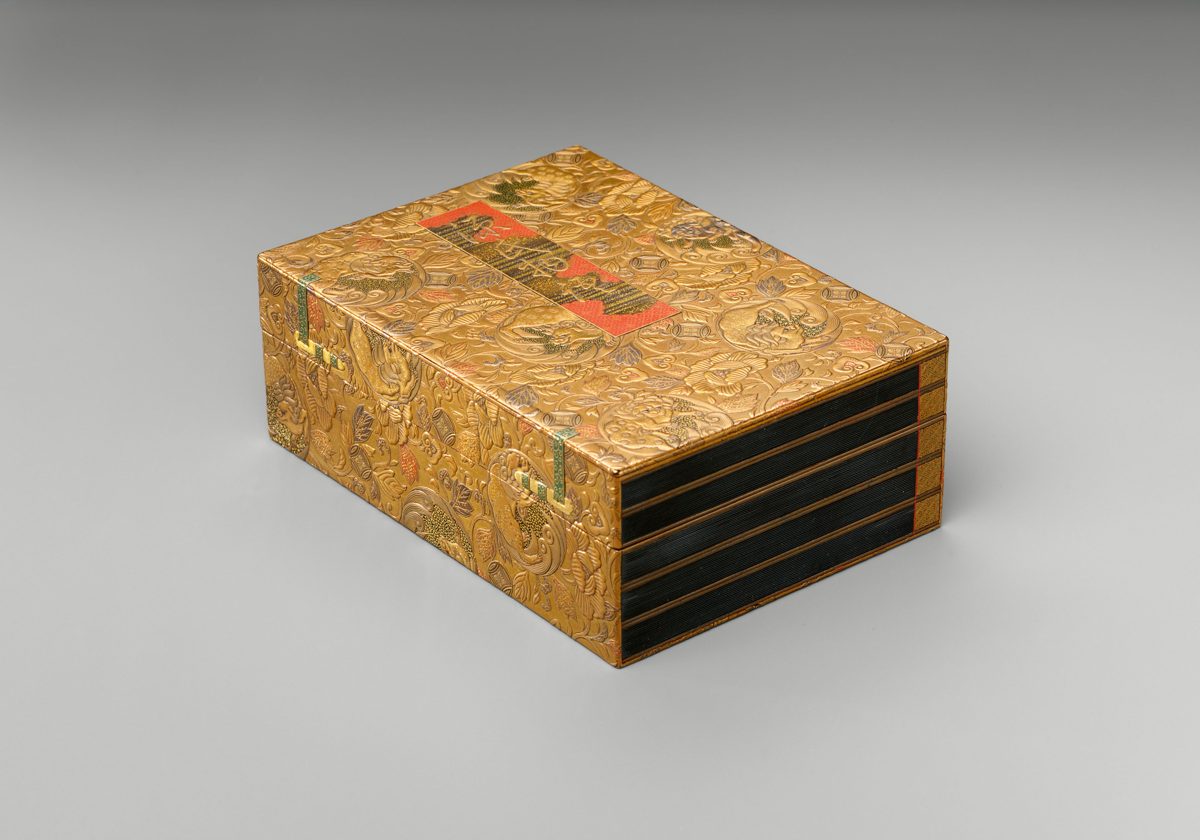
In the same collection, another incense box borrows the shape of five volumes of Genji. That box makes the book its shell. This one opens the book at the very chapter about scent.
Penta sees something simple here. The maker did not need to write a line about scent. It was enough to choose one chapter, one character, one poem. The rest, whoever opens the box will smell for themselves.
Olfactory Art