
Essays · Olfactory Art
Japan. Incense Game Set.
Scent cannot be counted. So they made tokens to count it.
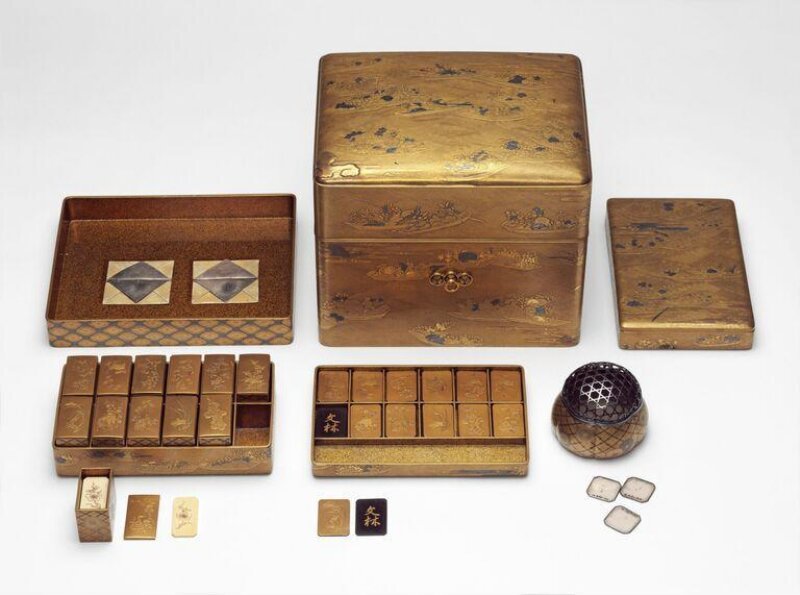
© Victoria and Albert Museum, London; Alexander Gift · Victoria and Albert Museum (V&A)
A box that holds a whole gathering
The Victoria and Albert Museum in London displays a Japanese incense game set in Room 45. The museum dates it broadly to the Edo period, 1615 to 1868, and names no maker. It entered the museum in 1916 as part of the Alexander Gift.
The outer box is about 19 cm high and nearly square. Its exterior shows many boats laden with flowers amid waves, in gold and silver lacquer on nashiji, the gold flecked ground likened to pear skin. The escutcheons take the form of the triple Tokugawa crest.
Inside are a writing box, a tray for voting tokens, an inner tray and a set of implements. Everything has its place. The box does not only hold objects. It holds the order of a gathering.
Knives, block, mallet and brazier
The implements say the most about how fragrant wood was treated. The V&A record lists a brazier, a chopping block, a mallet and two knives, one with a sheath.
Fragrant wood was precious. No one burned a whole log. It was set on the block and split with knife and mallet into tiny slivers, just enough for one round. The brazier held the heat that warmed those slivers until they released their scent.
These four tools show that before incense was a game, it was a discipline of material. How much to cut, how long to warm, how hot. A little too far and the wood burns to smoke and the smell changes completely.
The writing box has its own place. Its upper tier holds an inkstone signed Nakamura Reihei and a small silver water dropper, parcel gilt. Ink means writing. Writing means a record.
A hundred and forty four ivory tokens
The token tray is the most refined part. It holds 144 ivory tokens in twelve small boxes. The boxes are painted in gold and silver with chrysanthemum crests in a lozenge pattern of flowers. Each lid shows one of the twelve animals of the zodiac. Each ivory token carries marks in gold lacquer.
The lower tier of the writing box holds a second series: twelve sets of five tokens in polished wood, painted with characters in gold.
Twelve boxes, twelve animals, twelve sets. It seems each player, or each seat, was known by an animal. When guessing, players did not speak. They placed their token in a box. Results were read from the tokens, not from voices.
The system keeps the room quiet. No one is swayed by a neighbour's answer. Each nose works alone.
From collecting to play
The V&A tells the history briefly. Incense appreciation began in the Muromachi period, when fragrant wood was imported from mainland Asia and gathered by enthusiasts. By the Edo period the game had reached the height of its popularity, and sets like this one were made.
The rules as the museum describes them: four incenses are chosen, only three burned. Guests smell the samples first, then compete to identify each one burned, or to guess the fourth that was not. They place an ivory token in a box to mark their choice, and the answers are written on paper.
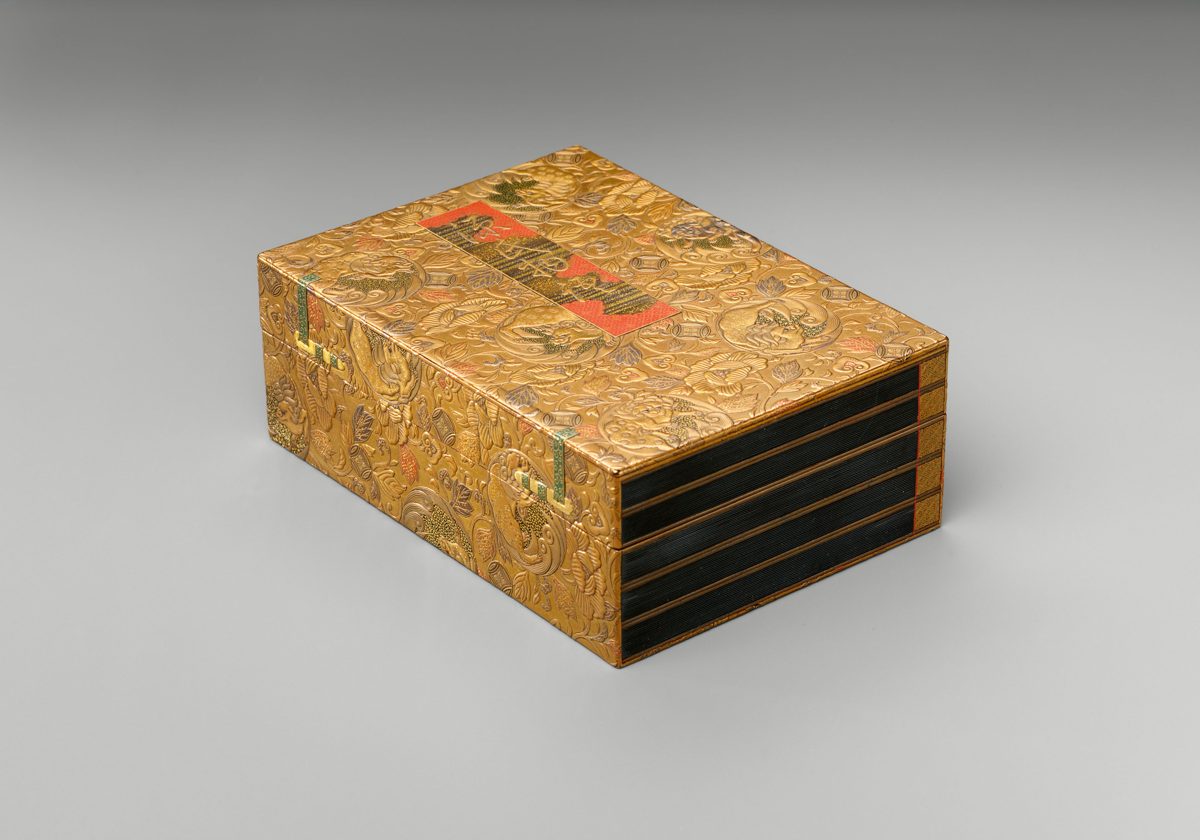
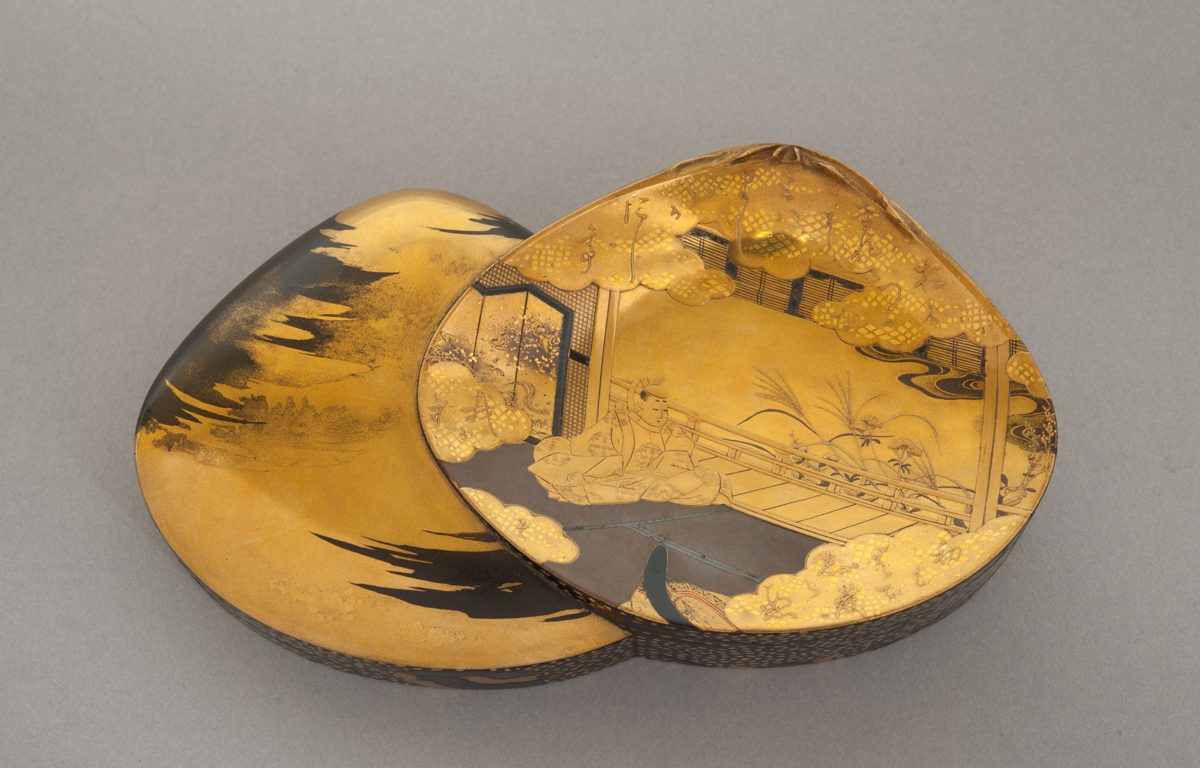
In New York, Atsu-hime's ten-round incense game set tells the story of a marriage. The set in London tells the story of the game itself: how it was organised, counted and recorded.
Looking at it, one sees something rare: a culture serious enough to build a voting system for the nose. Scent, so often called vague and private, placed on a board with rules, scores and minutes.
Olfactory Art