
Essays · Olfactory Art
Olivia Wiederkehr, Andreas Wilhelm. Schmerzh.
A city has memories too, and those memories have a smell.
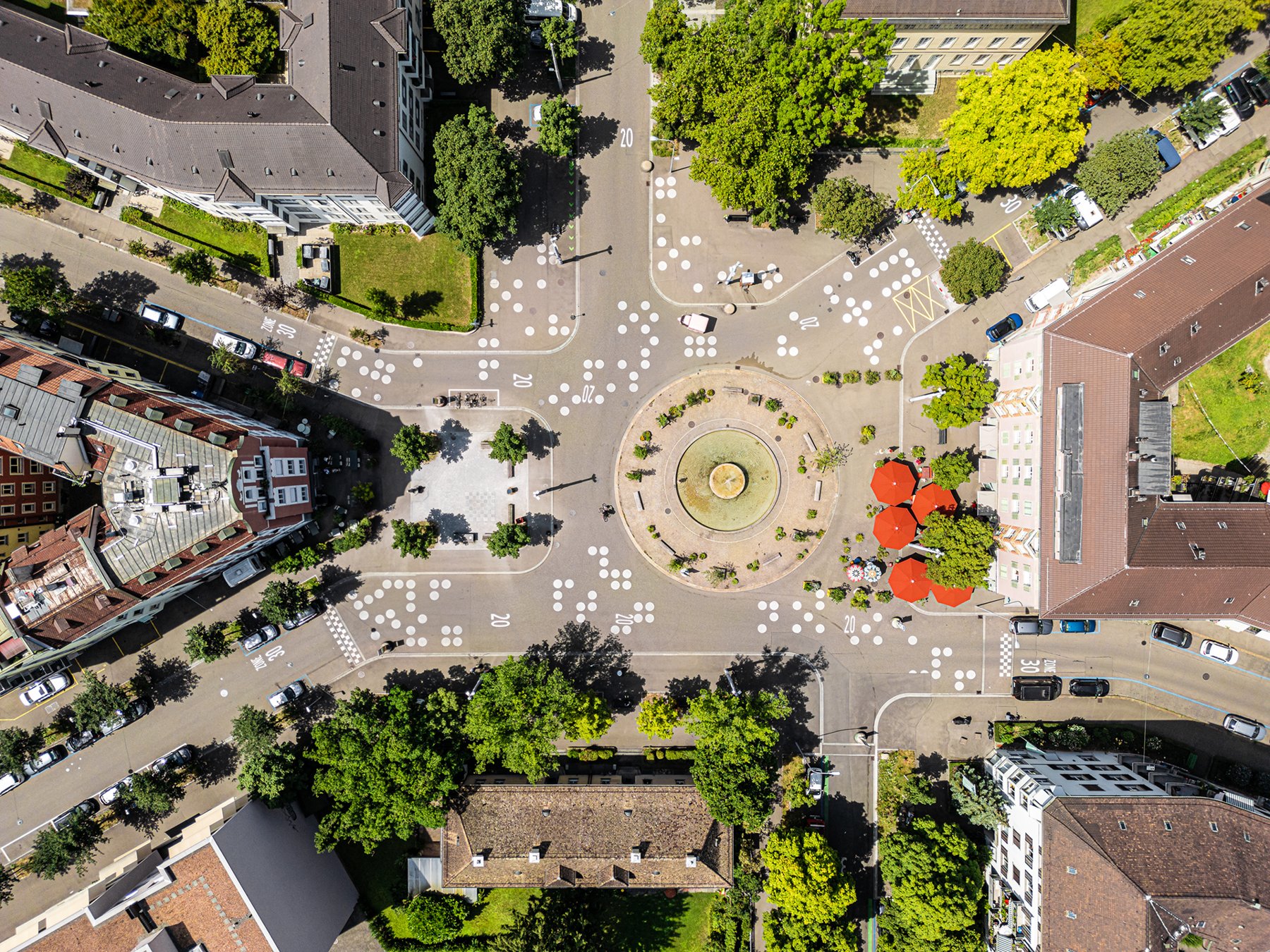
© Stadt Zürich, KiöR · SCHMERZH (project site, Kunst im öffentlichen Raum, Stadt Zürich)
Six squares, three weeks
From 2 to 22 September 2024, six public places in Zürich had an unfamiliar smell. Idaplatz, Bullingerplatz, Lindenplatz, Röschibachplatz, Louis-Favre-Platz and the old Letten station. No new monument. No large sign. Only a smell, rising from technical shafts beneath the pavement through a diffuser placed inside.
The project was called Schmerzh. Schmerz is German for pain. The two letters zh at the end are the familiar code for the canton of Zürich, as on number plates. So the name reads as the pain of Zürich. An English subtitle added that memories do not fade away.
It was made by the Zürich artist Olivia Wiederkehr, commissioned by Kunst im öffentlichen Raum, the city's public art office. The scent was composed with Andreas Wilhelm, a perfumer also based in Zürich. A communications agency, Live Lab, worked on the storytelling.
Passers by were not warned. They walked through, noticed the smell, and only then read the small sign nearby or looked up the project.
A city tells its own story
The idea of Schmerzh is to let the city narrate. Zürich is usually seen as rich, clean and calm. The project asks the opposite: what pain has this city witnessed or allowed? Discrimination. Exclusion. Exploitation. Voices made silent. The project also notes good memories alongside them. A city's memory is not one colour.
Each site was chosen for a link to local history. Some related to the migrant workers who came to work in Switzerland. The old Letten station recalls the years of an open drug scene in the middle of the city. None of this is new. But it is rarely spoken of in the places where it happened.
Scent does the work of a plaque. The project opens with a familiar question: do you know the feeling of smelling something and suddenly a memory surfaces? Schmerzh uses that same mechanism, but points it at a shared memory that belongs to no one person.
Alongside the smell, the project ran a social media account. There, stories about the places, people and organisations tied to the six sites unfolded over three weeks. The smell opened the door. Words came in after.
A soft smell that darkens
The Schmerzh scent was not made to be unpleasant. According to the project and local press, it opens floral, near rose and geranium, then moves into darker, spicy and earthy tones, with chocolate and nutmeg. A smell that might stop someone because it is pleasant, and keep them because something feels unsettled.
This choice matters. A foul smell would drive people away. A good one holds them long enough to think. The pain in Schmerzh is not forced on anyone. It is invited in.
Memorial art usually uses stone, bronze, engraved names. These last, and because they last they easily become part of the scenery, no longer seen. Scent works the other way. It stayed only three weeks. It depended on wind, temperature, and whether a passer by breathed at the right moment. The work switched off when the project ended. Reading a city through the nose has precedents, such as Brian Goeltzenleuchter's Smelling the City, but Schmerzh chose to speak of pain.
In 2025 Schmerzh was a finalist for the Sadakichi Award for experimental work with scent. A way of recognising that a memorial need not have a shape. It can be a stretch of air on a street corner, for a few days at the end of summer.
Olfactory Art