
Essays · Olfactory Art
Peter de Cupere. Invisible (Scent) Paintings.
The title lies under the paint, waiting for a fingertip.
© Peter de Cupere · Peter de Cupere (official artist site)
A painting that must be scratched
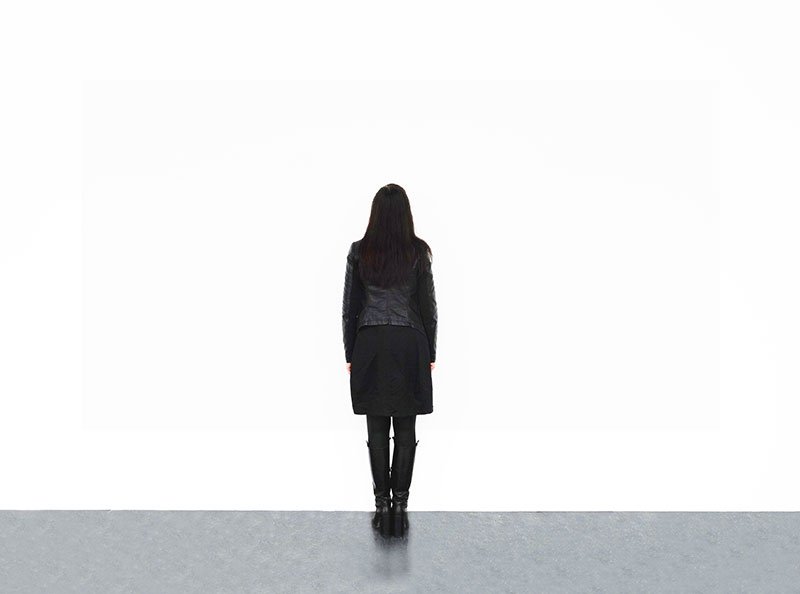
Invisible (Scent) Paintings is a series by Peter de Cupere, a Belgian artist who works mainly with smell. From a distance they are ordinary paintings on a wall. Colour, surface, a title. But the title on its own is hard to grasp, and can even seem at odds with what is in front of you.
The paintings use scratch and sniff technology, the kind found on children's stickers or perfume inserts in magazines. Smell is held in tiny capsules mixed into the surface. Scratched, the capsules break and release it.
So the way of looking changes. The viewer steps close, scratches the canvas, then lifts a fingertip to the nose. The smell left on the skin tells what the painting is really about. In the artist's words, the scent gives the title a context, and only then does its meaning come clear.
No scratch, no reading. The painting is still there, but half of it stays closed.
A week in a museum on pause
In June 2014 the series was shown during Marta Intermezzo at Marta Herford in western Germany, from the 8th to the 15th. The setting matters. Marta's large galleries, designed by Frank Gehry, were closed for renovation, and the museum stretched that pause by a week to stage an interlude.
For the first time, Gehry's rooms themselves became the subject. Many artists took part, among them Franz Erhard Walther, Bettina Khano and Heiko Wommelsdorf. The programme asked odd questions of the building: what if you saw or smelled the galleries from above, measured them on skates, running or dancing, or the lights suddenly went out? Can architecture be heard?
The thread running through the week was the tension between visible and invisible, light and dark, material and immaterial. De Cupere's paintings sat squarely on that thread. They are concrete objects: paint, frame, surface. Yet their most important part stays invisible until someone touches it.
In an empty museum, its rooms briefly without a collection, paintings that reveal themselves only through the nose carried an extra point. A gallery is not just walls and light. It is also air, and whatever the air carries.
When painting needs a finger
Museums teach one rule early: do not touch. Paintings are seen from a safe distance, behind a rope, under a guard's eye. Invisible (Scent) Paintings reverses the rule. Without touch, the viewer misses the work. The gesture forbidden in every other gallery becomes the condition for understanding.
Scratching leaves a mark too. Each time, some capsules break. The surface records how often it has been read. The more a painting is seen, the fainter its smell. The work wears down with attention, like a book whose spine cracks from being opened too often.
In later years De Cupere pursued this with another series of scratch and sniff oil paintings, on painting's most traditional subjects: still life, flowers, food, landscape, war, portraits, many nodding to famous works. A meadow smells of grass. A winter landscape smells of eucalyptus. A still life with lemons smells of lemon. Some hang in old gilded frames, to keep the link to painting in its most familiar sense.
The 2014 series reads like a starting point. It asks the plainest question: if smell carries part of a painting's meaning, has the eye ever seen enough?
The question does not weaken painting. It shows how used the eye is to working alone. Here the eye has to wait. The viewer scratches, smells, then reads the title again. The second look differs from the first. The image has not changed. The viewer simply knows something the eye could not find by itself.

Olfactory Art