
Essays · Olfactory Art
Peter de Cupere. Smoke Flowers.
We lean in for the smell of a flower. It hands us back our own.
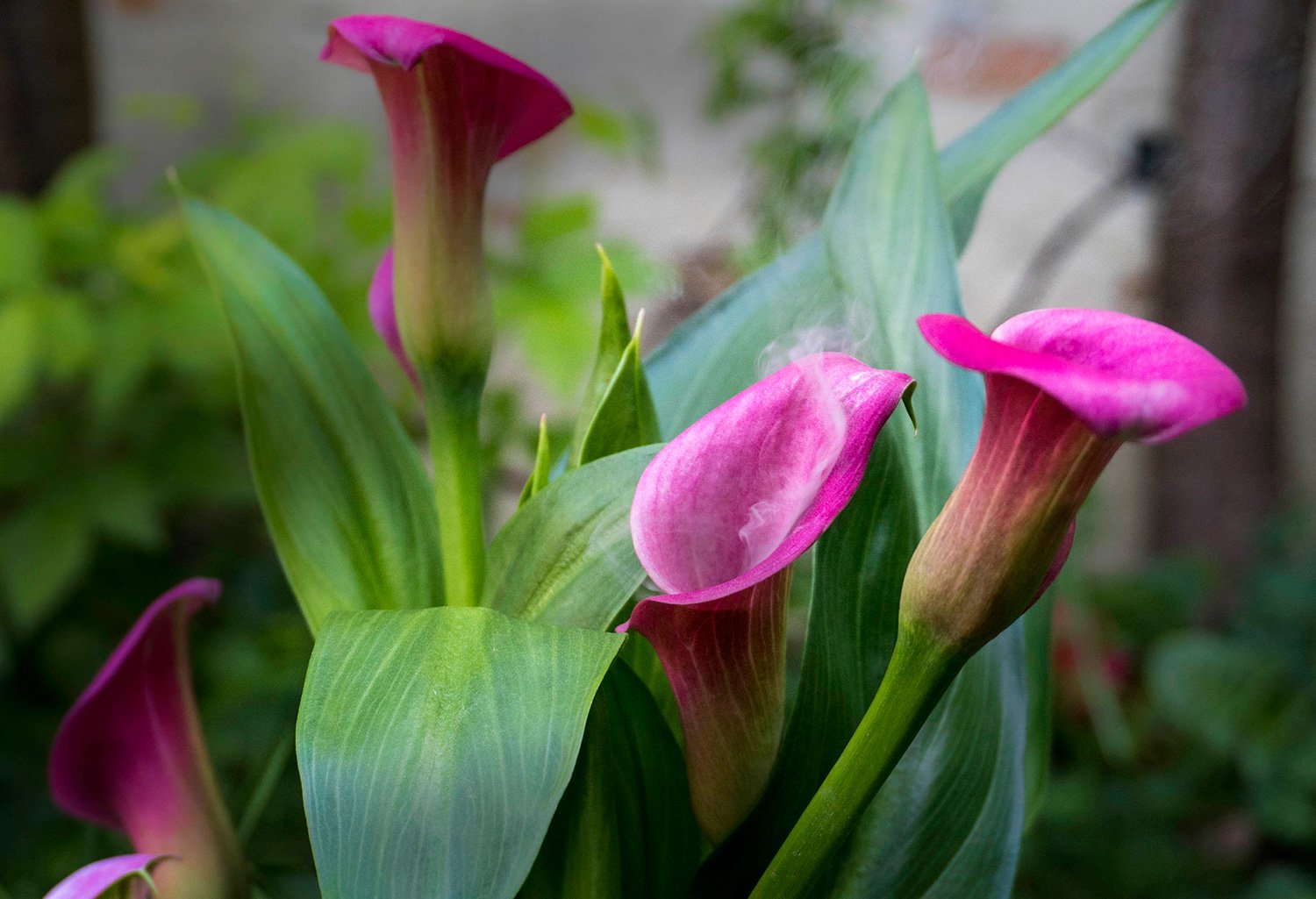
© Peter de Cupere · Peter de Cupere (official site)
A garden beside the Arsenale
May 2017, the opening week of the 57th Venice Biennale. Beside the Arsenale, in the gardens of Spazio Thetis, the exhibition Command Alternative Escape ran from 6 to 13 May, curated by Natasha Pradhan. In the middle of the garden stood a work by the Belgian artist Peter de Cupere: Smoke Flowers.
At a glance they were real flowers, large and small, growing among the plants. Nothing gave them away. Then, now and again, a thin smoke rose from the centre of a bloom.
Visitors came closer and leaned in as they would to any flower. What they smelled was not a flower. It was industrial air pollution. Exhaust, factory smoke, the air people breathe every day in big cities and rarely stop to smell.
De Cupere described the work as the flowers' revenge: they breathe back at people the very pollution people released.
Nine years to make a flower smoke
The idea was not new to him. According to the work's press release, his first drawing of Smoke Flowers dates from 2008. He spent about nine years researching before flowers could release real smoke in a real garden.
The scent was made with the support of IFF, one of the large flavour and scent companies. The press release names the perfumers who created the pollution smell for the work: Bernardo Fleming, Meahb Mc Curtin, Laura French, Gregoire Hausson and Marine Hetheier.
There is a telling paradox here. People skilled at building the smell of flowers, wood and fruit for perfume were asked to build a smell no one wants to keep: the smell of dirty air. The craft stays the same; only its direction changes.
The smoke does not flow continuously. It comes in bursts, without warning. Visitors cannot tell which flower will smoke next, or when. That unpredictability keeps them close, waiting, sniffing.
What pollution smells like
Air pollution is usually spoken of in numbers. Particulate readings, emission levels, maps in red and orange. The numbers matter but they are distant. They live on screens, not in noses.
De Cupere returns pollution to a form the body recognises. Not a number, but a smell, placed where we least expect it. Set in a garden among flowers, that smell becomes far clearer than when it dissolves into city air.
City dwellers often stop smelling the air they breathe. The nose adapts, then stops paying attention. Smoke Flowers lifts that smell off its familiar background and sets it in a new frame. A quiet, pretty frame, with flowers. What was long ignored becomes hard to ignore.
The work also speaks of nature as a victim. Flowers breathe the same air we do. If a flower could breathe back what it has to bear, this might be its smell.
An artist of unwelcome smells
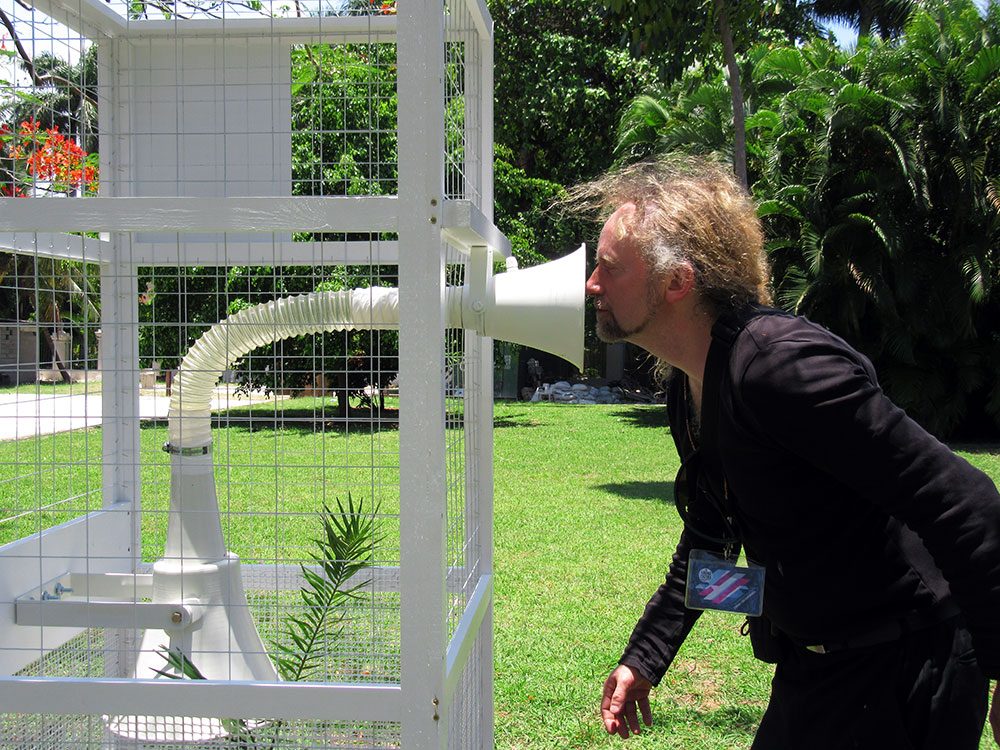
Peter de Cupere is one of the longest standing artists to use smell as his main material. He often works with smells people would rather avoid: the smell of strangers, of smoke, of the city. In Smoke Cloud he had visitors climb a ladder and put their heads inside a cloud that smelled of exhaust. Smoke Flowers shrinks that idea and places it inside a single bloom.
In 2018 Smoke Flowers was a finalist for the Sadakichi Award of the Art and Olfaction Awards, which recognises experimental work with scent.
What makes the work stay with you is the simplicity of the reversal. No long text, no screens. A flower, a wisp of smoke, a nose bending down. Visitors carry the smell out of the garden and perhaps, for the first time, notice the air on their way home.
Olfactory Art