
Essays · Olfactory Art
Peter de Cupere. Salt Flowers.
Flowers white as salt. But nothing here is salt.
© Peter de Cupere · Peter de Cupere (official artist site)
A river turned sea
In 2017 the IJssel Biennale in the Netherlands took climate change as its theme. Twenty-three artists were asked how they saw its consequences for the river IJssel. The biennale ran from 14 June to 24 September.
Peter de Cupere, a Belgian artist who had worked with smell for over twenty years, chose an extreme scenario. The sea rises until the IJssel valley floods with sea water. Fresh water turns salt. The existing ecosystem dies.
Within that scenario he looks for a utopian way to survive. The white ice caps at the poles have melted, so he replaces them with white caps of salt won from the ocean. From salt he builds a new nature: plants, fruit, vegetables, flowers, all white.
Each thing in that nature has its own smell. As the artist puts it, smell gives each one an identity. The shapes share a single white. Only smell tells them apart.
Five flowers, none of them real
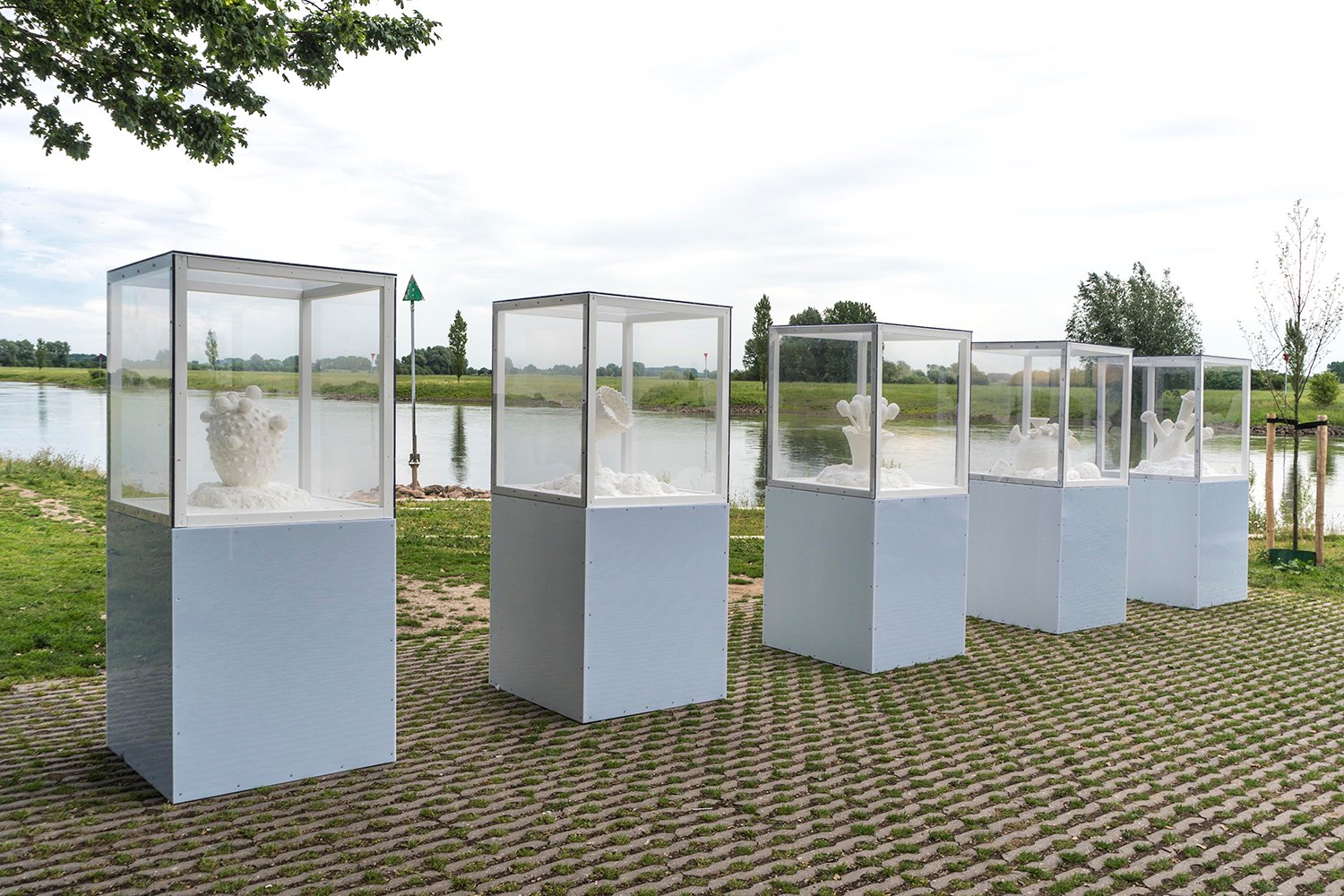
At the biennale De Cupere showed five Salt Flowers. Pure white, their grains glittering in the sun. He had found a way to bind small grains into a stable form. Viewers were all but certain they were salt.
They were wrong. Every flower was made of glass grains.
The smell deceives as well as the shape. Three flowers smell fresh, sometimes too fresh. Those smells are in fact toilet fresheners and laundry products, floral in a synthetic way. One carries artificial lavender, far from the plant in a field.
The other two stink. One smells of organic nitrogen fertiliser made from blood meal. The other smells of sturgeon feed. Both are smells of production: farming and fish breeding, two industries that depend on what people add to soil and water.
What remains once nature has gone
Salt Flowers is built around a question of perception. How do we sense things? How much does it matter to know exactly what we see and smell? The work shows both senses can be fooled at once, and a viewer can stand before an object a long time without guessing what it is made of.
The two groups of smells make two different points. The pleasant ones show what might remain if the climate keeps changing: a world where the smell of flowers survives only in laundry bottles. The foul ones turn toward the causes. With the idea of what you give is what you get, the artist questions environmental policy and the economy, the overuse of fertiliser, the overbreeding of fish.
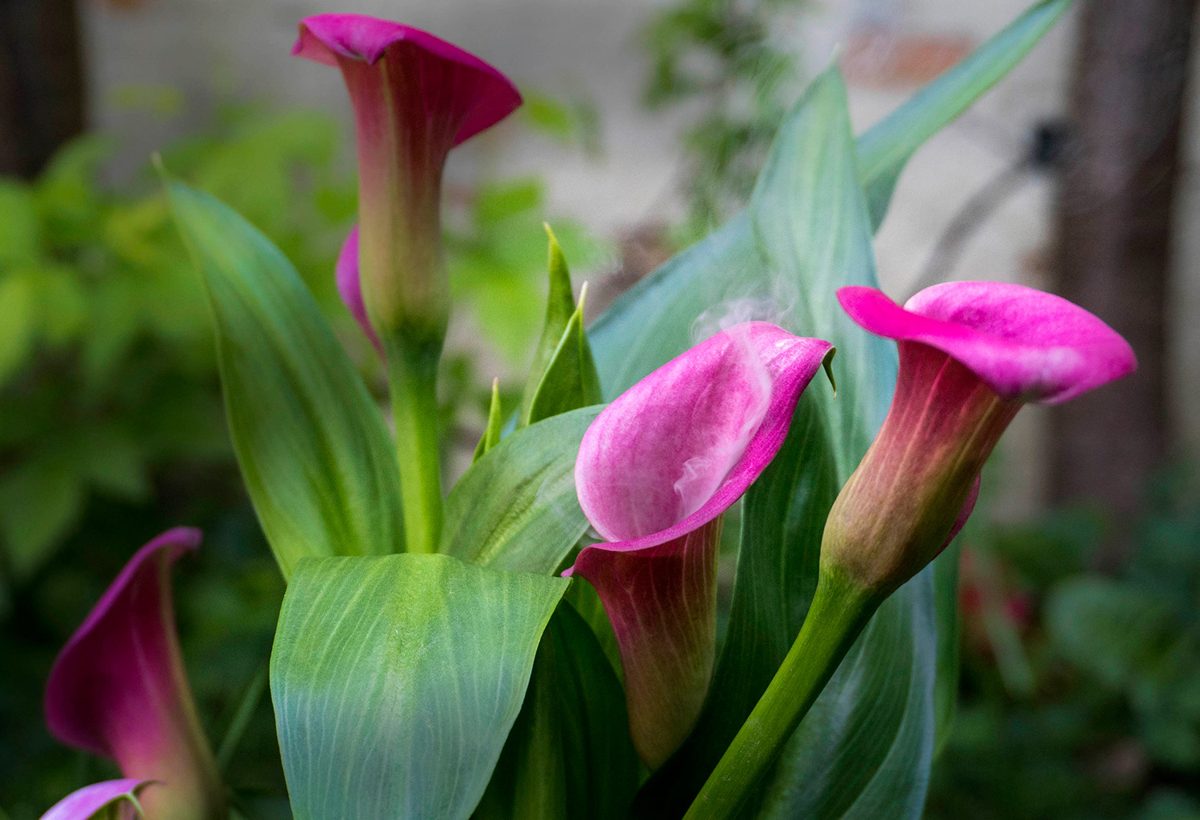
The same year, during the opening week of the Venice Biennale, De Cupere made another work in this vein: real flowers giving off smoke and the smell of air pollution, as if nature were taking revenge.
Salt Flowers is quieter. No smoke, no movement. Just five white flowers beside a river that is still fresh water. Viewers bend down, smell, and recognise something from their own bathroom. The work need not say more. The future it imagines is already here, in part, in things we use every day.
Olfactory Art