
Essays · Olfactory Art
Peter de Cupere. Is This Mankind?
Hair keeps the smell of a person.
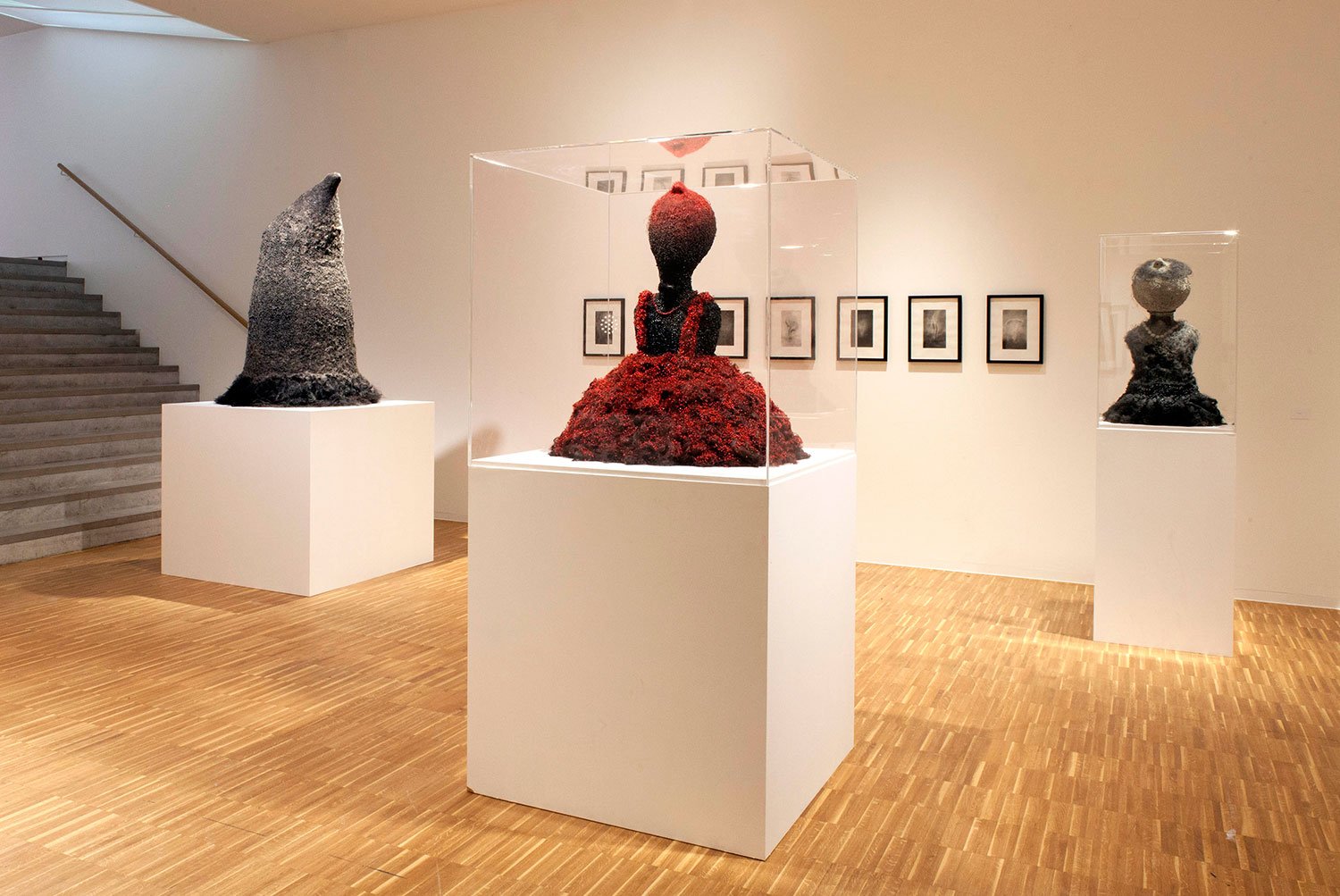
Photo: We Document Art, 2016 · Peter de Cupere (official site)
An exhibition in Turnhout
From 9 September 2016 to 22 January 2017, the arts centre De Warande in Turnhout, a small city in the province of Antwerp in northern Belgium, hosted a solo exhibition by Peter de Cupere. Its Dutch title was Eens was ik een mens: once I was a human being. The English title is a question: Is This Mankind?
De Cupere is a Belgian artist who works mainly with smell. He has built clouds of smoke, made paintings with no colour and only odour, composed an alphabet of scents. Those works often leave visitors surprised by their own noses.
At De Warande the direction was different. The main material was not a beautiful smell or a strange one. It was the olfactory memory of specific people, tied to what had happened to their bodies.
The exhibition was built around three olfactory spaces. Each was a room to walk into and breathe. What visitors took away was not an image but a smell still lingering in the nose at the exit.
The shaved head
The first space turned on one concrete event: having your head shaved, or your hair cut, against your will.
De Cupere drew on testimony from two groups. The first were survivors of Auschwitz. On arrival, prisoners had their heads shaved under the pretext of hygiene. In truth it was a humiliation, stripping away a person's familiar shape from the first day.
The second group were cancer patients. They lost their hair as a side effect of the very treatment keeping them alive. No one forced them. But they did not choose it either.
The two stories are decades apart and almost opposite in meaning. One is violence, the other hope. De Cupere does not flatten that difference. He simply points to a moment both pass through: looking in a mirror and finding an unfamiliar face.
The scents were developed with support from the research lab of IFF, a major company in scent materials. People who usually make smells for consumer goods lent their skill to a work about loss. A small detail, but it shows that the craft of making smells can serve memory, not only sales.
A forest of hair
The exhibition also held a forest of hair: some 21,000 tresses of human hair, each with its own scent, each linked to the identity of a particular person.
The number is hard to picture. A single lock is small and light enough to rest in a palm. Thousands together become a mass, like a crowd with no faces.
Hair keeps smell for a long time. Anyone who has held a child or slept on someone else's pillow knows this. So a lock with its own scent stops being an exhibit. It becomes an absent person.
Here smell does something a portrait photograph struggles to do. A photograph shows a face from a distance. Smell makes you stand close, as close as you would to a living body.
Why the exhibition stays with us
In 2017 Is This Mankind? was a finalist for the Sadakichi Award at the Art and Olfaction Awards, the prize for experimental work with scent. During the run, De Cupere's book Scent in Context: Olfactory Art was also available at De Warande.
Many scent works stop at surprise: an unexpected smell, a dark room with an aroma. Is This Mankind? goes elsewhere. It uses smell to keep the testimony of people who had part of their shape and identity taken from them.
Smell cannot narrate events. It has no dates, no place names, no figures. But it keeps the closeness of a body. Perhaps that is why De Cupere chose hair: something that belongs to a person and can also leave them.
The title is a question, and the exhibition does not answer it for the visitor. It places them among the tresses and lets them breathe.

Olfactory Art