
Essays · Photography
Peter Hujar. Portraits in Life and Death.
The living and the dead, lying the same way.
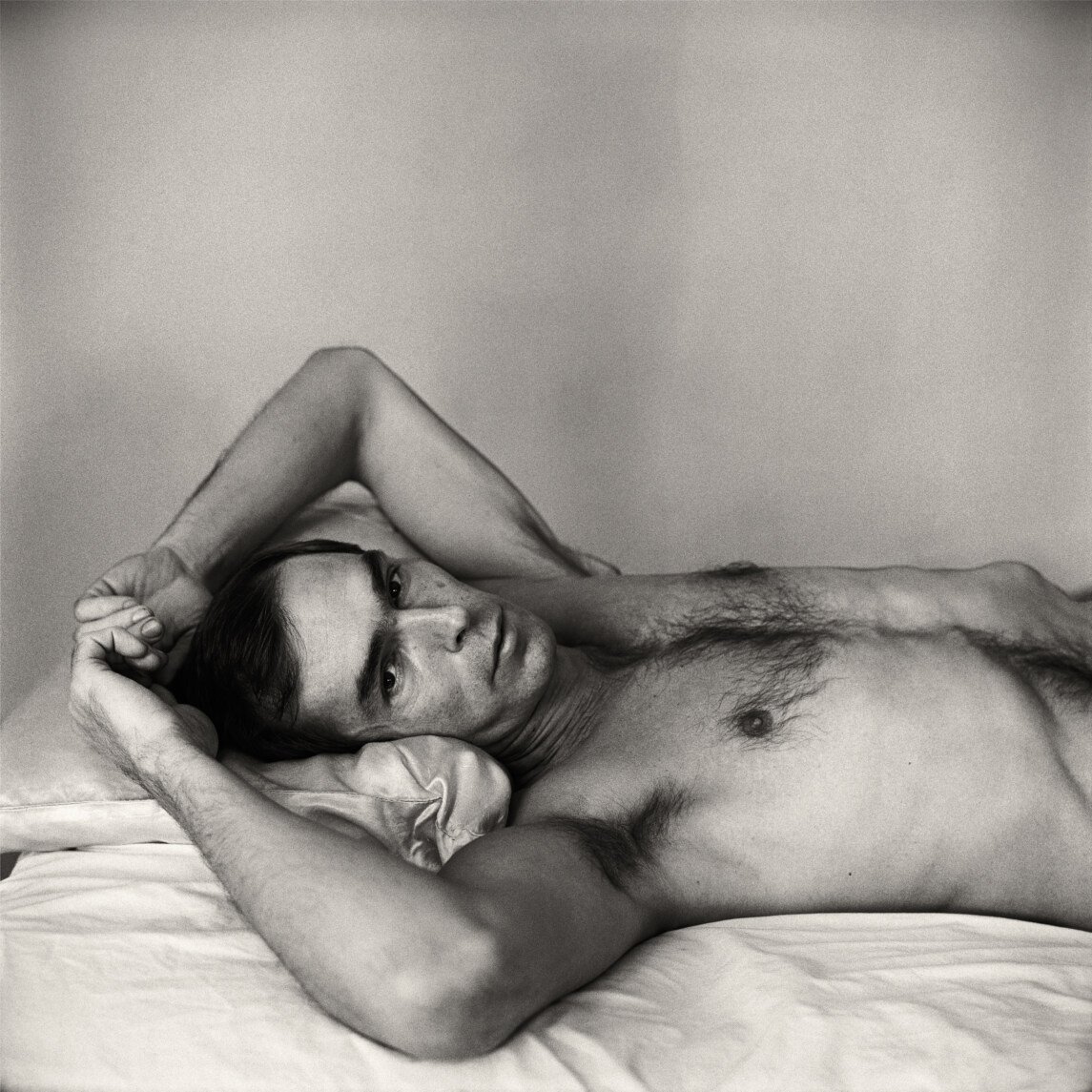
© The Peter Hujar Archive/Artists Rights Society (ARS), NY · Fraenkel Gallery
The only book
Peter Hujar (1934 to 1987) was a New York photographer who lived and worked in downtown Manhattan. He photographed people, animals and the city, and is known for the sensitivity and psychological depth of his portraits.
In his lifetime Hujar made only one book: Portraits in Life and Death, published by Da Capo Press in New York in 1976. It had a single print run. Over the years it became so scarce that it turned into a collector's item.
The introduction was written by Susan Sontag. She was Hujar's friend and also one of the people in the book. A year later, in 1977, she published her essays On Photography.
Twenty nine friends
The first part of the book holds twenty nine portraits, mostly made in 1974 and 1975. The sitters are Hujar's friends, figures of the New York avant garde of the time: artists, musicians, writers, performers. Sontag is there, the filmmaker John Waters, the actor Divine.
What makes these portraits unusual is posture. Many sitters lie down. They recline, rest their heads on their hands, lie on their backs looking up, against plain black or grey. No furniture, no setting. Only a person and the surface beneath them.
A person lying before the camera has lowered their guard. They are not standing to be looked at. They rest, and let Hujar look while they rest. The closeness in these pictures comes from trust between friends.
The Palermo catacombs
The later part of the book moves to another place and time. In 1963 Hujar travelled to Palermo, Sicily, with the painter Paul Thek, then his lover. They went down into the Capuchin Catacombs, where for centuries the dead have been kept, clothed, propped against the walls or laid in niches.
Hujar photographed the mummies where they were. Some lie, some stand, some seem about to speak. Thirteen years later he placed those pictures at the end of the book, after the portraits of his friends.
The whole book holds 41 photographs. The reader passes from the living to the dead with no words in between. Only the repeated postures: lying, leaning, face turned up.
The sequence draws no conclusion. Hujar does not say the living will become this, nor that the dead were once like that. He puts the two kinds of picture in one book, on the same page size, in the same black and white, and lets the reader find where they touch.
Read again in Venice
From 20 April to 24 November 2024, the complete set of 41 photographs from the book was shown at Santa Maria della Pietà in Venice, as a collateral event of the 60th Venice Biennale. The exhibition was curated by Grace Deveney, curator of photography at the Art Institute of Chicago.
In 1976 the book was a dialogue between life and death as ideas. Hujar died in 1987 of an AIDS related illness, and many of the people in the first part were gone within the following decades. Hung again nearly fifty years later, the two halves no longer stand as far apart as they once did.
Hujar belonged to the same city and time as Diane Arbus and her box of ten photographs. Both photographed people at the edges of New York with respect. But Arbus usually had her subjects stand and face her. Hujar let his lie down.
Photography