
Essays · Olfactory Art
Pierre-François-Pascal Guerlain. A water for an empress.
The smell flies off. The name stays.
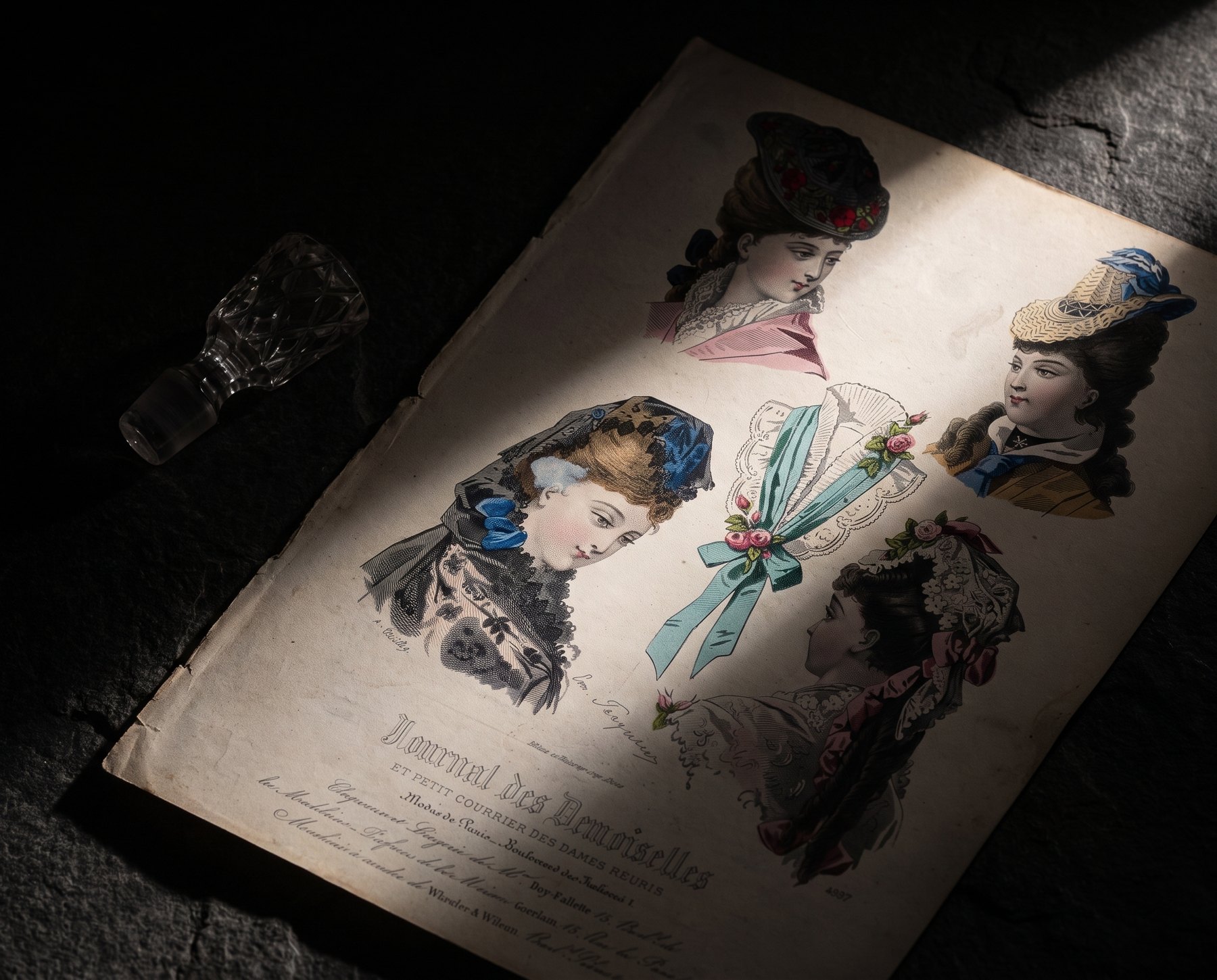
Paris, 1828: a perfume house is born
Guerlain was founded in Paris around 1828 by Pierre-François-Pascal Guerlain. In 2018 the house and photography celebrated one hundred and ninety years together: two inventions nearly the same age, a few years apart.
It was a meaningful moment for the trade. The nineteenth century was when Paris became the capital of fashion and refinement. Perfumers were no longer compounders in apothecaries. They became businessmen, with shops, regular clients, ties to the court.
Others had taken that road before Guerlain. Jean Marie Farina, heir to an apothecary in Cologne, settled in Paris and became supplier to Napoleon and to several other courts. Houbigant was named perfumer to Princess Adélaïde d'Orléans in 1829. Tying one's name to a court was a way to gain clients, and a way to gain a name.
In 1853 Pierre-François-Pascal Guerlain received an imperial warrant for Eau de Cologne Impériale, a water made for Empress Eugénie. That same year Eugénie had just become the wife of Emperor Napoleon III.
Eau de Cologne is a family of scented waters with its own history, beginning in Cologne in the eighteenth century: light, fresh, usually built around citrus, used freely and many times a day. It is not a dense perfume dabbed on for special occasions. It is closer to water than to oil.
Choosing to make a cologne for an empress, rather than something dense and rare, is a notable choice. It is a smell for a person's daily life, not for a ceremony. It belongs to the morning, to washing, to a handkerchief.
The imperial warrant is the opposite: a formal object, sealed, signed, kept. The two travel together. One flies off every day, one stays.
A name that outlived the empire
The Second Empire fell in 1870. The emperor was deposed, the empress went into exile. Anything marked Impériale suddenly became the trace of a vanished regime.
But Cologne Impériale did not disappear. It remains among Guerlain's scents today, and Nez magazine, writing on perfume and politics, lists it among bottles whose names recall old power, beside names such as Kingdom, Royal Oud and Santal Royal.
There is a small paradox here. Smell is the most fragile thing: it evaporates in hours. An empire is the most durable thing people try to build. Yet the smell, remade every day, has kept the empire's name longer than the empire kept itself.
Smell does not preserve itself. It is preserved by repetition: someone makes it again, someone wears it again, a house sells it again. Each remaking is one more time the name is read aloud.
A collodion photograph
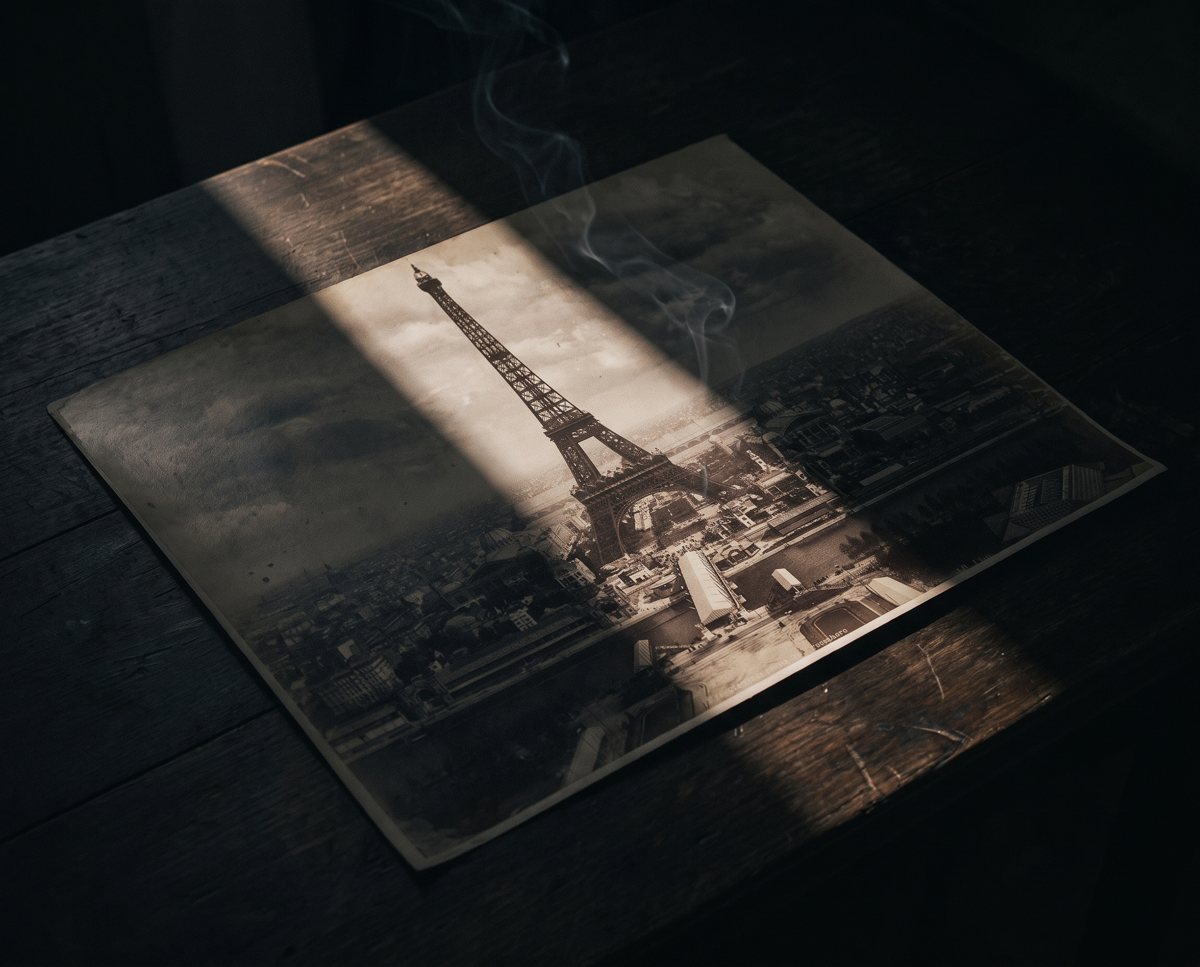
In 2018, for its hundred and ninetieth anniversary, Guerlain invited eight artists to make images of key perfumes in its history, each in a photographic technique of its own era. Eau de Cologne Impériale was rendered as a collodion print, a mid nineteenth century process. The show was held at the house's shop at 68 Champs Élysées.
One of the eight was the photographer Joan Fontcuberta. He said that while researching the house's history he had found a link between Guerlain's founder and Daguerre, a founder of photography, through a forgotten perfume. That is his claim, and Fontcuberta is an artist known for playing on the line between document and fiction. Penta keeps the story where it belongs: as a story.
The choice of technique, though, is clear. A smell of 1853 seen through the eye of 1853. The collodion print, like the imperial warrant and the name Impériale itself, is a still object holding on to something that has passed.
Readers who want to go further into this family of waters can start with a Farina Eau de Cologne bottle, its paper label intact after nearly two centuries.
Olfactory Art