
Essays · Photography
Richard Misrach. Desert Cantos.
Dry land keeps every trace.
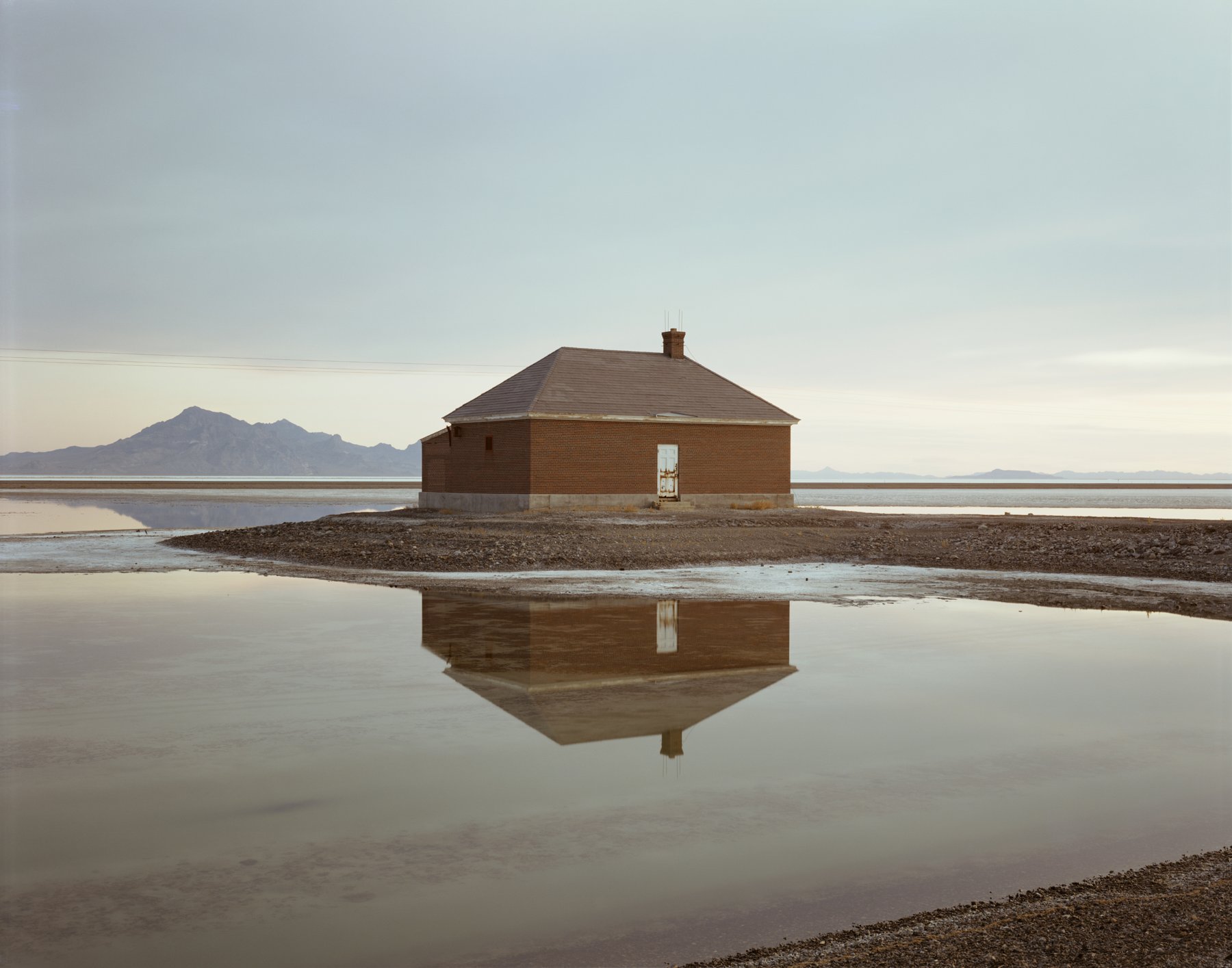
Fraenkel Gallery · Fraenkel Gallery
A project without an end
Richard Misrach began Desert Cantos in 1979. More than forty years later it is still open. It is his longest and most ambitious series, on the deserts of the American Southwest, across California, Nevada, Utah.
He works with an 8x10 view camera on a tripod. It is heavy and slow; each exposure has to be set up from scratch. In return the large negative holds dense detail. In a print you can read each pebble, each streak of salt, each layer of cloud.
Canto is an Italian word for a section of a long poem. Misrach divides his project into such sections, each with its own subject. Together they form a poem in photographs about one region.
That pace shapes the seeing. The photographer cannot shoot in a hurry. He has to choose where to stand, wait for the light, then open the lens. Each picture in Desert Cantos is the result of a slow decision, not a glance.
Cantos of fire, water and pits
Each canto looks at the desert through one phenomenon. The Flood is about the Salton Sea, California's largest lake, where rising water drowned what had been built along its shore. The Fires shows burning land, much of it set by people. The Pit shows pits where livestock carcasses were dumped. Other cantos concern military test sites, or events such as a shuttle landing.
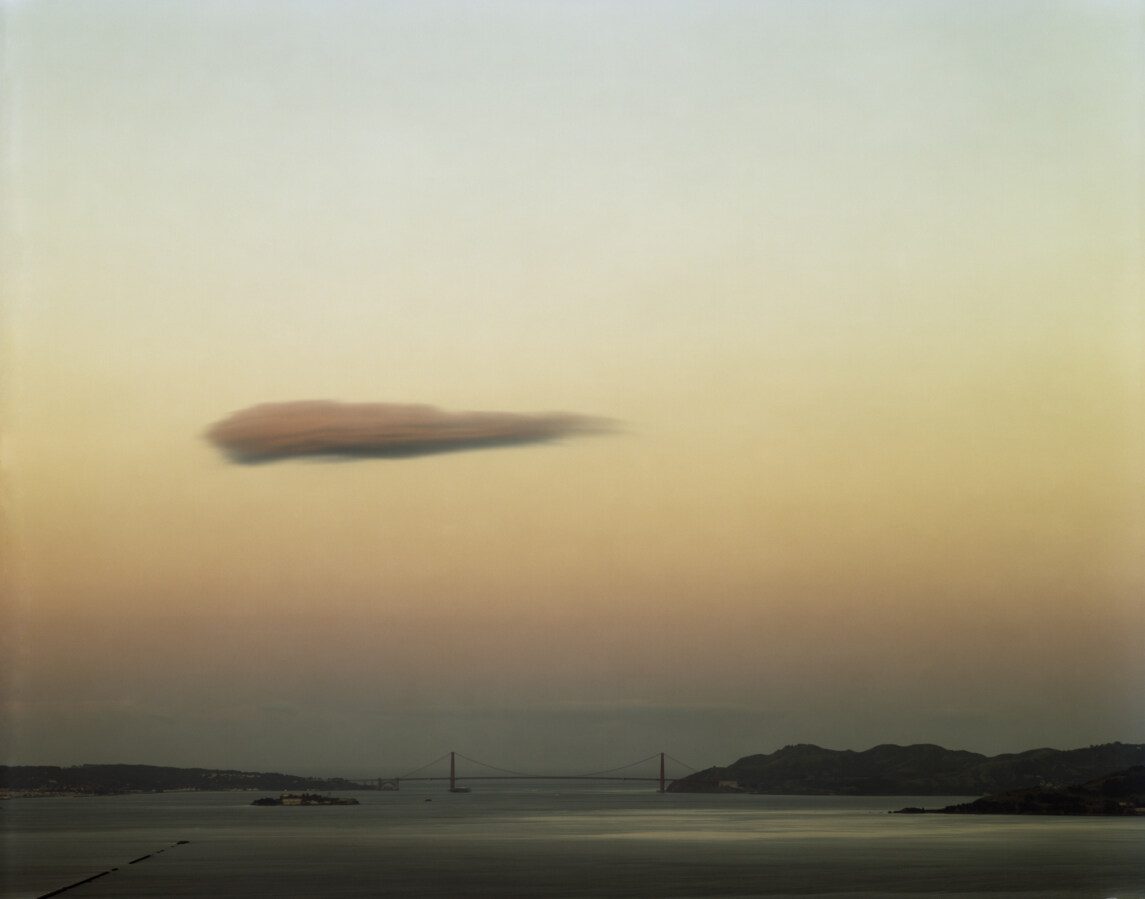
The titles on Fraenkel Gallery's page show that range. Desert Fire #153, 1984. Salton Sea (Red Beacon), 1985. Oil Derricks, Santa Barbara, 1984. Aerial Target ("Dart"), Wendover Air Base, Utah, 1990. Encrusted Tracks, Bonneville Salt Flats, Utah, 1992. Road, Moab, 1997. Pyramid Lake (at night), 2004. Clouds, June 8 2019.
Read in a row, the titles are an inventory: fire, water, oil, a target, tracks, a road, clouds. The desert is not a view. It is an archive.
Beauty and dread in one frame
What makes Desert Cantos hard to forget is that the pictures are beautiful. Soft colour, clear wide desert light, straight horizons. But what sits in that light is often a trace of damage: burned ground, poisoned lakes, land churned by ordnance.
The two do not cancel out. The viewer is drawn in by beauty and stays because of the worry. Misrach does not use photographs to shout. He lets beauty work slower and deeper than a slogan.
He has said that when we look at landscape we are looking at something that is not really landscape but a symbol, a metaphor for the country. The desert, in that sense, is where America shows itself most clearly: what it builds, what it tests, what it leaves behind.
Time in dry ground
The desert is a special place for a photographer. Few trees to hide things, little rain to erase them. A track across salt, as in Encrusted Tracks, can remain long after the vehicle is gone. Dry ground holds traces like a very slow exposure.
Misrach returns to these places over decades. Pictures from the 1980s sit beside one from 2019. The same land, but its light, its water and what people left on it shift from one return to the next.
So Desert Cantos is not only about a place. It is about the time of a place, the pace at which people change the ground compared with the pace at which the ground changes itself. Another view of industry's marks on the land is in Edward Burtynsky. Oil.
Photography