
Essays · Contemporary Art
Robert Irwin. untitled (dawn to dusk).
Look slowly and the light appears.
The Chinati Foundation · The Chinati Foundation
An old hospital turned into a building of light
On the grounds of the Chinati Foundation in Marfa, Texas, there is a site that once held the hospital of the old army post. The building had long been abandoned. From 1999, Robert Irwin began developing and refining a design for it. Seventeen years later, in July 2016, the work opened: untitled (dawn to dusk).
The work is a C shaped concrete building wrapped around a central courtyard. Along its two long wings runs a sequence of windows. The sills are raised, so from inside one sees the land through horizontal frames that Chinati likens to Dutch landscape painting.
Inside there are no paintings, no sculptures, nothing on the walls. Only rooms, windows, and daylight changing by the hour.
Two scrims
The only thing Irwin added to the space are thin, transparent scrims stretched taut from floor to ceiling. Each long wing is divided lengthwise by one: black scrim in one wing, white in the other.
Scrim has a strange quality. Seen straight on, it is nearly transparent. Seen at an angle, it becomes a hazy plane. When light strikes it, it holds some of that light, and the air in the room seems to thicken. Walking the corridor, one sees the other half of the room grow clear and faint, bright and dim.
The black and the white scrims do the same work in opposite ways. One absorbs light, the other returns it. On the same morning, the two wings feel entirely different.
From dawn to dusk
The title is a schedule. The building is meant to be seen across a whole day. In the morning, sun enters from one side, long and golden. At noon the light stands upright and flat. In the afternoon it moves to the other side and reddens. Each change shows on floor, wall and scrim.
There are no switches, no electric lights staging effects. Irwin only decided where the windows go, where the scrims hang, what colour the walls are. The rest belongs to the sun and the weather. A grey day makes one work. A bright day makes another.
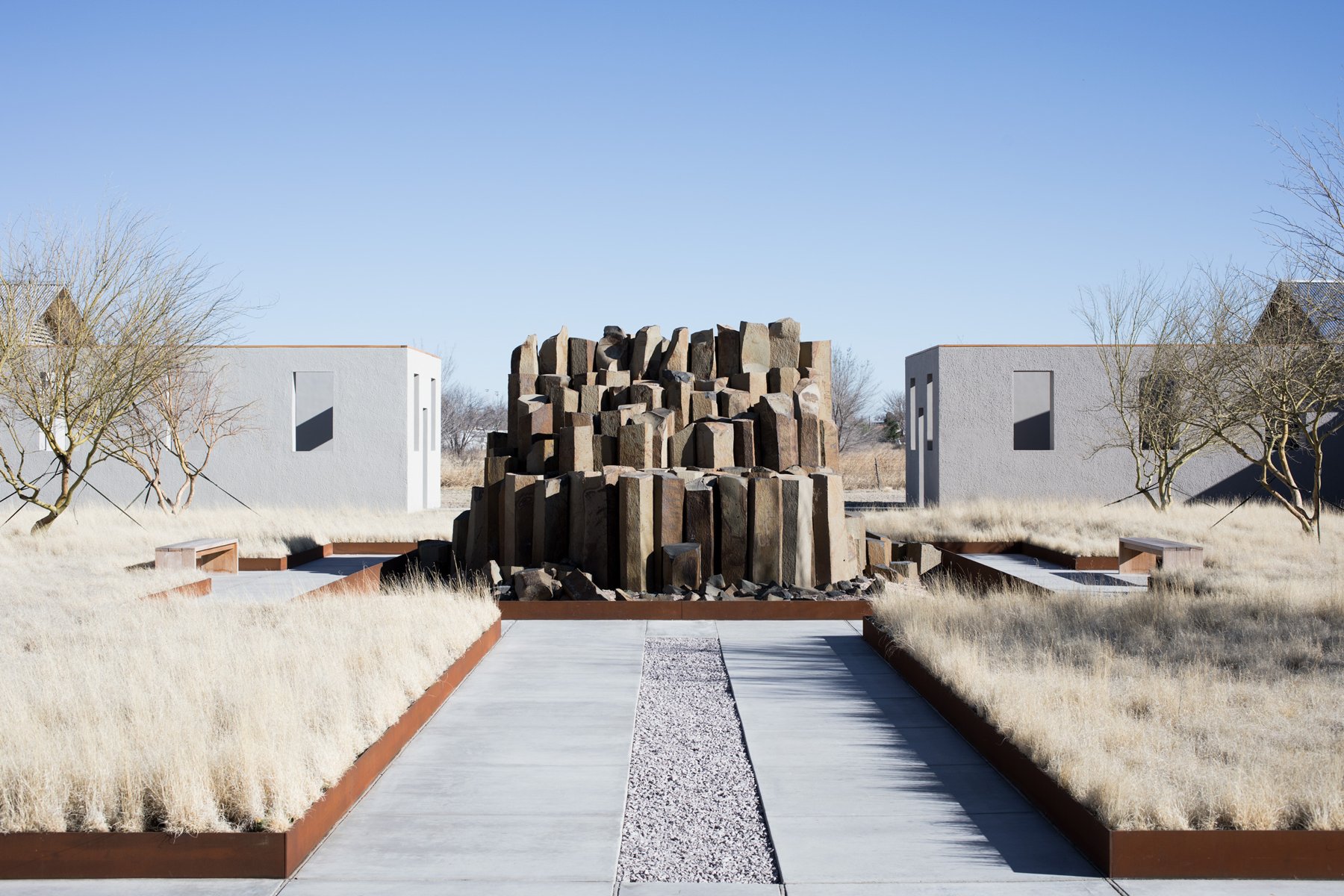
Outside, concrete paths run beside raised beds lined with Corten steel. Two rows of honey mesquite trees grow in the courtyard, along with large basalt columns. Their shadows also shift with the hours, a second clock outside the windows.
Seeing seeing
Robert Irwin belonged to the California artists often grouped as Light and Space, who from the 1960s worked with light, space and perception rather than objects. Chinati describes dawn to dusk as the result of his decades long investigation into the act of perception through the handling of space and light.
Irwin's question is simple: what do we actually see when we look? Most of the time we look to recognise things, to name them, and stop there. Irwin wanted to stretch the moment before naming. When there is no object to recognise, the eye begins to notice smaller things: the warmth of light, the density of a shadow, the way a scrim softens a corner.
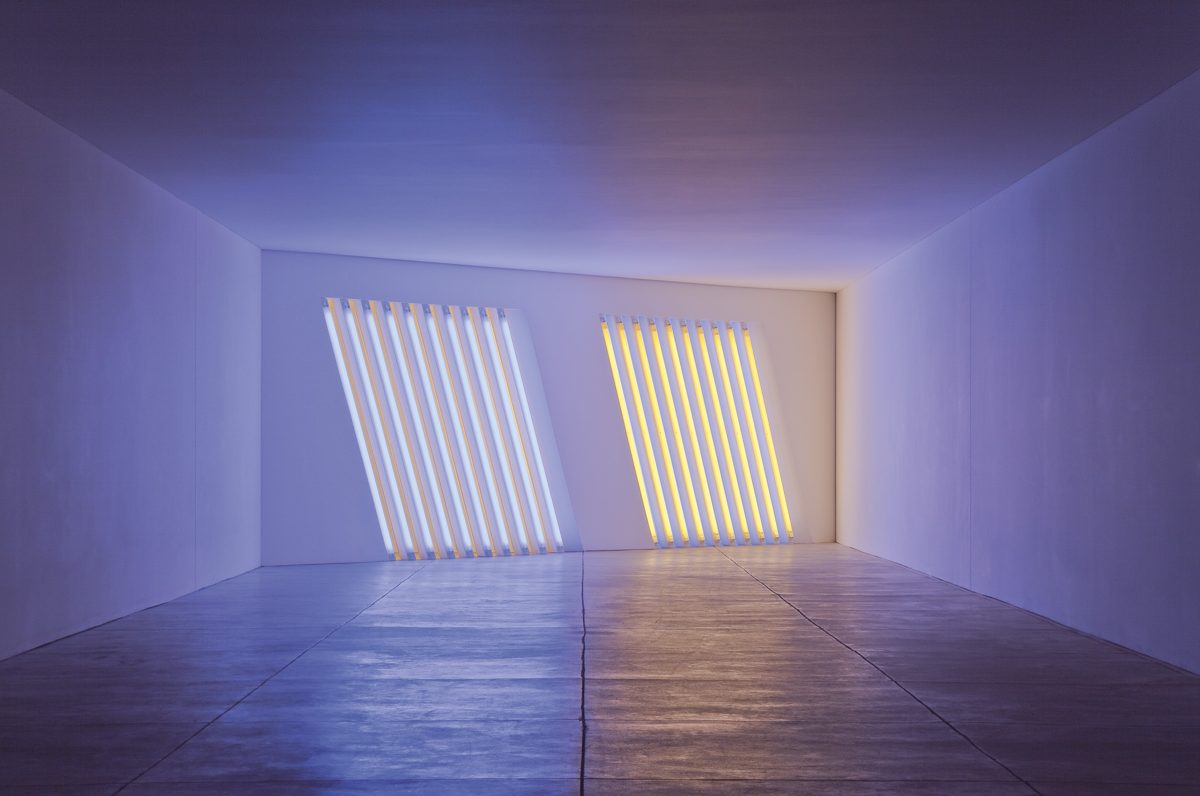
A contemporary, James Turrell, moved in the same direction, as in Aten Reign at the Guggenheim. But Turrell often builds with artificial light. In Marfa, Irwin chose daylight alone. The building is his. The mornings and evenings belong to no one.
Contemporary Art