
Essays · Modern Art
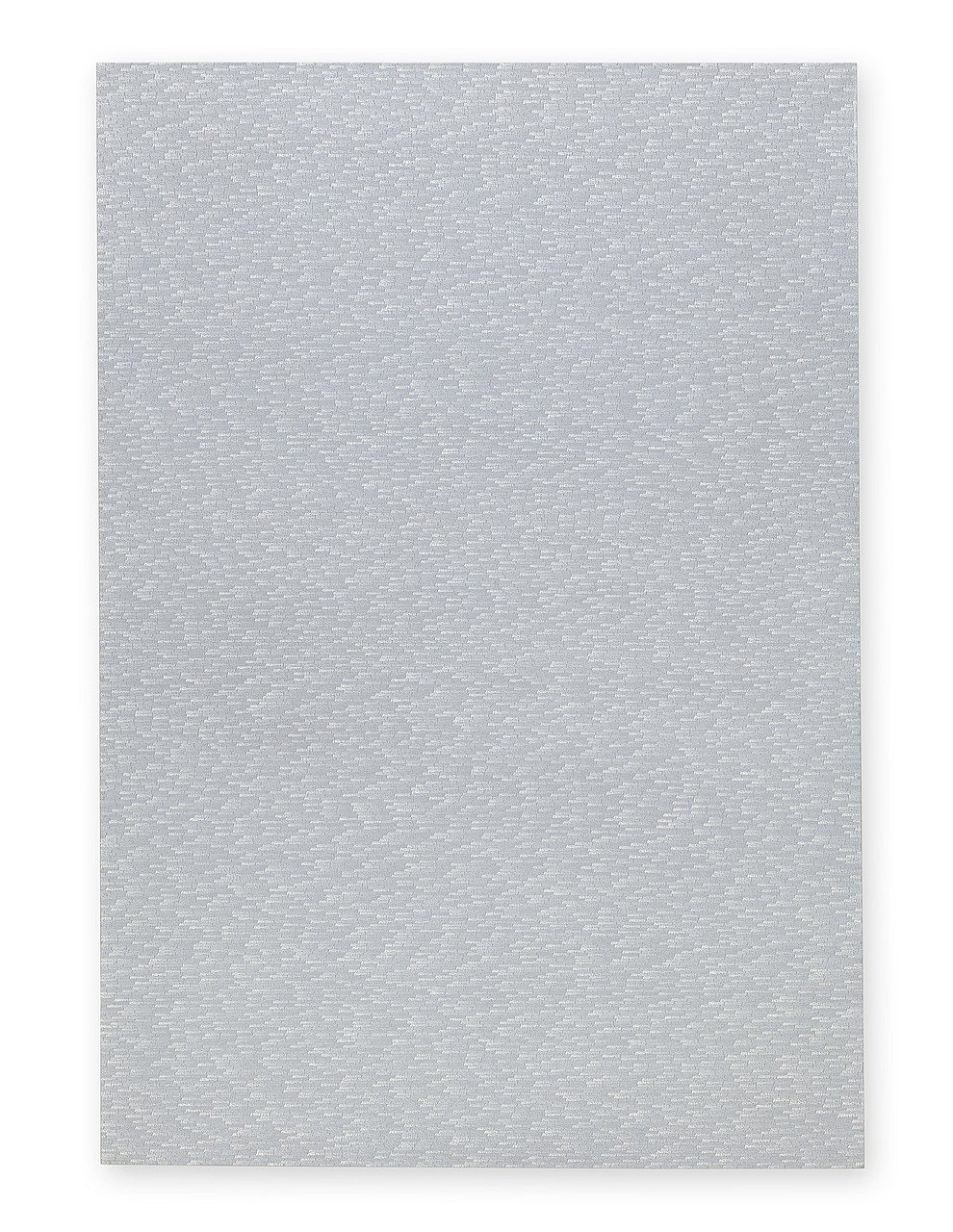
Roman Opałka. Détail 1520432 to 1537871.
Counting is the slowest way to live.
Solomon R. Guggenheim Museum · Solomon R. Guggenheim Museum
A count that began in 1965
In 1965, in Warsaw, the painter Roman Opałka painted the number 1 in the top left corner of a dark canvas. Then 2. Then 3. He wrote in white paint with a small brush, left to right, top to bottom, until the canvas was full.
Then he took a new canvas of the same size and wrote the next number. He continued until his death in 2011.
The whole project has one name: OPALKA 1965/1 to infinity. Each canvas is called a Détail, a detail of that whole. The title of each painting is simply the first and last number on it.
The painting in the Solomon R. Guggenheim Museum collection is titled OPALKA 1965/1 ∞ Détail 1520432 to 1537871. It begins at one million five hundred twenty thousand four hundred thirty two and ends at one million five hundred thirty seven thousand eight hundred seventy one. More than seventeen thousand numbers, handwritten, none skipped.
A ground growing paler
At first Opałka wrote white numbers on black. Later he moved to grey. From the early 1970s he began adding a little white to the ground of each new canvas. Each painting was slightly lighter than the last, almost imperceptibly.
The result was something he had planned: over the years, the ground would approach white, and the white numbers on it would grow harder to read. Toward the end, number and ground nearly merge. The writer keeps writing, but the writing disappears into the surface.
Before a Détail, viewers usually do not read the numbers. The eye sees a grey plane that trembles faintly, like densely woven cloth. Only up close do the numbers emerge, and with them the sense that every stroke is a moment that has passed.
The voice and the face
Opałka did not only write numbers. While painting, he spoke each one aloud in Polish and recorded it. That steady voice is a record running parallel to the canvas: the same count, made of breath.
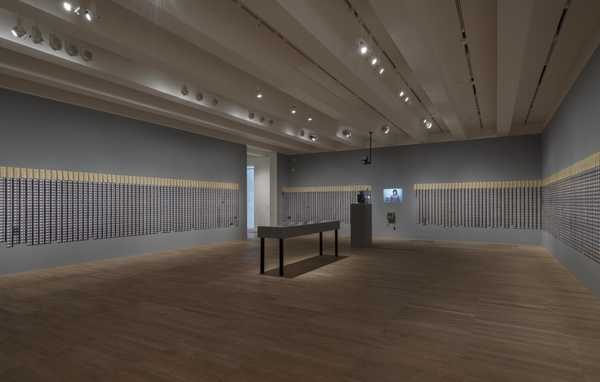
After each working session he photographed himself in front of the unfinished canvas, with the same framing, the same pale shirt, the same neutral expression. Hundreds of these photographs set side by side show a face ageing, hair whitening, very slowly.
Three records travel together: numbers on canvas, voice on tape, face on film. They record the same thing, time passing through a body, through three different senses.
An art of patience
Opałka belonged to the generation of artists in the 1960s and 1970s who used systems, rules and repetition to make work. But few bound the work so tightly to their own lives. The project had no completion date. It could only stop when the painter stopped.
In the same years, On Kawara turned dates and waking times into art, as in I Got Up. The two took different paths. Kawara recorded the markers of a day: when he woke, where he went, whom he met. Opałka recorded no events at all. He only counted, as if existing were enough of a mark.
Looking at a Détail today, one does not see a story. One sees a real span of time, dense, even, made by hand. And one knows that somewhere there exist the painting that came just before it and the one that came just after.
Modern Art