
Essays · Contemporary Art
Tehching Hsieh. One Year Performance.
A punch every hour. Hair is the second clock.
Tate · Tate
One year, once an hour
In April 1980, in his New York studio, Tehching Hsieh began something almost too simple to believe. He installed a factory time clock. Every hour, on the hour, he punched a card. Day and night. For a year.
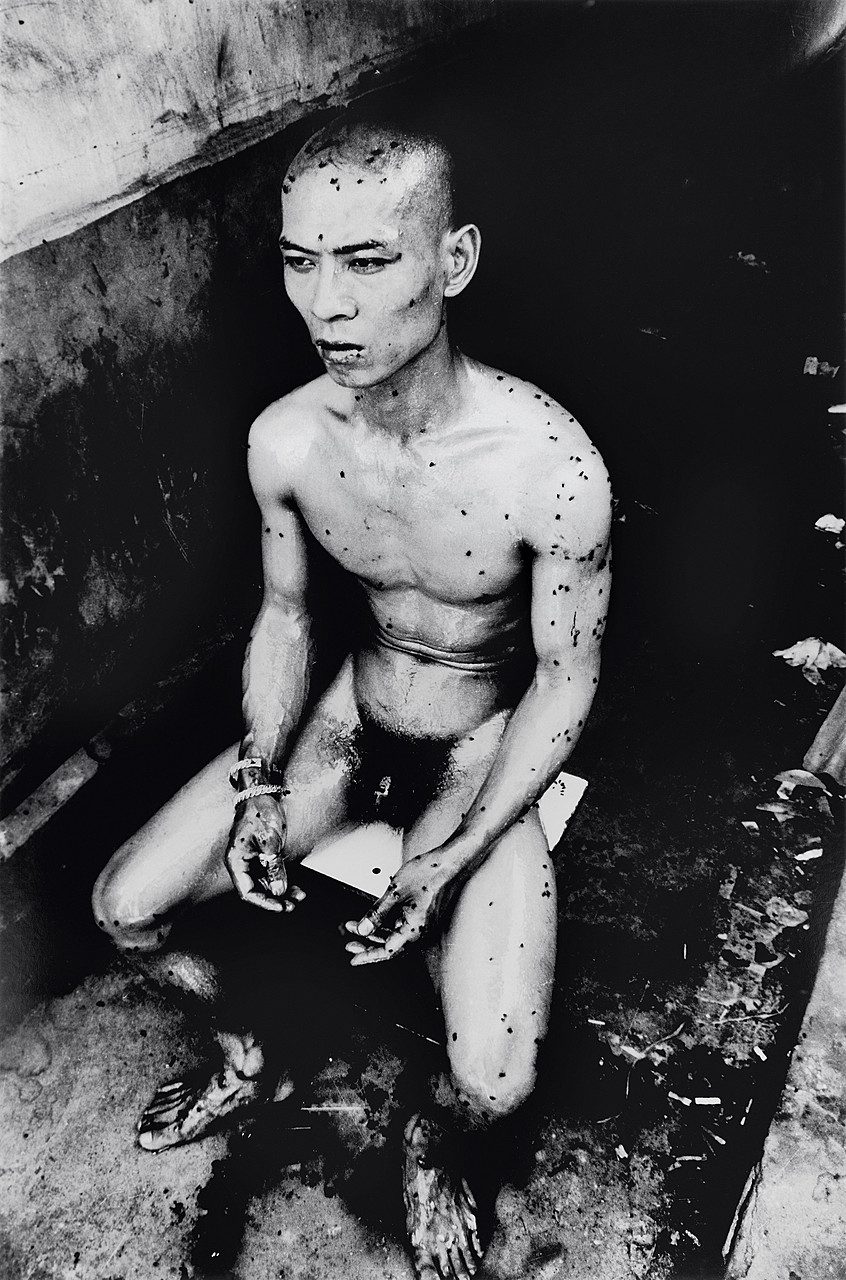
Beside the clock stood a 16mm film camera. Each time he punched in, he shot a single frame of himself. He wore a worker's uniform. Before starting, he shaved his head. From then on his hair grew freely, and each frame recorded it a little longer.
A year has 8,760 hours. Hsieh missed 133 punches. He did not hide them. They are part of the work, like gaps in a diary.
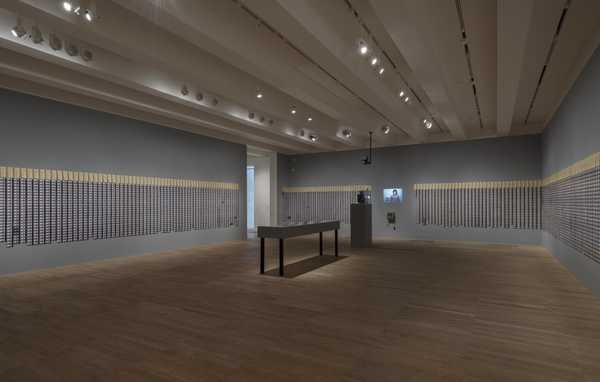
Tate now holds the work as what remains of it: a poster, letters, photographs, time cards, the time clock itself, the 16mm camera, a silent colour film and the uniform.
Never a full night's sleep
The rule sounds light but was heavy to live by. Punching in every hour means never sleeping more than an hour at a stretch. No travelling far. No forgetting. The whole day cut into equal pieces, each ending with the click of the machine.
Before this, Hsieh had spent a year shut in a cage built inside his studio. In a conversation with Marina Abramović published by Tate Etc., he said that in the cage he was doing time, and that he wanted to continue that idea by using a time clock to record doing time. He called one year a basic unit by which people count life, and the time the earth takes to circle the sun.
He liked to use real time. In his words, it let him live in art time and think freely. That is the paradox: the freedom came from a discipline that forgave almost nothing.
Picture an ordinary day that year. Punch in at seven. Cook, read, punch in again at eight. Nap, set an alarm, wake to punch in at nine. Nothing large happens. Only the same gesture, repeated twenty four times a day, until it becomes the rhythm of a whole life.
Six minutes for a year
The frames were later joined into a short film. A year compressed into about six minutes. Watching it, you see Hsieh's hair rise like grass in time lapse. The face changes. Sometimes the image jumps, where a punch was missed.
Here the work reveals two different times. One is clock time: even, rigid, indifferent to fatigue. The other is body time: sleep, hunger, the hours one cannot get up. The 133 misses are where the two collide.
Many read the work as an image of labour. The time clock belongs to the factory, where a worker's hours are bought by the hour. Hsieh sold his hours to no one. He punched in for himself, and turned the repetition into the work.
He did not explain much, and he has resisted readings of the work as autobiography. What remains is a stack of cards, a run of photographs and an old question still open: what measures a life? From 1968 to 1979, On Kawara had stamped his waking time on postcards. Two artists, two ways of recording the same thing: presence, hour by hour, day by day.

Contemporary Art