
Essays · Contemporary Art
Rosa Barba. The Hidden Conference.
A work in storage is still alive.
Tate · Tate
Three museums, three stores
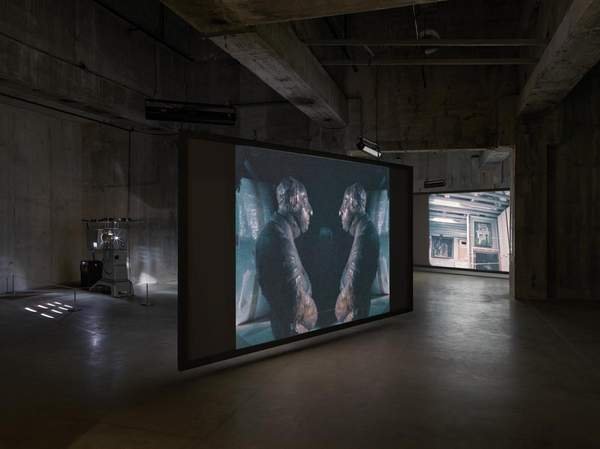
The Hidden Conference is a work in three films, made by Rosa Barba between 2010 and 2015. Each film was shot in the storage rooms of a European museum, where works are kept while they are not on display.
The first, About the Discontinuous History of Things We See and Don't See, was filmed in 2010 in the stores of the Neue Nationalgalerie in Berlin. The second, A Fractured Play, was filmed in 2011 in the stores of the Musei Capitolini in Rome. The third, About the Shelf and Mantel, was filmed in 2015 in the Tate stores in London.
Three cities, three very different collections. A museum of modern art in Berlin. One of the oldest public museums in Rome, home to a great deal of ancient sculpture. A national collection in London. What they share is not on the walls but behind them: rooms without visitors, full of racks, crates and frames.
The work is in Tate's collection. In 2023 all three films were shown together in The Tanks, the former oil tanks beneath Tate Modern. Before that it was shown at Palazzo Cusani in Milan in 2015 and at ARTER in Istanbul in 2019 and 2020.
Paintings and sculptures as characters
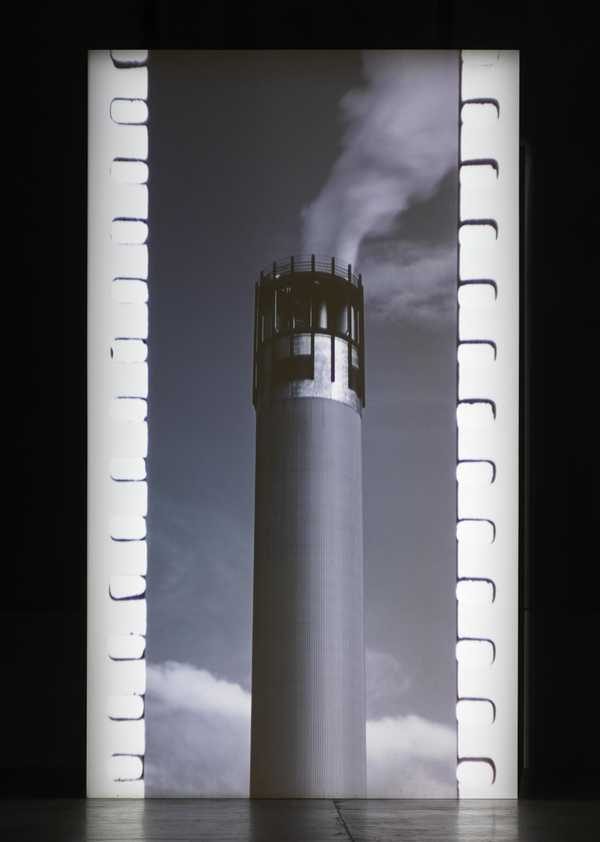
Barba works with 35mm film, not digital video. In the room, three Dresden D1 projectors run at once, one film each, in colour with stereo sound. The noise of the machines belongs to the space. A reel of film is an object with weight, length and sound.
The three films have different durations, so they never start or end together. Speech, ambient sound and silence from one film fall over the others in combinations that keep shifting. The viewer stands among three projections and listens as if to a conversation they were not invited to.
On screen, the stored works seem to move. Tate describes them gliding on invisible wheels. Paintings and sculptures are no longer things hung to be looked at. They become characters. They appear, withdraw, stand beside one another in arrangements no curator made.
The title points to this. A conference, but a hidden one. The participants are artworks. Nobody takes minutes.
The part a museum does not show
A large museum usually shows only a small part of what it owns. The rest sits in storage, numbered, wrapped, kept at a steady temperature and humidity. It waits. Some works wait months to be hung again. Some wait years.
Barba is interested in that state of waiting. In the galleries, a work is placed inside a story: by movement, by date, by theme. In storage the story pauses. A modern painting may sit beside an empty wooden frame. An ancient figure may turn its back to the lens. No one has decided how they should be seen.
Barba's camera does not reorder any of this. It passes through. It lets the chance neighbours of the stores show themselves. That is why the first title speaks of a discontinuous history of what we see and don't see. The museum shows us one part. The other part still exists, just out of sight.
Choosing 35mm belongs to the same story. A reel of film is also something that can sit in storage. It needs care, it can fade, it waits to be projected. Barba uses a material that shares the fate of what she films.
Why the work stays with you
Rosa Barba is an Italian born artist who lives and works in Berlin. She is known for treating film as a sculptural material: projectors, reels, light and sound all become part of the form. In The Hidden Conference that way of thinking meets a subject very close to it: the museum as a place that keeps things.
Many artists have turned the camera on museums. Candida Höfer photographs galleries once the visitors have gone. Others photograph visitors in front of paintings. Barba goes a step further. She walks through the door visitors cannot use, and looks at the works when they are performing for no one.
What stays afterwards is not a single image. It is a sense of scale. Behind every gallery wall there is another room, fuller, darker, quieter. And there the works are still works, even unseen.
The Hidden Conference asks a plain question. Does a thing need to be seen in order to exist? The three films answer by not answering. They only show what is still there.
Contemporary Art