
Essays · Photography
Samuel Fosso. Tati.
The costume changes; the wearer stays one.
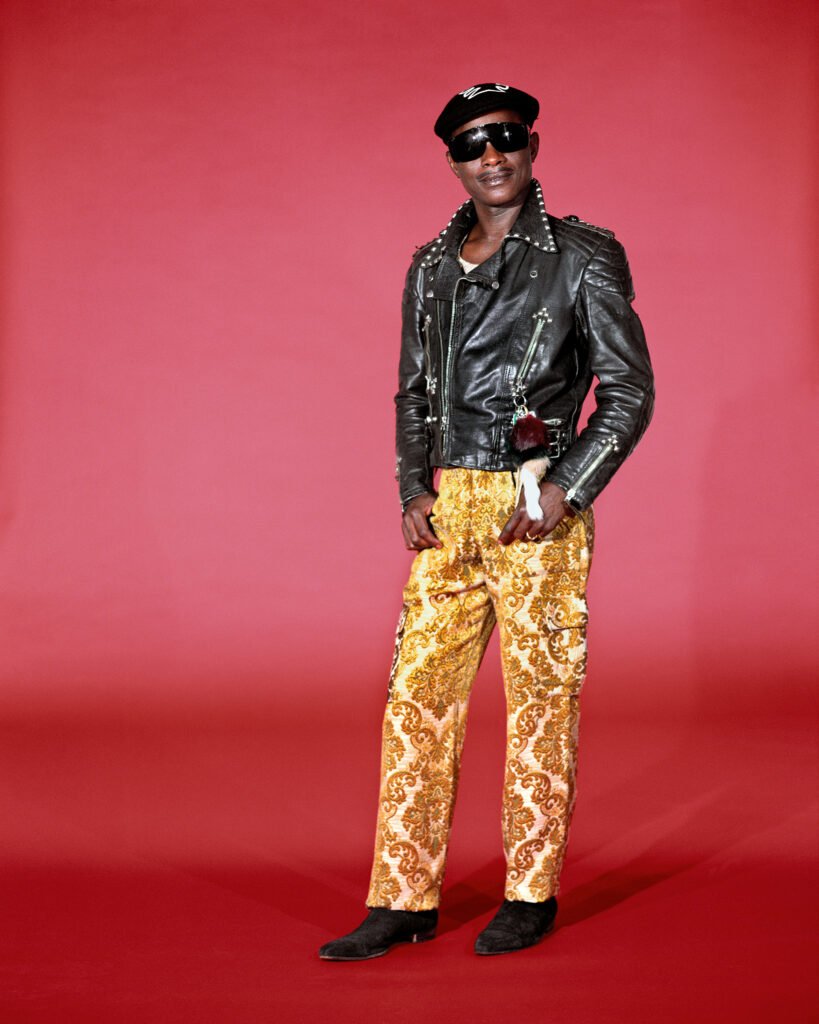
© the artist and courtesy JM Patras/Paris · Aperture
From a studio in Bangui
Samuel Fosso was born in Cameroon. On 14 September 1975 he opened a photo studio in Bangui, capital of the Central African Republic, and named it Studio Photo Gentil. He made portraits for clients. And in the same room, before the same backdrop, he began to photograph himself.
From that small room a lifelong practice began. Fosso wore different clothes, stood before the studio backdrop, tried poses, tried roles. Self-portraiture for him was not a record of how he looked. It was a small stage where he played the people he might be.
Some two decades later, that method brought him to Paris, and to a commission that went nowhere anyone expected.
A commission redirected
In 1997 Tati, the famous discount department store in the Barbès district of Paris, marked its fiftieth anniversary. It invited Fosso along with two masters of West African studio portraiture, Seydou Keïta and Malick Sidibé. The plan: recreate an African photo studio inside the store and make black and white portraits of passersby.
Fosso did not follow the plan. He took clothes and accessories sold in the store and made ten colour self-portraits. Each picture is a character.
This is worth a pause. Keïta and Sidibé were known for photographing others, giving their sitters a fine image of themselves. Fosso used the same kind of studio to photograph one person only.
The list reads like a wardrobe of the Western imagination. The rocker. The businessman. La Bourgeoise. The liberated American woman of the seventies. The sailor. The pirate. The golfer. The lifeguard.
And the most discussed picture: Le Chef, the chief who sold Africa to the colonists. Fosso wears animal skins before a bright wax print backdrop, grand and suspect at once. The image is both a tribute to tribal leaders and a critique of the temptations of power under colonialism.
Roles and the question of identity
At a glance, Tati looks playful. Bright colour, exaggerated poses, clothes close to costume. Yet together the pictures ask something serious: who is allowed to be whom? An African man in the dress of a businessman, a sailor, a French bourgeois woman. Those clothes belong to types the West drew of itself, and of others.
In a conversation with the curator Yves Chatap, published in Aperture in 2017, Fosso described his work as a discourse about segregation and slavery and a demand for independence and freedom. Clothes from a discount store become tools for that question.
Tati opened onto larger series. In 2008, African Spirits, in which Fosso became historical figures of the civil rights struggle. In 2013, Emperor of Africa, on China's economic reach in Africa. In 2015, SIXSIXSIX, 666 unique self-portraits.
Through it all, the face is Fosso's. Costume, role and backdrop change. But the person before the lens, the one pressing the shutter, stays one. Perhaps that is what Tati shows most clearly: identity lies not in the costume, but in the one who decides to wear it.
Photography