
Essays · Olfactory Art
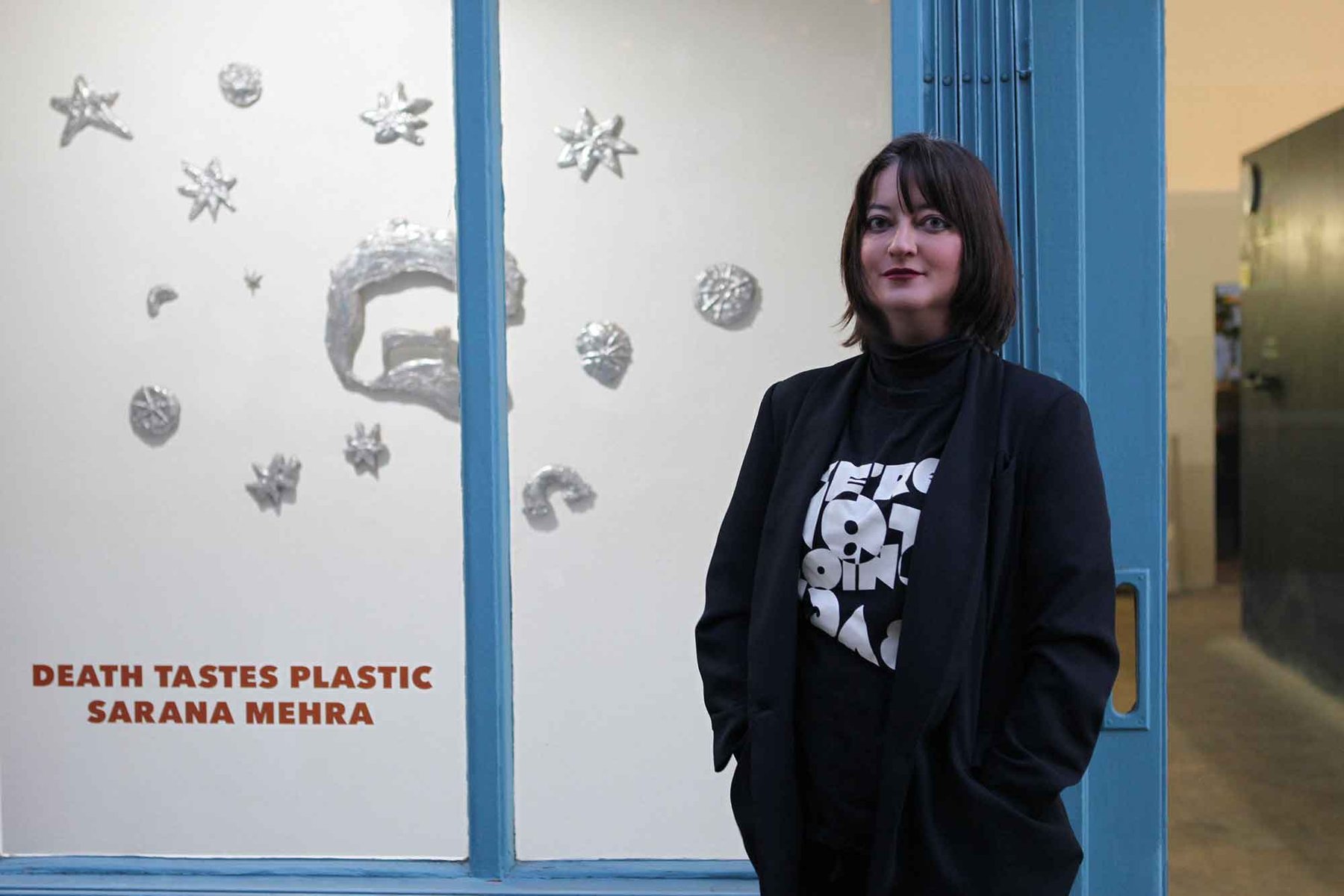
Sarana Mehra. Death Tastes Plastic.
The offerings change material. The plea stays the same.
Institute for Art and Olfaction · Institute for Art and Olfaction
A title with a taste
Death Tastes Plastic. The title opens with a sense rarely invited into a gallery: taste. And the taste it names is not food, but an industrial material.
Sarana Mehra's solo exhibition ran at IAO Gallery on Chung King Road, Los Angeles, from 1 to 30 November 2024, opening on the evening of 1 November. Mehra was born in London, lives in Los Angeles, is British American, and studied at the University of Oxford and Central Saint Martins.
Anyone who has spent long stretches in a hospital may understand the title without explanation. Tubes, drip bags, gloves, trays, sterile wrapping. Plastic is present at every step of caring for a failing body. It sits closer to the patient than their dearest people.
The title does not explain itself. It places two things side by side, death and plastic, and leaves the viewer to connect them.
The losses before the work
According to the exhibition text, Death Tastes Plastic followed a run of losses. Mehra lost her mother. She lost a friend. She herself came through two life threatening illnesses.
That means she knew the hospital in both roles: the one who cares and the one cared for. The two roles see the same room from opposite sides. The carer sits in a chair, watching the clock and the machines. The patient lies in the bed, watching the ceiling. Both breathe the same air.
From those private losses the show opens onto larger questions. How does grief sound amid the world's shared crises? What does it mean to care for a person on a planet that is also failing?
The smell of a ward
Mehra developed a scent for the show. It simulates the smell of being in hospital, as carer and as patient.
It is an unusual choice in the world of scent. Most perfumes evoke places people want to go: gardens, beaches, pine forests. The hospital is a place no one wants to stay. Its smell is usually described as something to endure, not something to keep.
That is exactly why it is strong. Smell is one of the shortest roads back to memory. Someone who has spent nights in intensive care may recognise it at once, before thinking. The smell returns them to the room, the chair, a person who is gone.
In the gallery the smell comes without machines or white light. It stands alone, lifted out of its setting, so that visitors notice how deeply it has marked them.
Votives for a technological age
The show is about ritual, and about how technology, language and modern symbols shape everyday life. Motifs of illness, death and memory run throughout, sometimes mythic, sometimes playful.
Mehra draws on the tradition of the votive, the object people have offered at temples and churches since antiquity to ask for protection or give thanks. Placing votives inside a show about hospitals creates tension: on one side the plain fact of death, on the other the belief that something continues after it.
The exhibition text speaks of how belief and science coexist as things come apart. That may be what stays longest. The show does not call prayer superstition or medicine cold. It accepts that in a hospital room people do both. They read the numbers on the screen, and they quietly say a name.
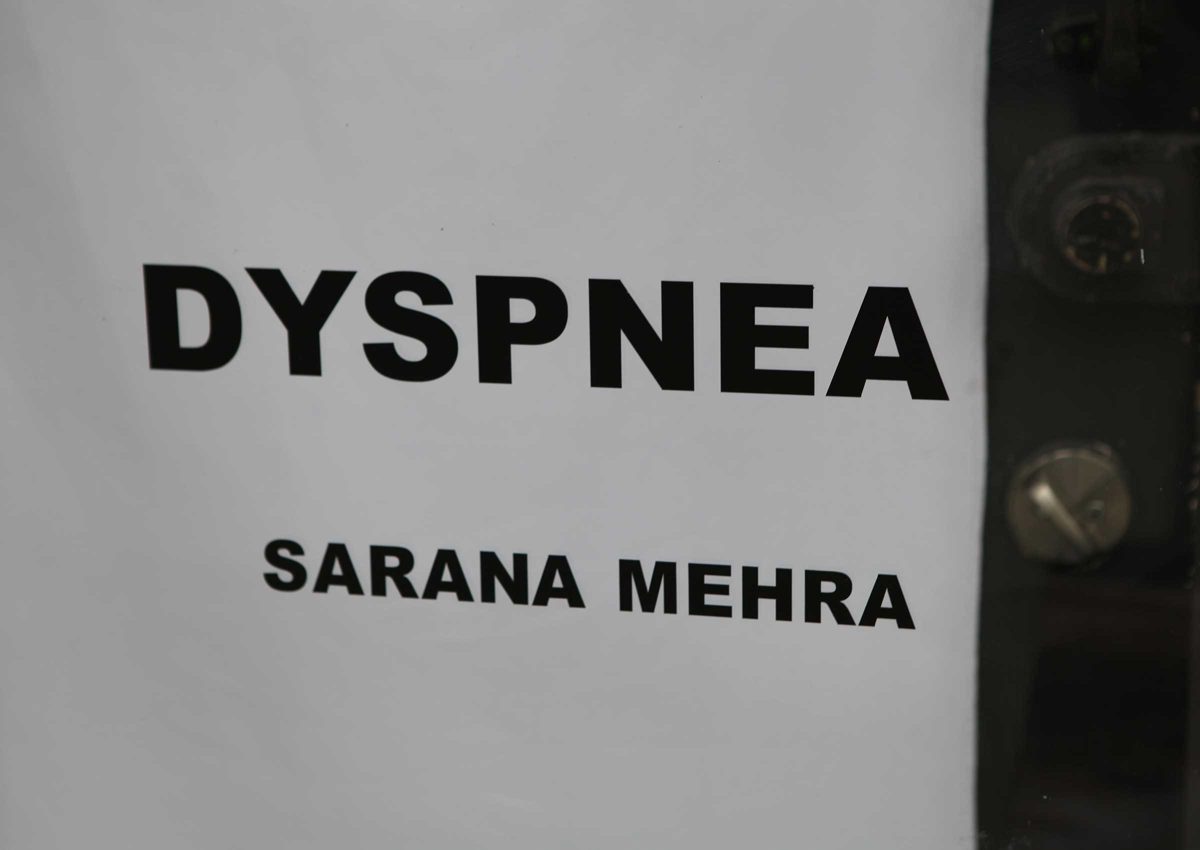
Two years earlier, in the same gallery, Mehra's Dyspnea looked at the breathing of a whole society during the pandemic. Death Tastes Plastic narrows the view to one bed, one chair, one smell.
Olfactory Art