
Essays · Photography
Taryn Simon. An American Index of the Hidden and Unfamiliar.
Real, but not seen.
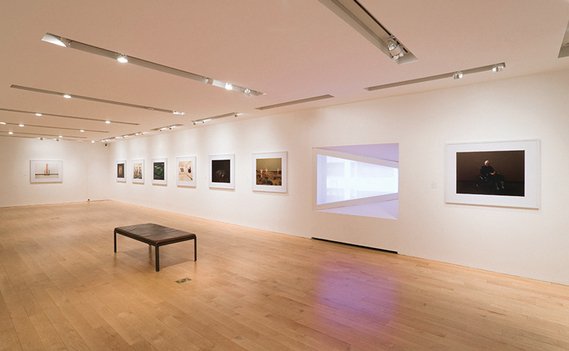
Whitney Museum of American Art · Whitney Museum of American Art
An inventory of what lies out of view
Taryn Simon, born in 1975, is an American artist working with photography and text. An American Index of the Hidden and Unfamiliar is an inventory in photographs of her own country. The Whitney Museum in New York showed it from 9 March to 24 June 2007.
The title says almost everything. This is an inventory. Its subjects are places, objects and procedures that exist within the United States, tied closely to how the country runs day to day, yet which the public either cannot enter or does not know exist.
Simon sorts them by the familiar domains of a society: science, government, medicine, entertainment, nature, security, religion. Each domain has closed rooms. Simon found ways to bring her camera into those rooms.
From radioactive capsules to a hibernating bear
The subjects of the Index vary widely. Radioactive capsules at a nuclear waste storage facility. A black bear in hibernation. The headquarters of the Central Intelligence Agency at Langley, where the agency keeps an art collection of its own.
Side by side, these things share nothing visually. One dangerous, one asleep, one guarded. Their only common ground is that they are real and they are hidden.
Simon used a large format view camera whenever conditions allowed. It is slow and heavy and needs time to set up. It yields pictures sharp in every detail, calm, almost cold. No prying lens, no stolen shots. Each image looks as if it was made after everything had been approved.
That calm produces a strange effect. The secret things in Simon's pictures do not look secret. They look like goods in a storeroom, waiting to be entered in a ledger.
Picture and caption
Every photograph in the Index comes with a passage of text. Not a short label, but an explanation: what this is, where, why it exists. The tone is dry and precise, like an entry in a reference book.
Here picture and text do separate jobs. The picture shows a surface, and surfaces rarely tell much. A room, a shelf, an object on a table. The text tells what the room is for, where the object came from. The viewer moves back and forth, and in that movement grasps something: to see an object is not yet to know it.
In 2007 Steidl published the Index as a book, with a foreword by Salman Rushdie. The project was also shown at the Museum für Moderne Kunst in Frankfurt. Simon went on to use this method in many later projects, always pairing image with text, always seeking systems that people rarely look at. One of them uses flowers as witnesses: Paperwork and the Will of Capital.
An American Index is therefore a work about the borders of seeing. Every country has its hidden places. Simon does not expose them like a reporter. She lists them like a librarian, and lets the viewer measure the distance between what they are shown and what is actually running around them.
Photography