
Essays · Photography
Tomoko Yoneda. Between Visible and Invisible.
The lens is still here. The one who looked through it is not.
Mori Art Museum · Mori Art Museum
A pair of glasses on a page
Between Visible and Invisible is a black and white series Tomoko Yoneda began in 1998 and continues today. Its method is simple. She finds the actual glasses of an influential figure of modern intellectual history. She sets them on a text, a score or a photograph connected to that person. Then she photographs through the lenses.
The results are almost abstract. Most of the page falls out of focus. Only inside the circle of the lens do a few lines come sharp, enlarged or bent by the prescription of the person who once wore them.
Each title follows the same pattern: whose glasses, looking at what. Mahler's glasses, viewing his Symphony No. 10, the last he left. Joyce's glasses, viewing a letter to Sylvia Beach, his first publisher and patron. Le Corbusier's glasses, viewing his notes for a Paris lecture on the modern dwelling.
Tanizaki and the letter to Matsuko
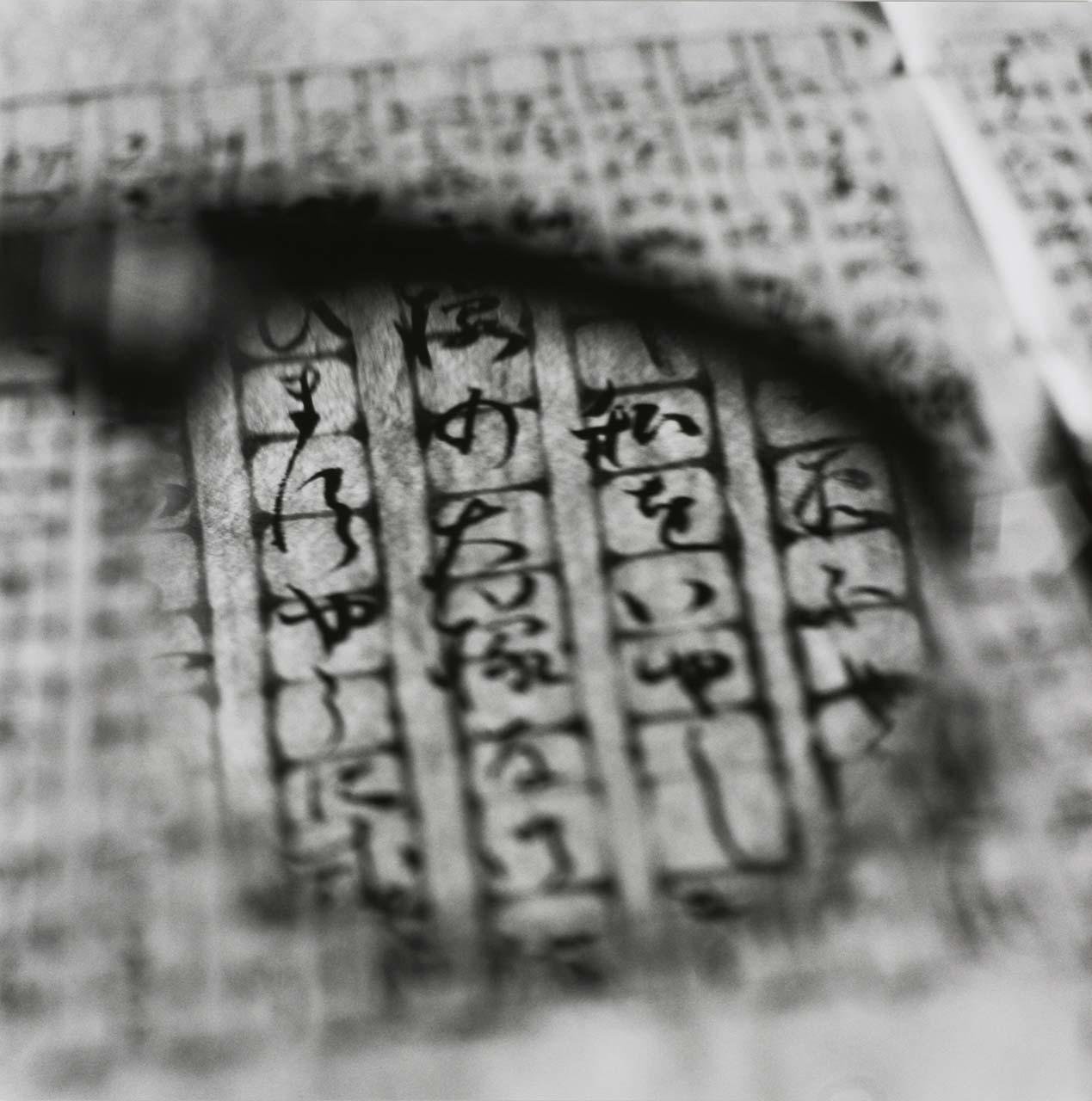
The Mori Art Museum in Tokyo holds several works from the series. One is Tanizaki's Glasses, made in 1999: the novelist Tanizaki Jun'ichirō's glasses resting on a letter to Matsuko. A gelatin silver print, square, 120 by 120 centimetres.
At that size the glasses are almost as large as the viewer's torso. Handwritten Japanese appears through the lenses as through a magnifier. The viewer cannot read the whole letter. They see only what the lens shows, exactly the part the wearer once bent down to look at.
Tanizaki wrote about shadow in the Japanese house, about paper, wood, lacquer and dim light. A black and white photograph of his glasses and handwriting sits quietly in tune with what he wrote.
Freud reading Jung
Some works carry sharper tension. Freud's Glasses, Viewing a text by Jung II places Sigmund Freud's glasses, now in the Freud Museum London, on a page by Carl Jung. Jung had been Freud's close disciple before the two fell out. According to the Mori Art Museum, the text criticises Freud's concept of the libido.
The picture does not say what Freud thought. It only puts his eyes back in front of those lines. The viewer wonders how he felt, reading his former student's critique through these very lenses.
That is how the series works. Yoneda does not restage history. She places two objects together, one belonging to the looker and one being looked at, and lets the space between them do the rest.
The seen and the unseen
The title states the idea. The visible is the surface: glasses, paper, a few lines. The invisible is everything we know, or think we know, about the person, their time, what they believed and defended. For Yoneda the image forms where the two layers meet.
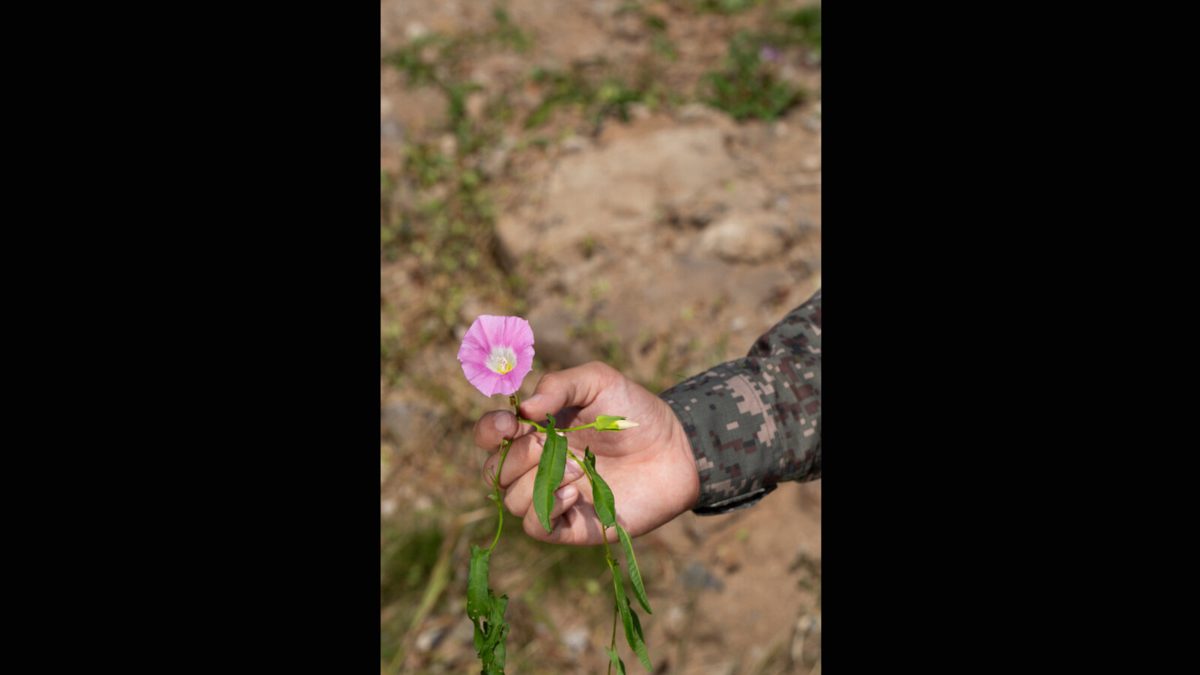
This series is the close-up side of a wider concern. In Scene, Yoneda photographs ground where wars were fought, the past lying under grass. Here the past lies under a lens. One is landscape, the other a desk. Both ask viewers to bring their own knowledge to see what is hidden.
In 2025 the series was shown in the ground floor library of the Daiwa Anglo-Japanese Foundation in London, as part of Faultlines. Among the bookshelves, the glasses of the dead seemed still to be reading.
Photography