
Essays · Contemporary Art
Wolfgang Laib. Pollen from Hazelnut.
Many springs, laid flat on one floor.
Buchmann Galerie · Buchmann Galerie
A yellow field in the atrium
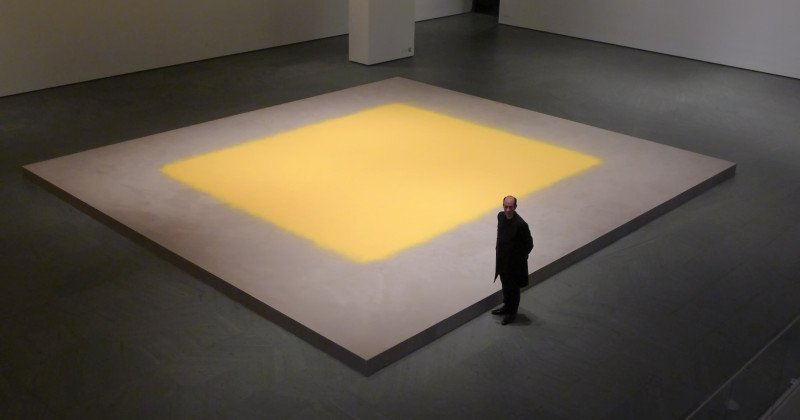
From 23 January to 11 March 2013, in the Donald B. and Catherine C. Marron Atrium of the Museum of Modern Art in New York, a yellow rectangle lay on the floor. It measured about 18 by 21 feet. No frame, no plinth, no glass.
The rectangle was made entirely of hazelnut pollen. According to Buchmann Galerie, which represents the artist, it was Wolfgang Laib's largest pollen installation to date.
Pollen does not look like paint. It is powder; each grain catches a little light, so the yellow does not sit flat but seems lit from within. Buchmann Galerie wrote that the work infused the space with a yellow luminosity.
Laib saw the atrium as the museum's innermost space, and compared it to a womb. He made the work for that place.
Nearly twenty years of gathering
None of this pollen was bought. Laib collected it himself from the plants around his home and studio in a small village in southern Germany, beginning in the mid 1990s. By 2013 that was close to twenty seasons.
Hazel flowers in late winter and early spring, for a short time. The gatherer has to be there at the right moment, work slowly, and stay patient for years, since each gathering yields only a little powder. The rectangle at MoMA is not just an area. It is time and labour laid down together.
To install it, Laib sifts the pollen onto the floor, layer over layer, until it forms an even surface. Visitors do not see this. They see only the result: a quiet yellow plane, as if it had always been there.
From medicine to living material
Wolfgang Laib was born in 1950 in Metzingen and studied medicine, then left it for art after time in India. Since the mid 1970s he has made works from one or two materials taken from nature: milk, marble, pollen, rice, beeswax. Buchmann Galerie notes that they are chosen for their purity and symbolic associations.
Laib seldom turns a material into another form. His work is to gather, to keep, to set down. The piece is almost the material presenting itself.
Of pollen, Laib has said that it is the potential beginning of a plant's life: as simple, as beautiful and as complex as that, and anyone alive knows pollen matters.
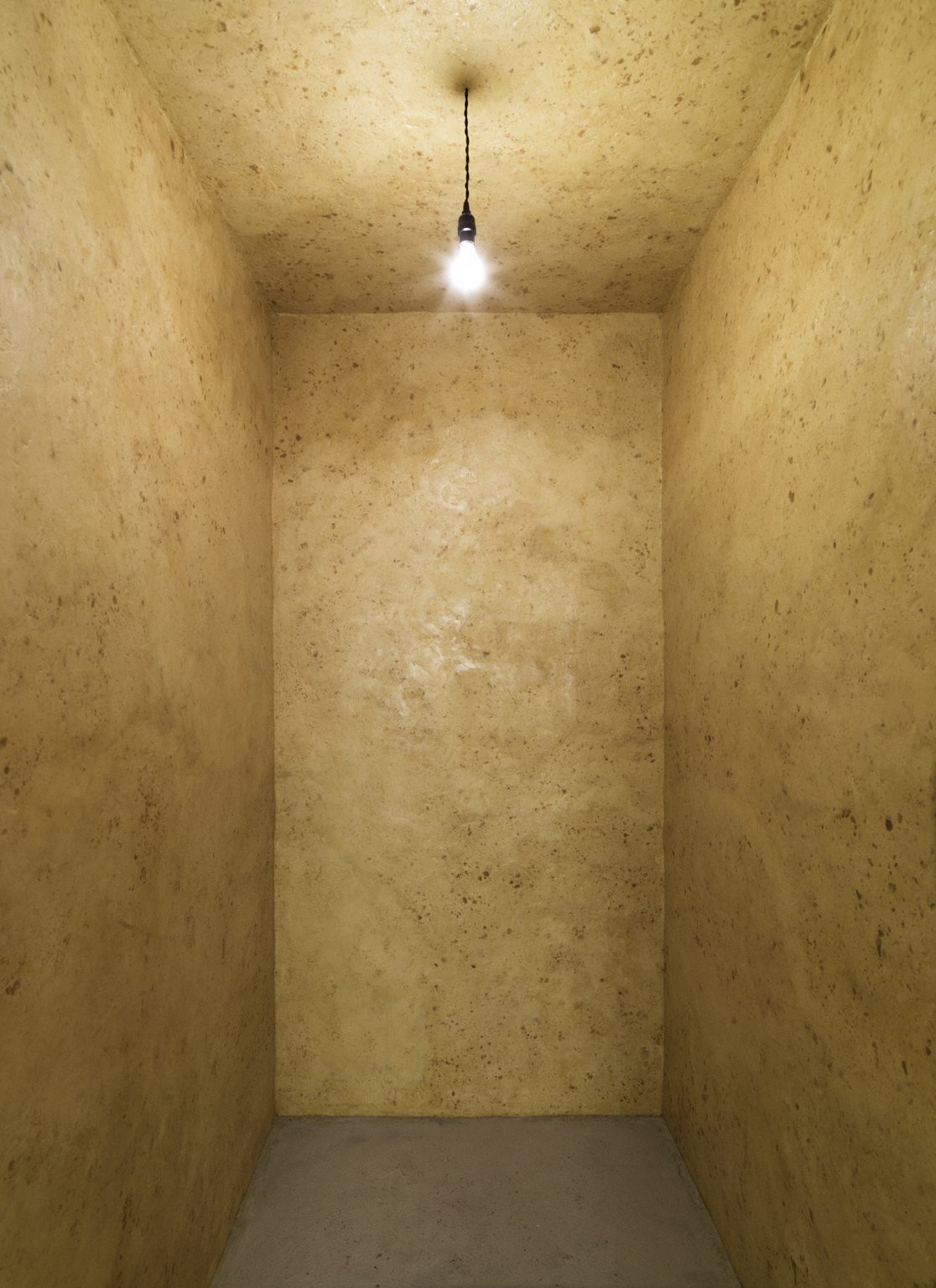
In the same year, in Washington, Laib made Wax Room, a small chamber lined with beeswax for The Phillips Collection. Side by side, the two works show two faces of one practice. Beeswax is what bees make after passing through seasons of flowers. Pollen is what flowers give away. Both are materials of spring, gathered by people rather than made.
Something you cannot touch
Pollen from Hazelnut is so fragile that a draught or a careless step could disturb it. It lies on the floor at the level of the feet, yet no one steps on it. Visitors stand at its edge or look down from the upper floors.
There is a quiet tension here. Pollen exists to fly, to be carried by wind to another flower. Laib holds it back, spreads it flat in a room without wind. The pollen cannot do its work. It just lies there to be looked at.
Perhaps that is why people stop. In a crowded museum in Manhattan, a yellow field from hazel trees in a German village reminds us that some things cannot be made faster. To have more, you can only wait for next spring.
Contemporary Art