
Essays · Photography
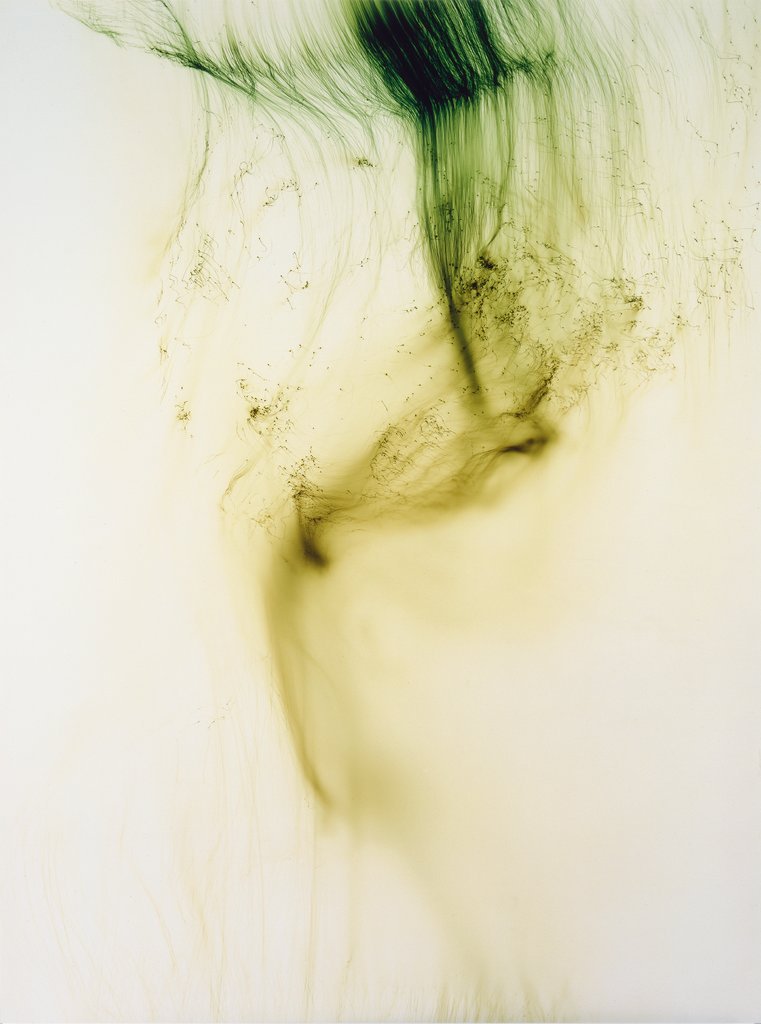
Wolfgang Tillmans. Freischwimmer 54.
Light passes; the paper remembers.
© Wolfgang Tillmans · Städel Museum
A photograph born in darkness
From a distance, Freischwimmer 54 looks like water. Fine threads of colour curl across a dark ground, thickening into a current in one place, dissolving like smoke in another. Some see drifting hair, some see weed, some see a drop of ink in water. Nobody is right, because the picture does not show any particular thing.
Wolfgang Tillmans made it in 2004, within the Freischwimmer series he began in 2003. The method has very few parts. No camera. No negative. No subject placed before a lens. Only a darkroom, a sheet of light sensitive paper, and small light sources held in his hand and moved across the surface.
Where the light lingers, the paper records it darkly. Where the hand moves fast, the line thins. The sheet is then developed like an ordinary colour print. What appears is the record of a movement, not the copy of a scene.
Number 54 is large: 237 by 181 centimetres, a C-print in a frame designed by the artist. The Städel Museum in Frankfurt acquired it in 2008 with funds from the Städelkomitee 21. Jahrhundert, the museum's patrons' group for twenty first century art.
A photograph without taking one
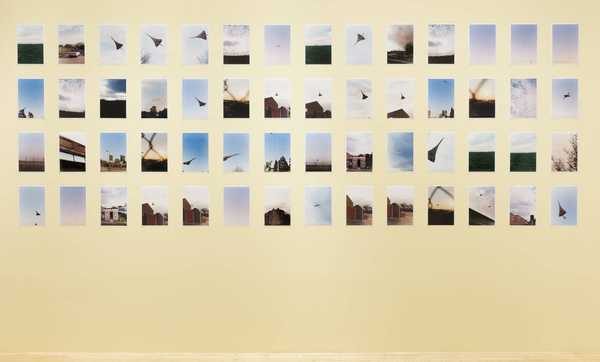
Tillmans became known in the 1990s for pictures of friends, club nights, objects on a windowsill, or the 56 pictures of an aeroplane in Concorde Grid. He photographed constantly. That is why Freischwimmer drew attention: a gifted photographer decided to put the camera down.
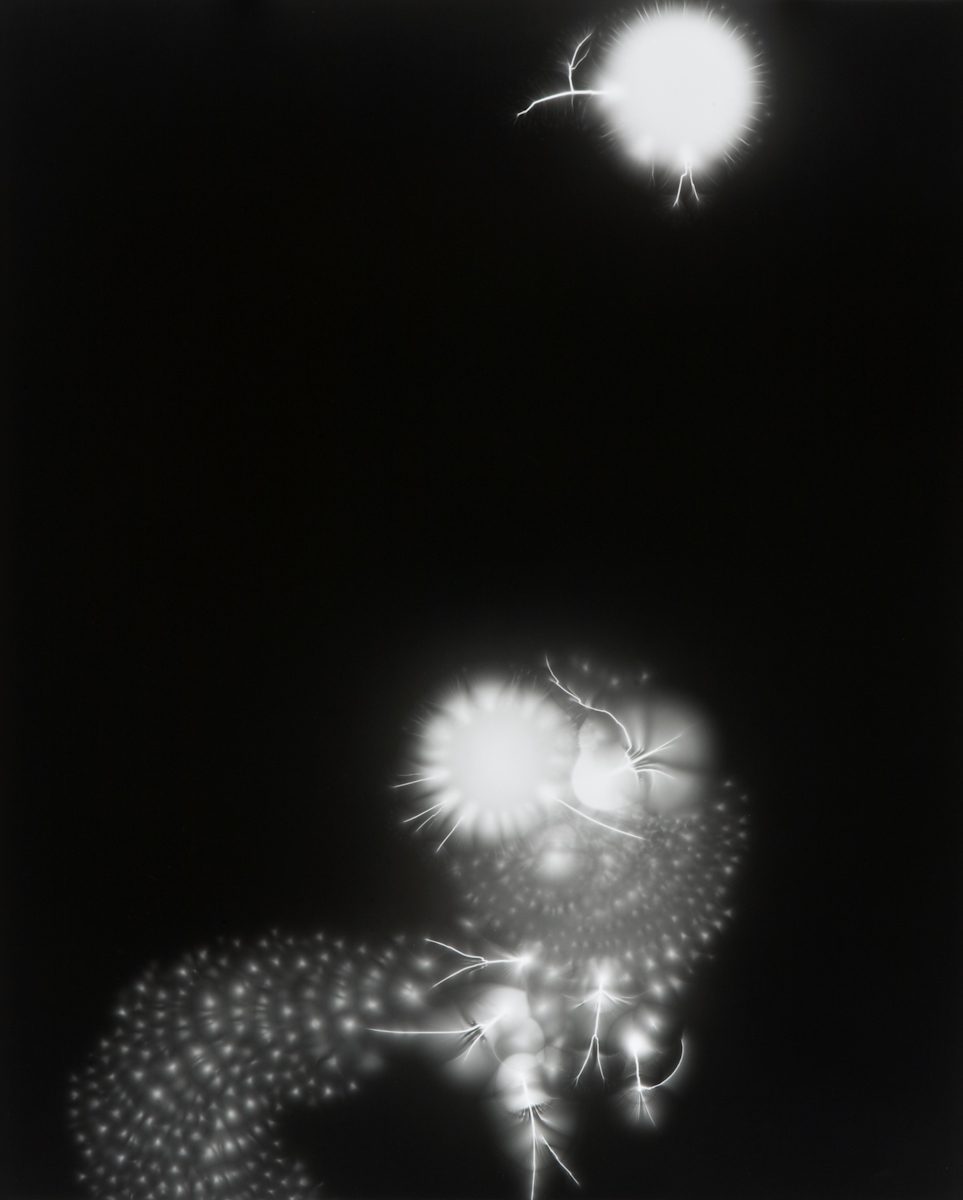
The idea was not entirely new. In the 1920s Man Ray and László Moholy Nagy laid objects on photographic paper and exposed them, producing shadows without a lens. But in those prints an object remained: a key, a coil of wire, leaving its silhouette. In Freischwimmer there is no object at all. The image is made only by light moved by a hand.
The Städel describes the series as a continuation of painting by photographic means. The remark is worth holding onto. A brushstroke records the movement of a wrist over canvas. A trace of light in Freischwimmer records the movement of a wrist in the dark. The difference is that a painter sees the stroke being made, and Tillmans does not. He sees the result only once the paper has passed through the chemistry.
Each sheet is therefore a meeting of intention and chance. He knows he wants a curve, but not exactly how fine it will be or how its colour will shift. The paper has its own say.
The name of a swim
In German, Freischwimmer means a free swimmer, someone who can swim alone without holding the side of the pool. The name fits what we see: the strands seem to float, attached to no form, with no floor and no shore.
The name also speaks about photography itself. Without a camera, the medium no longer holds on to the outside world. It no longer has to prove that a scene existed. It is reduced to light, paper and chemistry, the three most basic things it is made of.
What is striking is that the picture remains entirely real. It invents no scene, because there is no scene to invent. Every line on the paper is an event that happened: a moment when light touched the surface, in a dark room, on a day in 2004. The photograph does not report on the world. It certifies its own making.
Hung at the Städel, taller than a standing person, Freischwimmer 54 asks for time. Up close, the threads separate, overlap, burn bright in places and fade in others. From further back they gather into one current. Neither view replaces the other. The work needs both.
Photography