
Essays · Olfactory Art
Candice Lin. Swamp Fat.
Mùi không ở lại phòng trưng bày. Nó đi theo da người.
The smell does not stay in the gallery. It leaves on the skin.
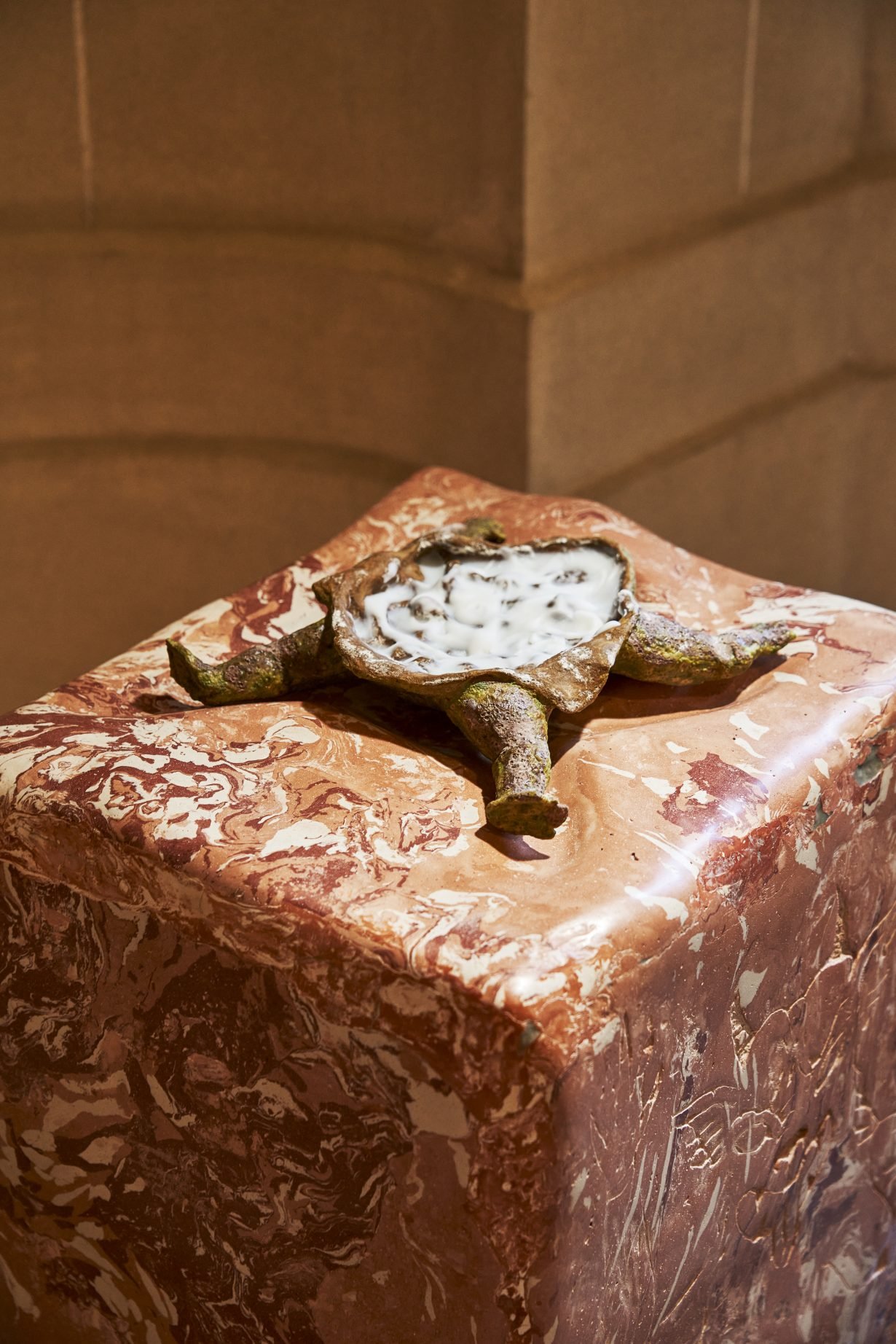
Photo: Jonathan Vanderweit. Courtesy the artist and François Ghebaly Gallery, Los Angeles · ArtReview
Một khối mỡ trên bệ
Nhìn từ xa, Swamp Fat giống một bàn thờ nhỏ hoặc một góc xưởng. Có gốm, đất sét, đất, vữa. Có những mặt phẳng bằng scagliola, một kỹ thuật giả đá cẩm thạch từ thạch cao và bột màu, vốn dùng trong các cung điện châu Âu. Kích thước thay đổi theo từng nơi trưng bày.
Ở giữa là mỡ lợn. Candice Lin đã ướp nó bằng một cách làm cũ của ngành nước hoa Pháp: để mỡ lạnh hút dần mùi từ vật liệu đặt lên nó, qua nhiều ngày, cho đến khi mỡ trở thành vật chứa mùi. Ngày xưa người ta dùng cách này để giữ mùi hoa nhài, hoa huệ. Lin dùng nó cho những mùi ngược lại.
Mùi trong khối mỡ là mùi của cơ thể và sự phân huỷ: tôm, thịt đang rữa. ArtReview gọi đó là những mùi mang tính quỷ ám. Không có hương hoa nào che đi.
Người xem được mời lấy một ít mỡ, xoa lên da mình. Rồi họ rời phòng trưng bày, mang theo mùi ấy trên tay, trên cổ, trên quần áo.
Điều đáng chú ý là tác phẩm không kết thúc trong phòng. Nó kết thúc ở đâu đó ngoài kia: trên xe buýt, trong bếp nhà ai, trên chiếc gối tối hôm ấy. Mỗi người xem trở thành một bệ trưng bày di động, và mùi đi xa hơn mọi bức tường của bảo tàng.
Saint Malo, một ngôi làng trên đầm lầy
Tác phẩm được làm cho Prospect.5, triển lãm định kỳ của New Orleans, mùa 2021 đến 2022. Lin nhìn về một nơi cách thành phố không xa: Saint Malo, trong vùng đầm lầy Louisiana.
Saint Malo được xem là khu định cư người châu Á đầu tiên trên đất Mỹ. Đó là một cộng đồng nhiều dòng máu: người Philippines, người bản địa, và những người Maroon, tức những người từng bị bắt làm nô lệ đã trốn thoát và lập làng ở nơi khó tìm tới. Họ sống bằng nước, bằng đầm, bằng tôm cá.
Ngày nay, chính mảnh đầm ấy đang lùi dần. Đất sụt, nước dâng, dấu vết vật chất của cộng đồng biến mất theo. Không còn nhiều thứ để nhìn. Vì vậy Lin không làm một mô hình ngôi làng. Cô làm một mùi.
Mùi tôm không phải ngẫu nhiên. Nó là mùi của nghề đã nuôi sống ngôi làng. Mùi thịt rữa cũng không ngẫu nhiên. Đầm lầy là nơi mọi thứ phân huỷ và trở lại thành đất.
Thuốc hay chất độc
Việc xoa mỡ lên da gợi tới một tập tục thời Trung cổ ở châu Âu. Người ta từng tin rằng thoa các thứ mỡ có mùi lên người sẽ giữ bệnh dịch tránh xa. Đó là thứ khoa học giả, nhưng nó cho thấy mùi đã từng được coi là một hàng rào giữa cơ thể và thế giới.
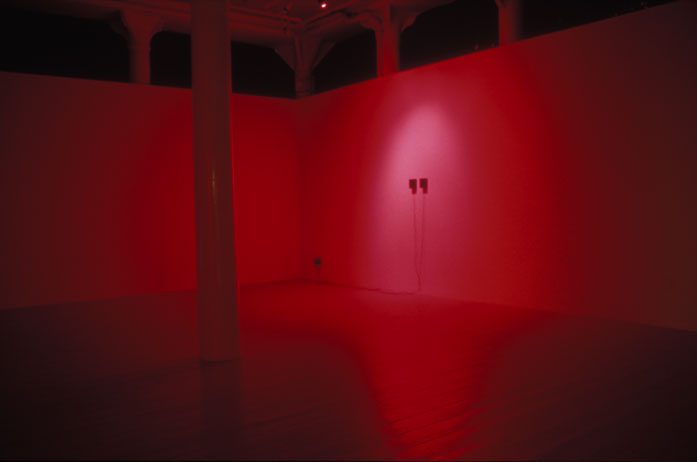
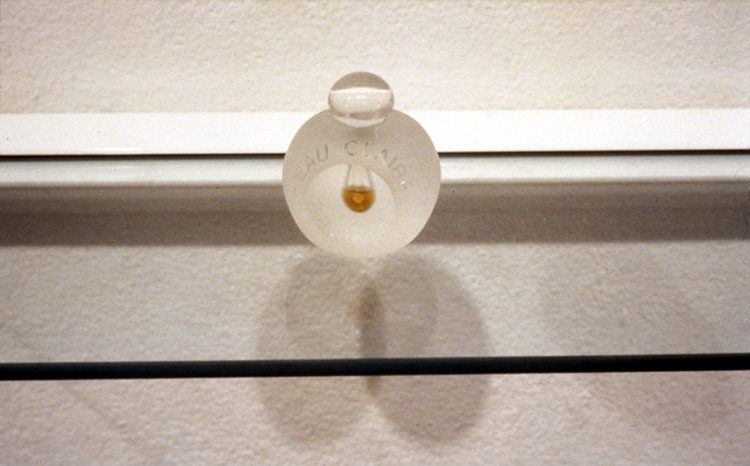
Lin lật tập tục ấy lại. Thứ được xoa lên da không phải mùi thơm để xua điều xấu, mà chính là mùi mà người ta muốn xua đi. Ranh giới giữa thuốc và chất độc, giữa sạch và bẩn, trở nên mờ. Đây là một mạch chạy qua nhiều tác phẩm của Lin, những nghiên cứu về lịch sử thuộc địa và những cuộc gặp gỡ giữa các chất liệu. Một ví dụ khác là Vomit Clock, nơi cơ thể cũng là trung tâm.
Năm 2023, Swamp Fat được trưng bày lại trong triển lãm Thick as Mud tại Henry Art Gallery, Đại học Washington, Seattle. Đầm lầy Louisiana đi xa hàng nghìn cây số, trong một khối mỡ.
Có một điều khó chịu nằm ngay trong cách tác phẩm vận hành. Người xem phải quyết định có chạm vào hay không. Chạm vào nghĩa là nhận lấy một mùi không đẹp, và để nó theo mình cả buổi. Không chạm nghĩa là đứng ngoài. Lin không nói bên nào đúng. Cô chỉ đặt khối mỡ ở đó, và để mũi mỗi người tự trả lời.
A block of fat on a plinth
From a distance, Swamp Fat looks like a small altar or a corner of a workshop. There is ceramic, clay, earth, mortar. There are surfaces of scagliola, a technique that imitates marble with plaster and pigment, once used in European palaces. Its dimensions change with each venue.
At the centre is lard. Candice Lin scented it using an old method from French perfumery: cold fat slowly absorbs the smell of materials laid on it over many days, until the fat itself becomes a vessel of scent. It was once used to hold jasmine and tuberose. Lin used it for the opposite.
The smells in the fat are of the body and of decay: shrimp, rotting flesh. ArtReview called them demonic. No flower covers them up.
Visitors are invited to take a little fat and rub it on their skin. Then they leave the gallery carrying the smell on their hands, their necks, their clothes.
What stands out is that the work does not end in the room. It ends somewhere outside: on a bus, in someone's kitchen, on a pillow that night. Each visitor becomes a moving plinth, and the smell travels further than any museum wall.
Saint Malo, a village on the swamp
The work was made for Prospect.5, New Orleans' recurring exhibition, in its 2021 to 2022 edition. Lin looked toward a place not far from the city: Saint Malo, in the Louisiana marshes.
Saint Malo is considered the first Asian settlement in the United States. It was a mixed community of Filipino, Indigenous and Maroon people, the last being those who escaped slavery and built villages in places hard to reach. They lived from water, from the marsh, from shrimp and fish.
Today the marsh itself is receding. Land sinks, water rises, and the material traces of the community go with it. Little is left to look at. So Lin did not build a model of the village. She made a smell.
Shrimp is not a random choice. It is the smell of the trade that fed the village. Rotting flesh is not random either. A swamp is where everything decays and returns to earth.
Remedy or poison
Rubbing fat on the skin recalls a medieval European practice. People once believed that smearing scented fats on the body would keep plague away. It was pseudoscience, but it shows that smell was once treated as a barrier between the body and the world.
Lin turns that practice over. What goes on the skin is not a pleasant smell to ward off harm but the very smell people wanted to ward off. The line between remedy and poison, clean and dirty, blurs. This runs through much of Lin's work, her research into colonial histories and encounters between materials. Another example is Vomit Clock, where the body is also at the centre.
In 2023, Swamp Fat was shown again in Thick as Mud at the Henry Art Gallery, University of Washington, Seattle. A Louisiana marsh travelled thousands of kilometres inside a block of fat.
There is a discomfort built into how the work operates. Each visitor must decide whether to touch it. Touching means accepting an unlovely smell and letting it follow you for hours. Not touching means staying outside. Lin does not say which is right. She leaves the fat there and lets each nose answer.
Olfactory Art