
Essays · Contemporary Art
James Turrell. Aten Reign.
Ánh sáng không chiếu vào vật. Ánh sáng là vật.
Light does not fall on the object. Light is the object.
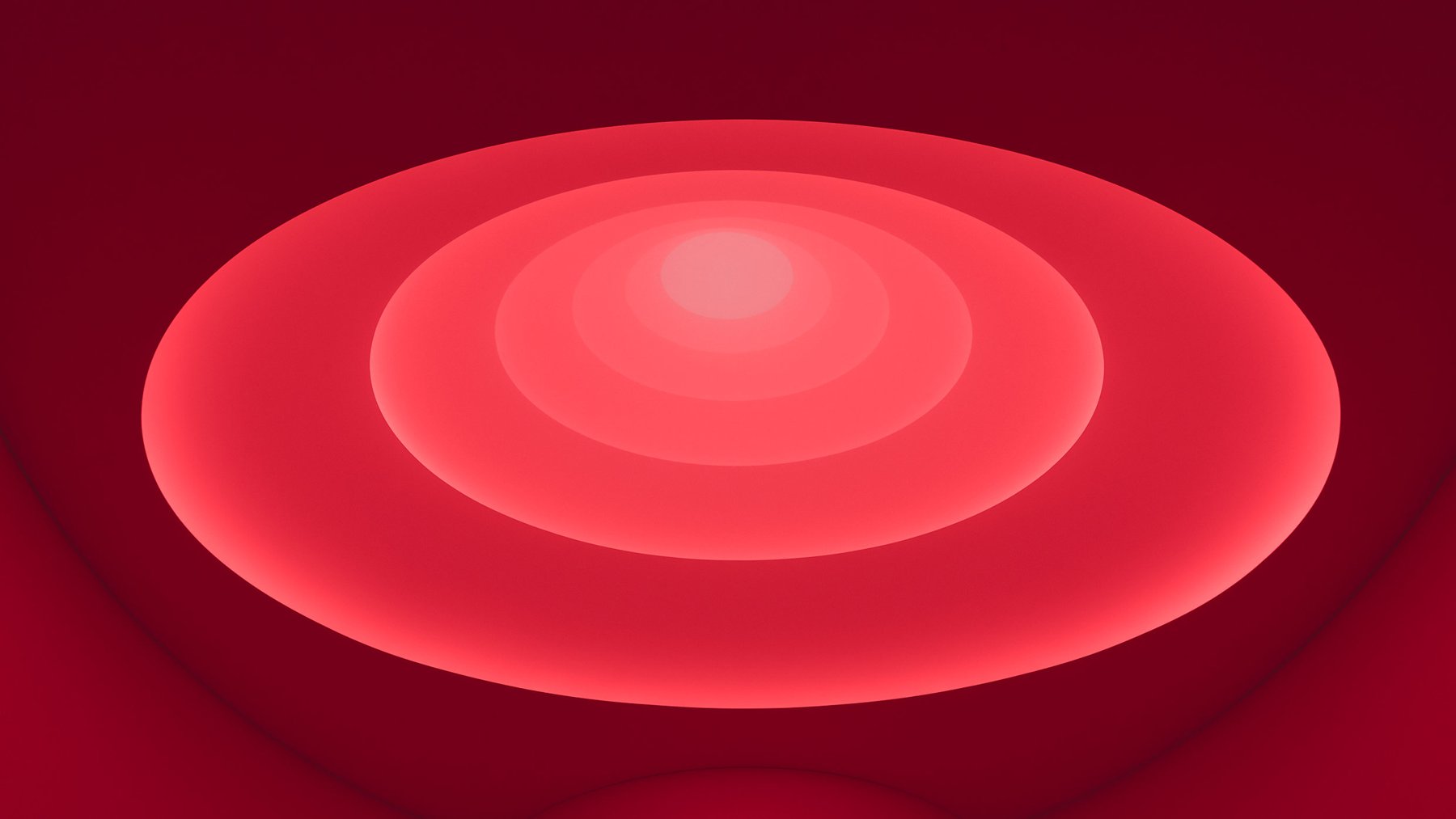
Solomon R. Guggenheim Museum · Solomon R. Guggenheim Museum
Một bảo tàng quay mặt lên trời
Rotunda của bảo tàng Solomon R. Guggenheim ở New York là một đường dốc xoắn ốc do Frank Lloyd Wright thiết kế, cuộn quanh một khoảng rỗng ở giữa, trên đỉnh là một giếng trời. Người ta quen đi lên dốc và nhìn xuống. Tranh treo dọc tường, khoảng rỗng ở giữa chỉ là nơi để ánh mắt đi qua.
Mùa hè năm 2013, từ ngày 21 tháng 6 đến ngày 25 tháng 9, James Turrell đảo ngược hướng nhìn đó. Aten Reign biến chính khoảng rỗng thành tác phẩm. Người xem đứng ở tầng trệt và nhìn lên.
Phía trên họ là một chuỗi vành elip lồng vào nhau, mỗi vành một sắc độ, trải dần về phía giếng trời. Ánh sáng nhân tạo và ánh sáng ban ngày trộn vào nhau trong cùng một khối. Màu đổi rất chậm, từ sắc này sang sắc khác, không có điểm dừng rõ ràng.
Theo bảo tàng, Aten Reign là một trong những lần biến đổi mạnh nhất mà toà nhà từng có. Nhưng không có vật gì được đặt vào không gian ấy để nhìn. Thứ được trưng bày là không khí và ánh sáng vốn đã ở đó.
Skyspace và miệng núi lửa
Turrell làm việc với ánh sáng từ cuối những năm 1960. Một dòng tác phẩm quen thuộc của ông là Skyspace: một căn phòng khoét lỗ trên trần, người ngồi bên dưới nhìn một mảnh trời bị cắt gọn trong khung. Bầu trời thôi là phông nền. Nó thành một mặt phẳng màu, gần như chạm tay được.
Guggenheim giới thiệu Aten Reign như việc đọc lại kiến trúc của Wright thành một Skyspace. Sự cởi mở với thiên nhiên, những đường cong, cảm giác không gian rộng, tất cả được giữ lại, chỉ đổi cách nhìn.
Tác phẩm cũng dẫn về dự án lớn nhất của Turrell: Roden Crater, một miệng núi lửa đã tắt ở sa mạc Arizona mà ông bắt đầu cải tạo từ năm 1979 thành một đài quan sát bầu trời bằng mắt thường. Dự án ấy vẫn chưa khép lại. Aten Reign giống một phiên bản thu nhỏ, đặt giữa thành phố, trong một toà nhà.
Cái tên Aten gợi tới đĩa mặt trời được thờ ở Ai Cập cổ. Một vị thần không có hình người, chỉ là một vòng sáng. Tác phẩm của Turrell cũng vậy: một vòng sáng, không có gì ở giữa.
Ba triển lãm trong một mùa hè
Đây là triển lãm đầu tiên của Turrell tại một bảo tàng ở New York kể từ năm 1980. Ngoài Aten Reign ở rotunda, các tác phẩm từ nhiều giai đoạn khác của ông được bày ở tầng Tower, như một đối trọng cho công trình mới.
Triển lãm do Carmen Giménez và Nat Trotman phụ trách, tổ chức cùng Bảo tàng Nghệ thuật Quận Los Angeles và Bảo tàng Mỹ thuật Houston. Mùa hè năm ấy, ba bảo tàng ở ba thành phố cùng mở ba triển lãm lớn về Turrell.
Ở mỗi nơi, câu hỏi gần như giống nhau: nếu bỏ đi tranh, tượng, khung, bệ, thì còn lại gì để nhìn? Câu trả lời của Turrell là chính việc nhìn.
Nhìn thấy mình đang nhìn
Trong Aten Reign, mắt không có chỗ bám. Không có đường viền rõ, không có vật thể, không có khoảng cách dễ đo. Màu dường như lơ lửng ngay trước mặt, dù nó nằm cách người xem nhiều tầng lầu.
Đứng lâu, người ta bắt đầu không chắc mình thấy gì. Màu này là của đèn hay của trời? Vành kia gần hay xa? Sự không chắc ấy chính là chất liệu. Turrell không kể một câu chuyện về ánh sáng. Ông để người xem nhận ra mắt mình tự dựng nên hình ảnh ra sao.
Đó là lý do tác phẩm cần thời gian. Nhìn lướt, nó chỉ là một trần nhà đẹp. Nhìn lâu, nó thành một câu hỏi về tri giác. Người rời khỏi rotunda mang theo một thói quen nhỏ: ngước lên, và để ý đến khoảng không trên đầu.
Khi triển lãm đóng cửa, các vành sáng được tháo xuống. Toà nhà trở lại như cũ. Nhưng khoảng rỗng ở giữa, từ đó, khó mà nhìn như một chỗ trống nữa. Người từng đứng dưới Aten Reign biết rằng nó luôn đầy, chỉ là đầy thứ mắt ít khi chịu dừng lại. Có thể đọc thêm về một nghệ sĩ khác cùng thế hệ, cũng lấy ánh sáng tự nhiên làm vật liệu, trong bài Robert Irwin và untitled (dawn to dusk).
A museum turned toward the sky
The rotunda of the Solomon R. Guggenheim Museum in New York is a spiral ramp designed by Frank Lloyd Wright, coiling around an empty centre with a skylight at the top. Visitors usually walk up and look down. Paintings hang along the wall; the void in the middle is just where the gaze passes through.
In the summer of 2013, from 21 June to 25 September, James Turrell reversed that direction. Aten Reign made the void itself the work. Visitors stood on the ground floor and looked up.
Above them hung a series of nested elliptical rings, each a different tone, stepping up toward the skylight. Artificial light and daylight mixed in a single volume. The colour shifted slowly from one tone to the next, with no clear point of arrival.
The museum described Aten Reign as one of the most dramatic transformations the building had ever seen. Yet nothing was placed in that space to be looked at. What was on view was the air and the light already there.
Skyspace and crater
Turrell has worked with light since the late 1960s. One of his best known forms is the Skyspace: a room with an opening in the ceiling, where people sit and watch a piece of sky cut cleanly by the frame. The sky stops being a backdrop. It becomes a plane of colour that seems almost within reach.
The Guggenheim presented Aten Reign as a reading of Wright's architecture as a Skyspace. Its openness to nature, its curves, its sense of space were all kept; only the way of looking changed.
The work also points to Turrell's largest project, Roden Crater, an extinct volcano in the Arizona desert that he began shaping in 1979 into an observatory for the naked eye. That project is still open. Aten Reign reads like a small version of it, set inside a building in the middle of a city.
The name Aten recalls the sun disc worshipped in ancient Egypt. A god without a human form, only a ring of light. Turrell's work is the same: a ring of light with nothing at its centre.
Three exhibitions in one summer
This was Turrell's first exhibition in a New York museum since 1980. Alongside Aten Reign in the rotunda, works from other periods of his career were shown in the Tower Level galleries as a counterpoint.
The show was curated by Carmen Giménez and Nat Trotman and organised with the Los Angeles County Museum of Art and the Museum of Fine Arts, Houston. That summer, three museums in three cities held three major Turrell exhibitions.
In each, the question was nearly the same: if you remove painting, sculpture, frame and plinth, what is left to look at? Turrell's answer is looking itself.
Seeing yourself see
In Aten Reign the eye has nothing to hold on to. No sharp edges, no object, no distance easy to judge. The colour seems to hover just in front of you, though it is several floors away.
After a while you are no longer sure what you see. Is this colour from the lamps or the sky? Is that ring near or far? The uncertainty is the material. Turrell does not tell a story about light. He lets viewers notice how their own eyes build an image.
That is why the work needs time. At a glance it is a beautiful ceiling. Looked at for longer, it becomes a question about perception. People left the rotunda with a small new habit: looking up, and paying attention to the space overhead.
When the exhibition closed, the rings came down and the building returned to itself. But the void at its centre is hard to see as empty after that. Anyone who stood under Aten Reign knows it is always full, only full of something the eye rarely stops for. For another artist of the same generation who works with natural light, read Robert Irwin and untitled (dawn to dusk).
Contemporary Art