
Essays · Modern Art
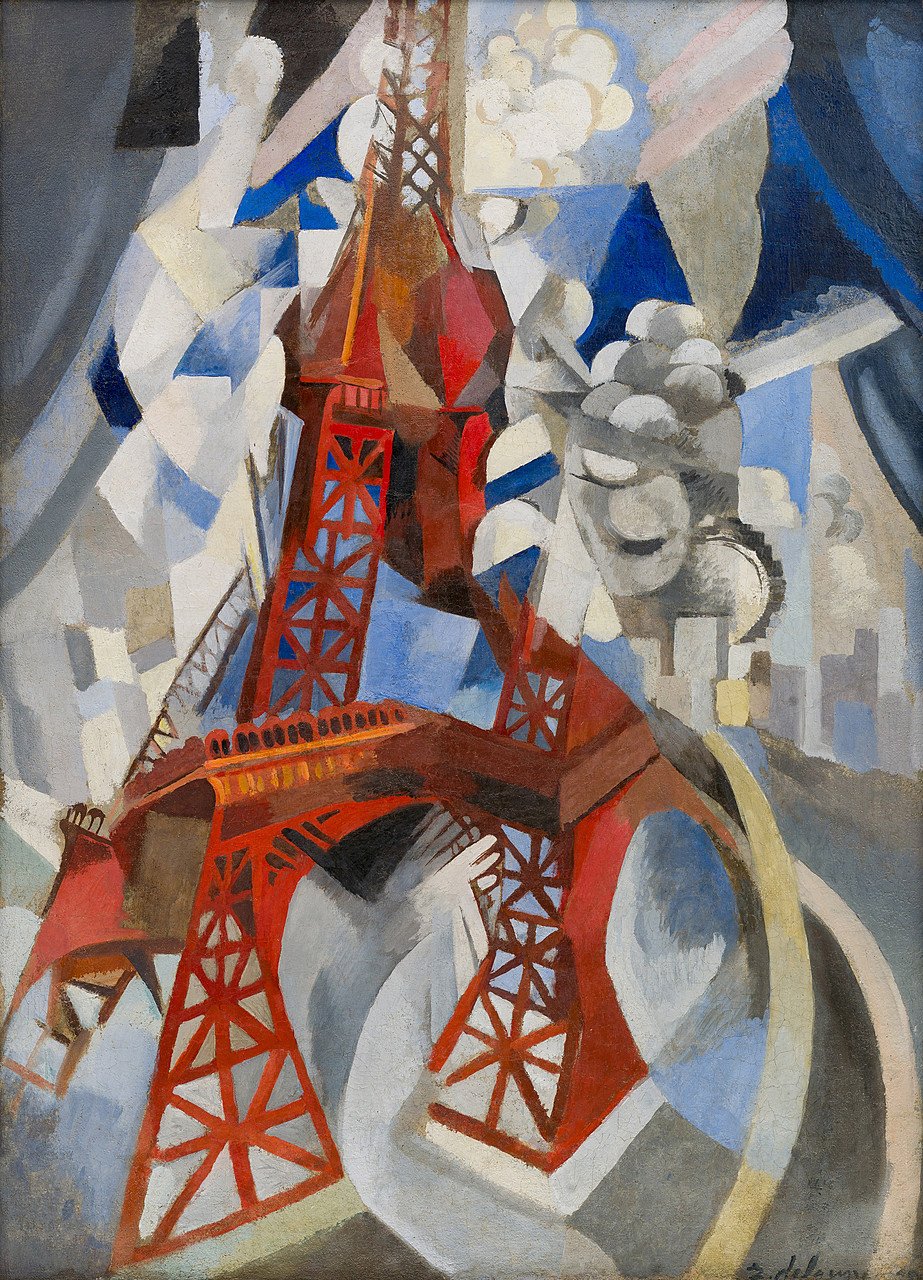
Robert Delaunay. Red Eiffel Tower.
Một ngọn tháp, nhìn từ mọi phía cùng lúc.
One tower, seen from every side at once.
Solomon R. Guggenheim Museum · Solomon R. Guggenheim Museum
Một ngọn tháp màu đỏ
Red Eiffel Tower là một bức sơn dầu khổ đứng, cao khoảng một mét hai mươi lăm, rộng hơn chín mươi phân. Robert Delaunay vẽ nó trong hai năm 1911 và 1912. Bức tranh thuộc Bộ sưu tập sáng lập Solomon R. Guggenheim, tại bảo tàng Guggenheim ở New York.
Ngọn tháp chiếm trọn chiều cao của tranh. Nó thon dần lên trên, và đỉnh tháp biến mất ở mép toan, như vẫn còn tiếp tục ở đâu đó phía trên. Tháp được tô màu đỏ son, một màu lạ với ta hôm nay. Theo Guggenheim, đó là màu gợi lại vẻ ngoài của tháp trong Hội chợ Thế giới ở Paris năm 1889, năm nó được dựng lên.
Thân tháp không đặc. Nó được dựng bằng những thanh dầm đan chéo, như lưới tam giác hay những nét gạch chéo. Nhờ vậy khối sắt khổng lồ trông nhẹ, gần như có gió thổi qua.
Cái nhìn bị tháo rời
Nhìn kỹ hai chân tháp phía trước, ta thấy chúng không theo luật phối cảnh nào. Chân bên phải được vẽ như ta đang đứng nhìn vào cạnh góc, thấy được hai mặt. Chân bên trái thì được nhìn thẳng, chỉ một mặt phẳng. Hai góc nhìn không thể cùng có, nhưng chúng cùng có mặt.
Kết quả là một cảm giác chuyển động. Có thể ta đang đi vòng quanh tháp. Cũng có thể chính ngọn tháp đang bước, hai chân vặn vào nhau, lê từng bước nặng nề. Hai chân phía sau chỉ được gợi bằng những nét đỏ nhạt hơn, nằm lùi sau.
Quanh tháp là một bức khảm những mảng xám, be và xanh. Nhìn gần mới thấy đó là thành phố: những khối chữ nhật nhỏ như dãy nhà cao tầng ở xa, những cụm trắng xám như mây hay khói. Ở hai góc trên, những dải cong rủ xuống rồi uốn ra ngoài, như nếp rèm cửa. Guggenheim giới thiệu đây là bức mở đầu cho loạt tranh vẽ tháp Eiffel và khu vực quanh nó như được nhìn qua khung cửa có rèm.
Nhà thơ Blaise Cendrars, bạn của Delaunay, từng mô tả cách làm này: Delaunay tháo tung ngọn tháp để đi vào bên trong cấu trúc của nó, cắt cụt nó, nghiêng nó, để phơi ra toàn bộ ba trăm mét chiều cao khiến người ta chóng mặt.
Từ Lập thể đến Orphism
Guggenheim xếp bức tranh này vào Lập thể và Trường phái Paris. Nó ra đời đúng lúc các hoạ sĩ Paris đang chia nhỏ vật thể thành những mặt phẳng để nhìn chúng cùng lúc từ nhiều phía. Delaunay dùng cách chia ấy, nhưng ông quan tâm đến màu và chuyển động nhiều hơn là đến khối.
Năm 1912, nhà thơ Guillaume Apollinaire đặt ra chữ Orphism để gọi những hoạ sĩ đang rời Lập thể để đi về một thứ hội hoạ trừu tượng, gợi nhiều giác quan cùng lúc. Cái tên lấy từ Orpheus, người hát trong thần thoại Hy Lạp có thể lay động cả thiên nhiên. Robert Delaunay, Sonia Delaunay, František Kupka và Francis Picabia là những cái tên gắn với nó. Họ tìm cách bắt lấy tính đồng thời của đời sống hiện đại: mọi thứ xảy ra cùng một lúc.
Ảnh hưởng của Delaunay lan nhanh. Những mặt phẳng màu trong suốt trên bầu trời trong Paris through the Window của Marc Chagall cho thấy Chagall đã học từ ông. Năm 1918, ở Madrid, Delaunay làm bìa cho một tập thơ mỏng tên Tour Eiffel của nhà thơ Vicente Huidobro. Bài thơ ấy lại được gợi ra từ chính những bức tháp Eiffel của ông.
Vì sao lại là tháp Eiffel
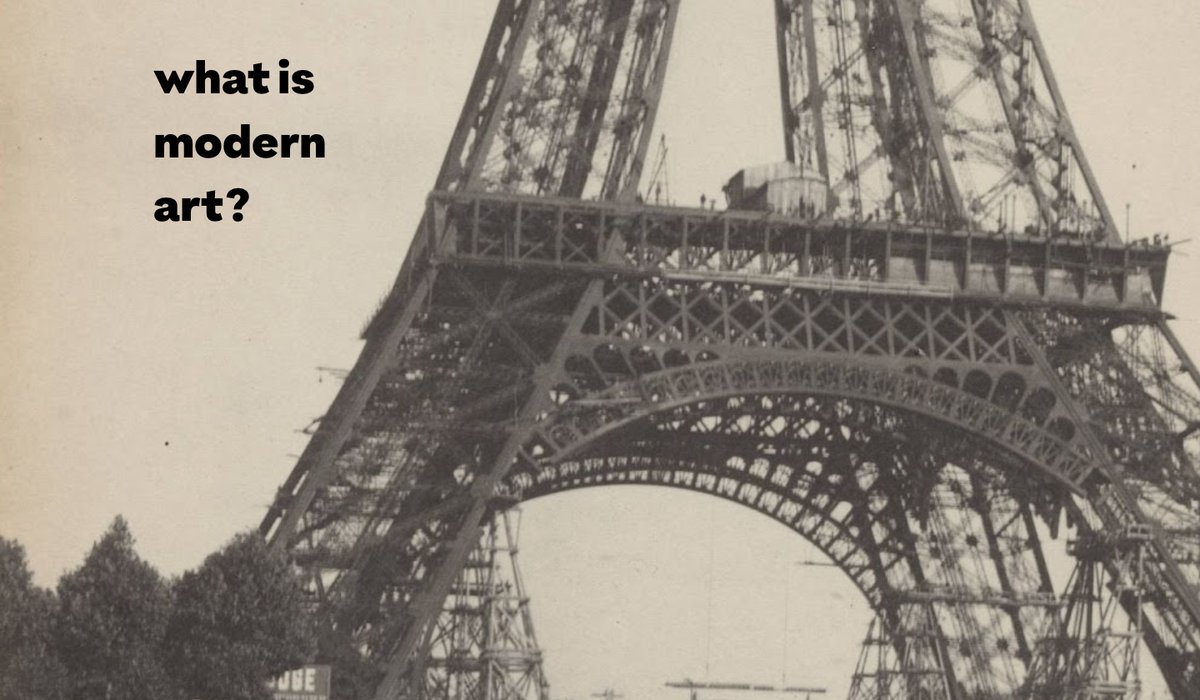
Khi Delaunay vẽ, tháp Eiffel mới hơn hai mươi năm tuổi. Nó là công trình bằng sắt, cao ba trăm mét, dựng cho một hội chợ, và nhiều người Paris từng thấy nó thô kệch. Với Delaunay và bạn bè, nó là hình ảnh rõ nhất của thời đại mới: sắt, tốc độ, chiều cao.
Ông vẽ nó đi vẽ lại nhiều lần trong những năm ấy. Mỗi lần, ngọn tháp lại nghiêng một kiểu, vỡ một kiểu. Trong bức màu đỏ này, nó không còn là một công trình đứng yên mà giống một vật sống, đang rung lên giữa những toà nhà.
Năm 2024, trong dịp triển lãm lớn về Orphism tại Guggenheim, một bức Eiffel Tower khác của Delaunay trong bộ sưu tập được làm sạch. Những chuyển màu tinh tế và cảm giác chuyển động trong tranh hiện ra rõ hơn. Hơn một trăm năm sau, ngọn tháp của ông vẫn chưa chịu đứng yên.
A red tower
Red Eiffel Tower is an upright oil painting, about 125 centimetres high and just over 90 wide. Robert Delaunay painted it across 1911 and 1912. It belongs to the Solomon R. Guggenheim Founding Collection at the Guggenheim Museum in New York.
The tower fills the full height of the picture. It narrows as it rises, and its tip vanishes at the edge of the canvas, as if it carried on somewhere above. It is painted vermilion, a colour that surprises us today. According to the Guggenheim, it recalls how the tower looked at the 1889 World's Fair in Paris, the year it was built.
The body of the tower is not solid. It is made of crossing beams, like triangular lattice or hatching. The huge iron mass looks light, almost as if wind could pass through.
A dismantled gaze
Look at the two front legs and they obey no rule of perspective. The right leg is seen as if we faced its corner, showing two sides. The left leg is seen straight on, a single plane. Two views that cannot coexist, coexist.
The result is a sense of motion. Perhaps we are walking around the tower. Or perhaps the tower itself is walking, its legs twisting toward each other in heavy, uneven steps. The rear legs are only suggested, in softer reds set further back.
Around the tower lies a mosaic of grey, beige and blue. Up close it becomes a city: small rectangles like distant blocks of flats, white and grey clusters like clouds or smoke. In the upper corners, curved bands drop and bend outward like the folds of curtains. The Guggenheim presents this as the first in his series showing the tower and its surroundings as if seen through a curtained window.
The poet Blaise Cendrars, Delaunay's friend, described the method: Delaunay took the tower apart to get inside its structure, cut it short and tilted it, to lay bare all three hundred dizzying metres of its height.
From Cubism to Orphism
The Guggenheim places the painting under Cubism and the School of Paris. It was made just as Paris painters were breaking objects into planes to see them from several sides at once. Delaunay used that breaking, but he cared more for colour and motion than for mass.
In 1912 the poet Guillaume Apollinaire coined the word Orphism for painters moving away from Cubism toward an abstract art that spoke to several senses at once. The name came from Orpheus, the singer of Greek myth whose music could move nature itself. Robert Delaunay, Sonia Delaunay, František Kupka and Francis Picabia are the names tied to it. They wanted to catch the simultaneity of modern life: everything happening at once.
Delaunay's influence travelled fast. The translucent planes of colour in the sky of Marc Chagall's Paris through the Window show what Chagall learned from him. In 1918, in Madrid, Delaunay designed the cover of a slim book of Vicente Huidobro's poem Tour Eiffel, a poem inspired by these very tower paintings.
Why the Eiffel Tower
When Delaunay painted it, the tower was barely more than twenty years old. It was an iron structure three hundred metres tall, built for a fair, and many Parisians had found it crude. For Delaunay and his friends it was the clearest image of a new age: iron, speed, height.
He painted it again and again in those years. Each time it tilted differently, broke differently. In this red version it is no longer a fixed monument but something closer to a living thing, trembling among the buildings.
In 2024, during a major Orphism exhibition at the Guggenheim, another of Delaunay's Eiffel Tower paintings in the collection was cleaned, bringing back its subtle colour shifts and sense of movement. More than a century on, his tower still refuses to stand still.
Modern Art