
Essays · Photography
Alessandra Sanguinetti. On the Sixth Day.
People and animals were made on the same day.
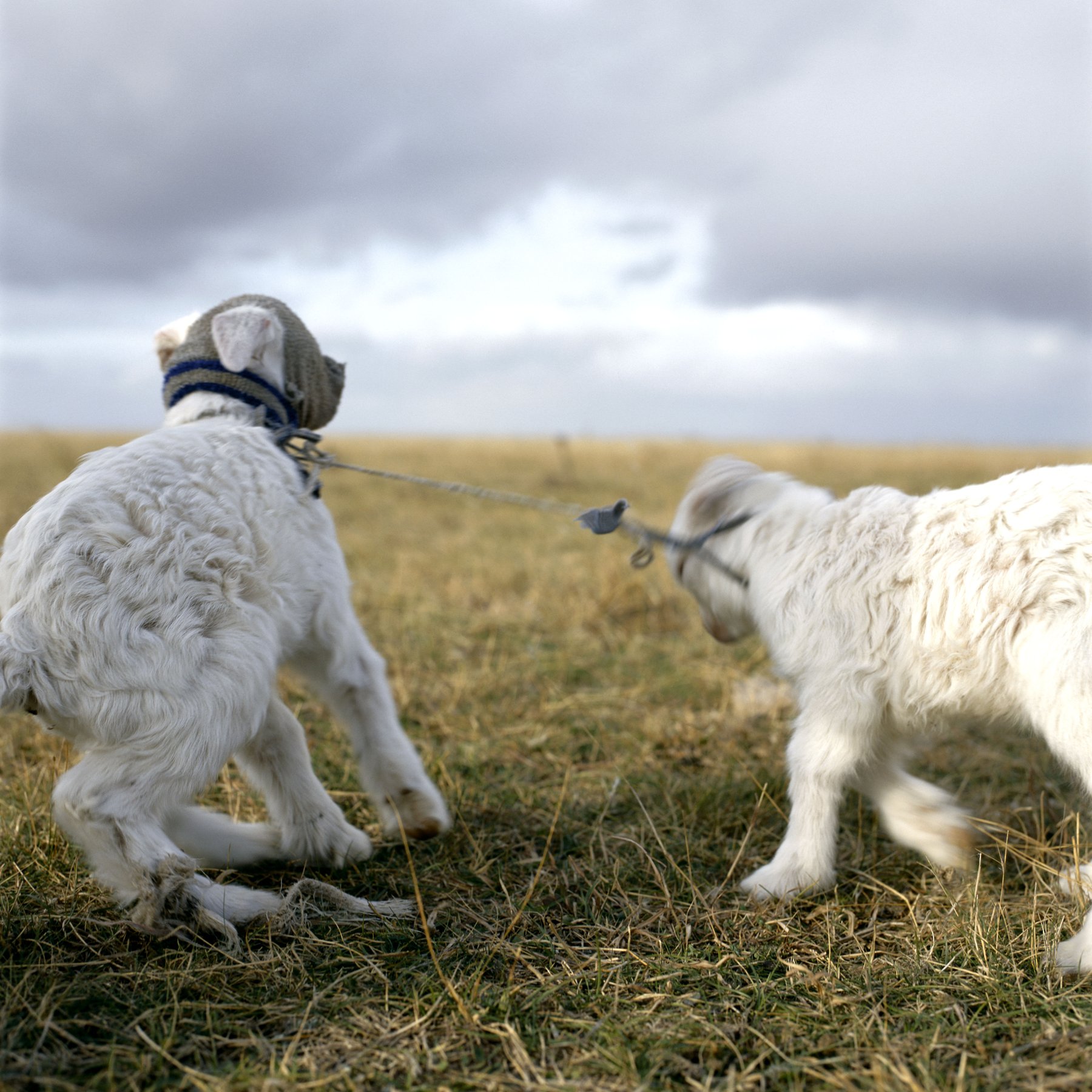
© Alessandra Sanguinetti · Magnum Photos
A farm in Partido de Guido
In 1996 Alessandra Sanguinetti was driving through the countryside around Buenos Aires when she stopped at a small farm. It lay in Partido de Guido, in Buenos Aires province, out on the wide flat grassland of the Pampas.
She is a photographer who grew up in Argentina and later became a member of Magnum Photos. The farm she found that year, with the animals of a woman named Juana, became the subject of her first major body of work.
She went back many times over many years. The pictures in the series carry dates from the late 1990s to the mid 2000s. In 2005 Nazraeli Press published the book On the Sixth Day.
This is a place of subsistence farmers. The animals are not pets, nor the stock of a large ranch. They live beside people, are fed and cared for, and one day are killed for food.
Rabbits, horses, pigs, geese
Sanguinetti's pictures are full of animals. Stray dogs. Cows standing in a field. Horses, pigs, ducks, geese, goats, chickens. Lambs. Rabbits. Cowhides drying on a fence.
She photographed them at every moment. Newborn. Running. Resting in the sun. Caught, tied, slaughtered. Reduced to a part of a body hanging up or laid on a table.
Colour makes everything plain. There is no darkness to hide death and no flattering light to decorate life. The colours of grass, of hide, of blood appear as they are.
People appear less often than animals, and when they do, they are working. A pair of hands holding an animal. Someone standing among the herd. No one poses. Each gesture is part of daily work on the farm.
The sixth day
The title comes from Genesis. In that account, on the sixth day the land animals and humankind were made. They share a birthday.
The name carries no direct religious message in the pictures. It offers a frame. If people and animals were made on the same day, what is the bond between them? People tend animals, then eat them. Animals live because of people, then die by them. On the farm these are not contradictions. They are one cycle.
Sanguinetti does not soften the cycle. Nor does she make it frightening. There is tenderness and there is cruelty, and both are equally ordinary. The cruelty belongs to no one in particular. It belongs to farm life, where food comes from animals whose faces you know.
City viewers may be uncomfortable. That is what the work makes clear: most of us have forgotten that food was once a living creature.
Why it stays
On the Sixth Day looks directly at something modern life tends to hide. It shows life and death walking side by side, without drama.
Beside Sally Mann's Immediate Family, we see two photographers who picture rural life without making it prettier. Mann photographed her children in the Virginia countryside. Sanguinetti photographed people and animals on the Pampas. Both let difficult things rest quietly in the frame.
She has another long project in rural Argentina, The Adventures of Guille and Belinda. But On the Sixth Day is where it all began: a farm, a woman, and her animals.
Photography