
Essays · Photography
Zoe Leonard. Al río / To the River.
The river does not know it is a border.
MCA Australia · MCA Australia
A river as a border
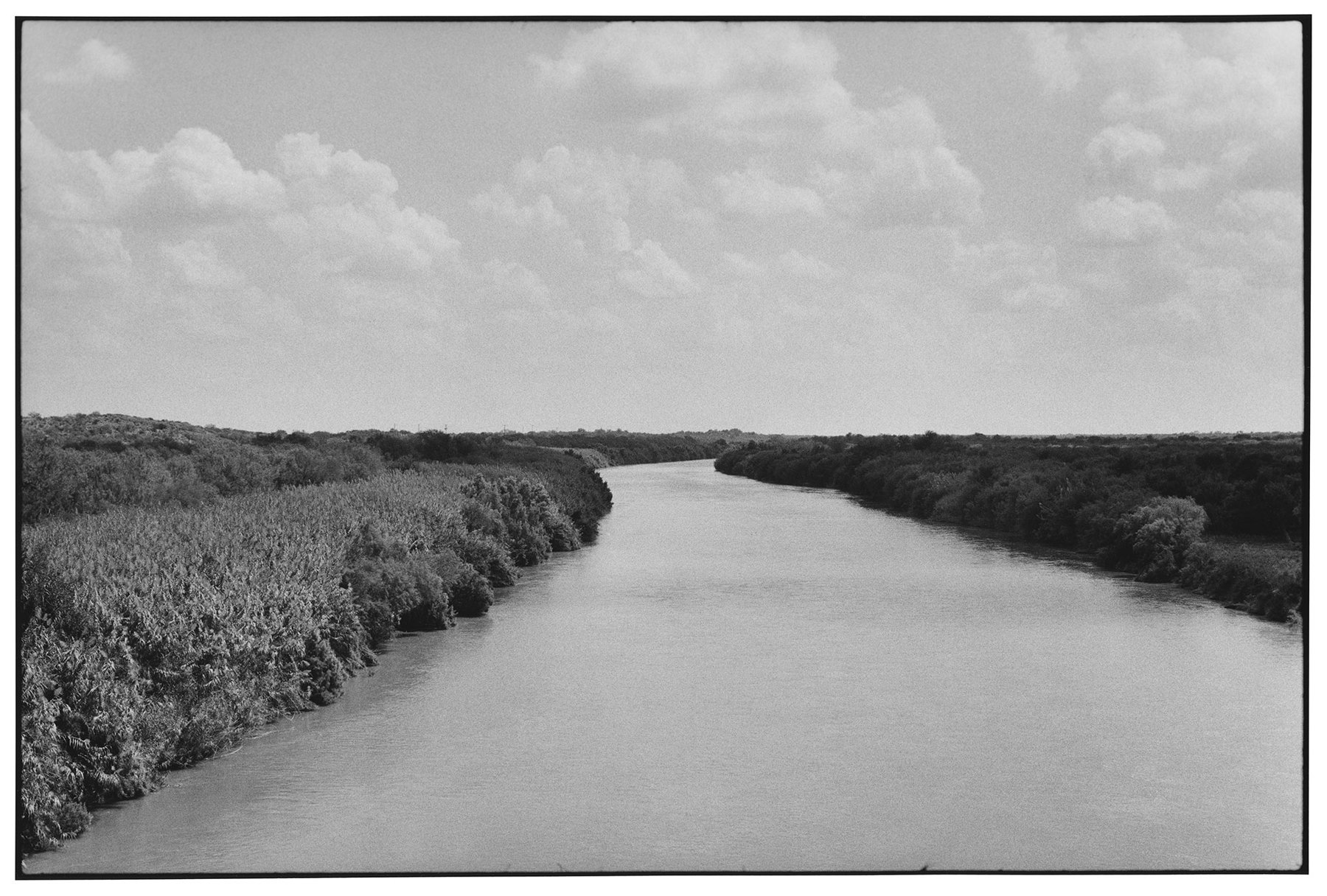
The Rio Grande, called the Río Bravo in Mexico, runs a long way as the boundary between the United States and Mexico. On the map it is a line. On the ground it is water, sand, reeds, bends that shift with the seasons.
In 2016 Zoe Leonard began a photographic project along that stretch, some 1,200 miles, from Ciudad Juárez and El Paso down to the Gulf of Mexico. She travelled it in stages, stopping and starting over about four years of fieldwork. The project as a whole took about six years, to 2022.
A project like this asks for time more than technique. Twelve hundred miles of river cannot be photographed in one trip. Each return finds the river slightly changed: water higher or lower, sandbars moved, the banks recoloured by the season. Travelling in stages is not the project's limit. It is how the project sees.
Its title is in two languages, Al río / To the River. From the name onward, the river belongs to both sides. Leonard does not choose one.
What lies along the banks
Most of the pictures are black and white, high in contrast, printed on gelatin silver paper. A smaller part are colour C-prints. According to published accounts, the full project includes more than five hundred black and white prints and about fifty colour prints.
The pictures show water and banks, but also what people have built around the river: farms, ranches, border crossings, sections of wall, small ferries between the banks, checkpoints. The river passes all of it without changing course.
No single picture tells the whole story. Some frames are only a patch of water. Some show a structure on the bank. It is the sequence that makes the river appear, and the viewer has to join the pieces.
When water is given a task
The question behind the project is simple and hard: what does it mean when a body of water is made to do political work? Water knows no border. It flows, erodes, deposits, shifts. Yet laws, fences and guns lean on it.
Leonard sets pictures of land and water beside pictures of fences, crossings, checkpoints. The two kinds cannot be separated. A sandbar and a stretch of wall may be a few steps apart. The river is where ecology, history and politics overlap.
The project draws no conclusion. It offers no slogan. It lays the river out at its real length: slowly, in many sections, in many layers.
Through several museums
In 2022 Al río / To the River was shown at Mudam Luxembourg and the Musée d'Art Moderne de Paris. It also went to the Museum of Contemporary Art Australia in Sydney. In 2025 the Chinati Foundation in Marfa, Texas, gave it its first showing in the Americas, not far from the river itself.
That matters. In Europe or Australia the river is a distant image. In Marfa a viewer can drive to its banks in a few hours. The same pictures, a very different distance between image and thing.
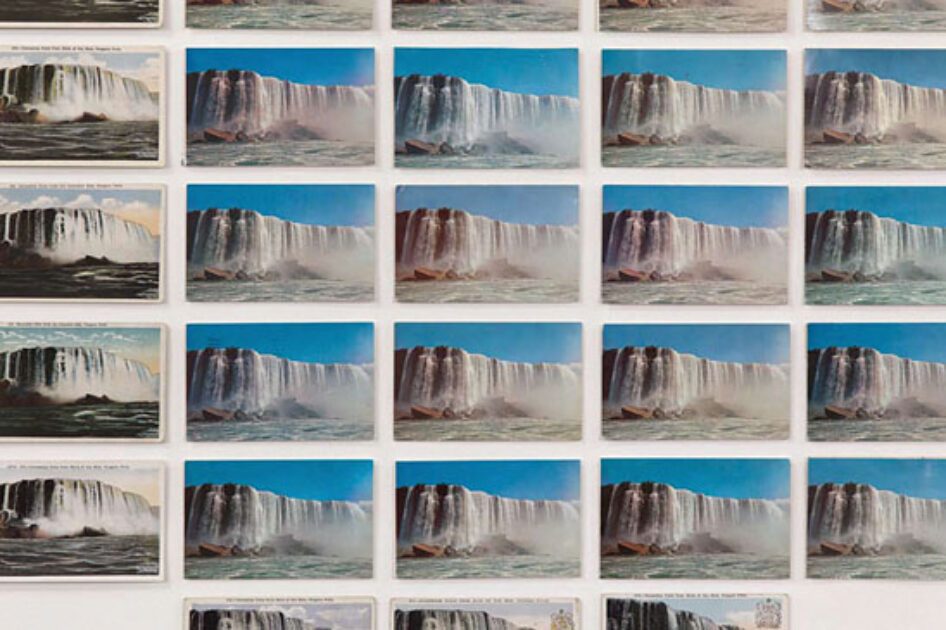
Earlier, in You see I am here after all, Leonard gathered other people's postcards of a waterfall. Here she walked and photographed herself, section by section. Both works ask about water and place, from opposite directions. Another river, seen closer and without borders, appears in Susan Derges. River Taw.
Photography