
Essays · Photography
An-My Lê. Small Wars.
A war played again, by people who were never there.
A war on weekends
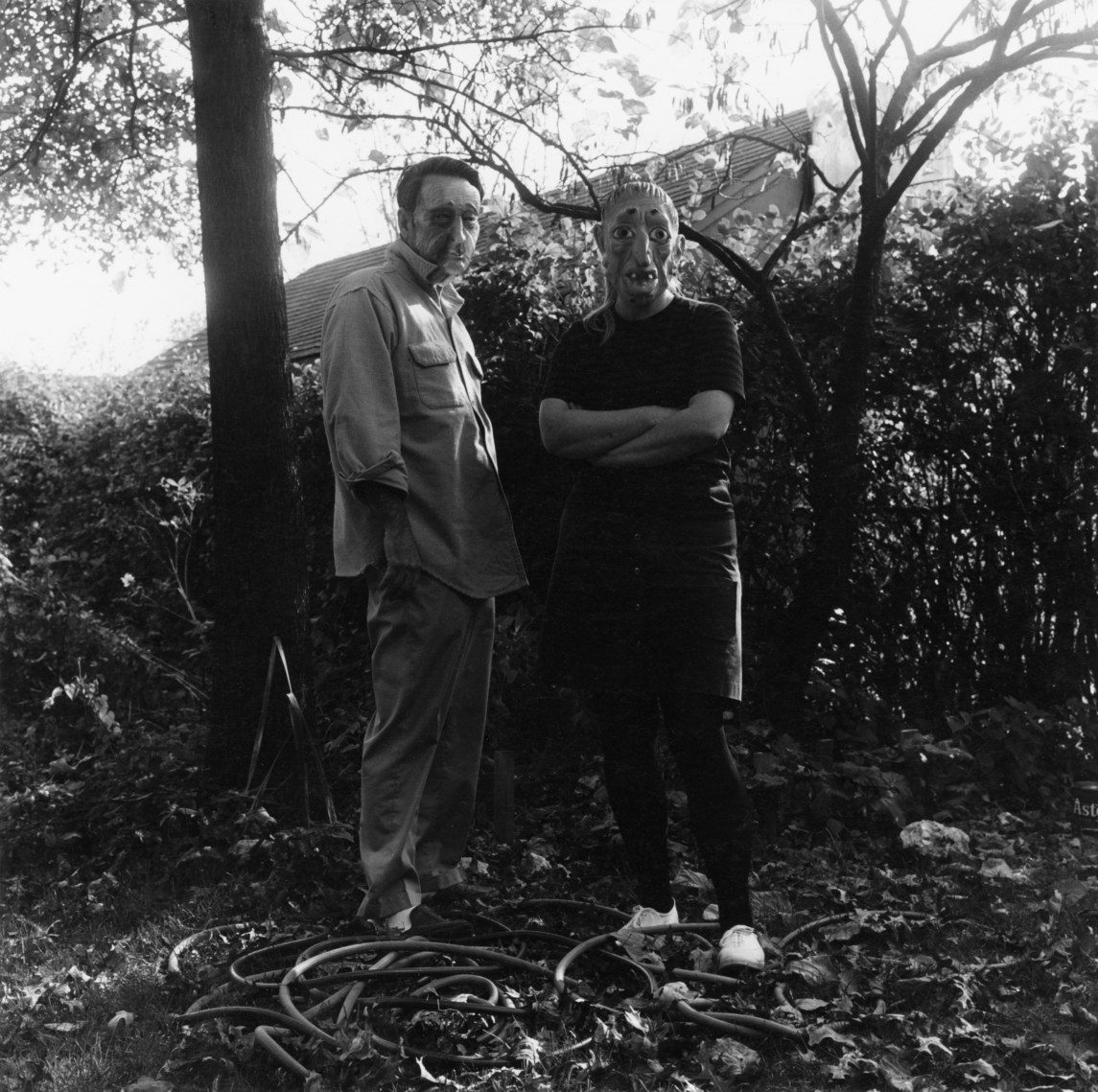
From 1999 to 2002, An-My Lê followed groups of Americans who reenact the Vietnam War. They are hobbyists who stage historical battles. On weekends they put on uniforms, carry replica weapons, pack gear and head into the woods of Virginia to replay battles from a war that ended decades earlier.
Virginia's woods are not a tropical jungle. But in black and white, from a low angle, with a little smoke, they can look like one. That is where Small Wars begins: the gap between the real and what looks real.
The pictures show soldiers in the woods, formations, moments of waiting, rescues. Everything is familiar, because viewers have seen it in films and press photographs. And everything is off, because this is America, a game, a weekend.
The condition for looking
The reenactors let Lê photograph them on one condition: she had to take part. They gave her the role of a Viet Cong guerrilla, at times a sniper. A Vietnamese woman was placed on the enemy side, in a war about her own country.
In a picture called Lesson, she is seen teaching Vietnamese to one of the reenactors. The scene is both funny and hard to name. Someone who left Vietnam because of the war now teaches a few words of her mother tongue so an American can play the enemy more convincingly.
Lê worked with a five by seven inch view camera and a wide angle lens. It is a slow camera, set on a tripod, planned in advance. It does not suit fast action. So her pictures often stand back, taking in the whole stretch of forest, with the soldiers only a small part of the landscape.
The one who was there
An-My Lê was born in Saigon in 1960. In 1975 her family left Vietnam for the United States. Her childhood passed inside the very war the people in her pictures are replaying.
This sets Small Wars apart from reportage or satire. She does not stand outside to mock the reenactors. Nor does she let them speak for Vietnam in her place. She stands in the middle: a player in the game, a bearer of real memory, the one holding the camera.
From there, the question is not whether they play it right. It is why a war keeps living in a nation's imagination, strongly enough that people want to walk into it every weekend.
From Virginia to Twentynine Palms
In 2008 SFMOMA held An-My Lê: Small Wars, from 26 January to 4 May, with 47 large format black and white photographs. Beside Small Wars hung 29 Palms, pictures of US soldiers training at the Twentynine Palms base in California before deploying to Iraq and Afghanistan.
Together the two series show something strange. On one side, civilians replay an old war. On the other, real soldiers rehearse a coming one, in a desert dressed as a battlefield. Both are rehearsals. Both need a landscape to play somewhere else.
Works from Small Wars are now in several collections, including the Guggenheim. In the same generation, Dinh Q. Lê wove Hollywood film stills with photographs of nameless Vietnamese. Different methods touch the same point: in America the Vietnam War lives largely as an image.
Photography