
Essays · Olfactory Art
Anya Gallaccio. Stroke.
A sweet wall cannot keep still.
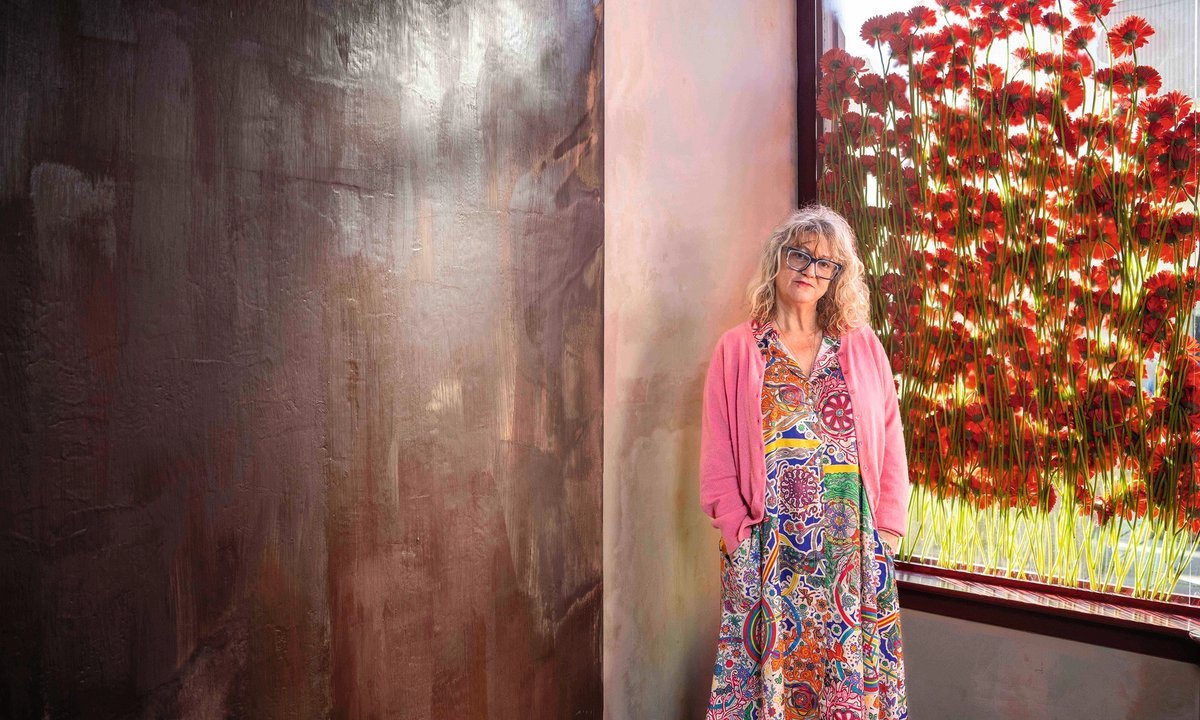
© Anya Gallaccio, courtesy of the artist and Thomas Dane Gallery · The Art Newspaper
A brown layer from the floor up
The materials of Stroke are few: dark chocolate, a wall, and almost nothing else. Anya Gallaccio covers the gallery walls with an even layer of deep brown, like a flat field of colour in abstract painting. According to The Art Newspaper, she used dark Bournville chocolate and wanted to apply it with as little a gesture as possible.
The title comes from that method. A stroke is a single pass of the brush or the hand. No image, no story. Only the trace of spreading.
The work has a precursor. In 1993 Galerie Krinzinger in Vienna invited Gallaccio to make a solo show, and she made Brown on White: walls coated in dark chocolate to a height of about two metres, with brown benches in the middle of the room shaped loosely like segmented bars. Krinzinger had a history with the Viennese Actionists, who sometimes used food in violent performances. Gallaccio chose an edible material but placed it in silence.
In 1994 the work titled Stroke appeared at Karsten Schubert in London, and the same year in the inaugural show of Blum & Poe in Los Angeles. It has been remade many times since: at Jupiter Artland near Edinburgh in 2014, at Blum & Poe in 2019 for the gallery's 25th anniversary, and at Turner Contemporary in Margate in 2024.
Visitors do not stand still
A brown field of colour in a gallery could look solemn. But this is chocolate, and visitors know it. They smell it. Then they do things no one does to a painting.
The Art Newspaper reports that visitors scratched their initials into the walls and picked at the edges to taste them. At the 2019 remake in Los Angeles, people were so rough that Gallaccio had to repaint sections after the opening.
That detail says a lot. Stroke is not made to stay the same. Every scratch is a new entry. After a few weeks the wall is no longer the plane she left but a map of who passed: here someone lingered, there someone could not resist.
Time writes on the surface too. In Brown on White in Vienna, where the chocolate oxidised and grew mould, a whitish film appeared. Brown on white became white on brown. The title changed its meaning along with the material.
The material decides
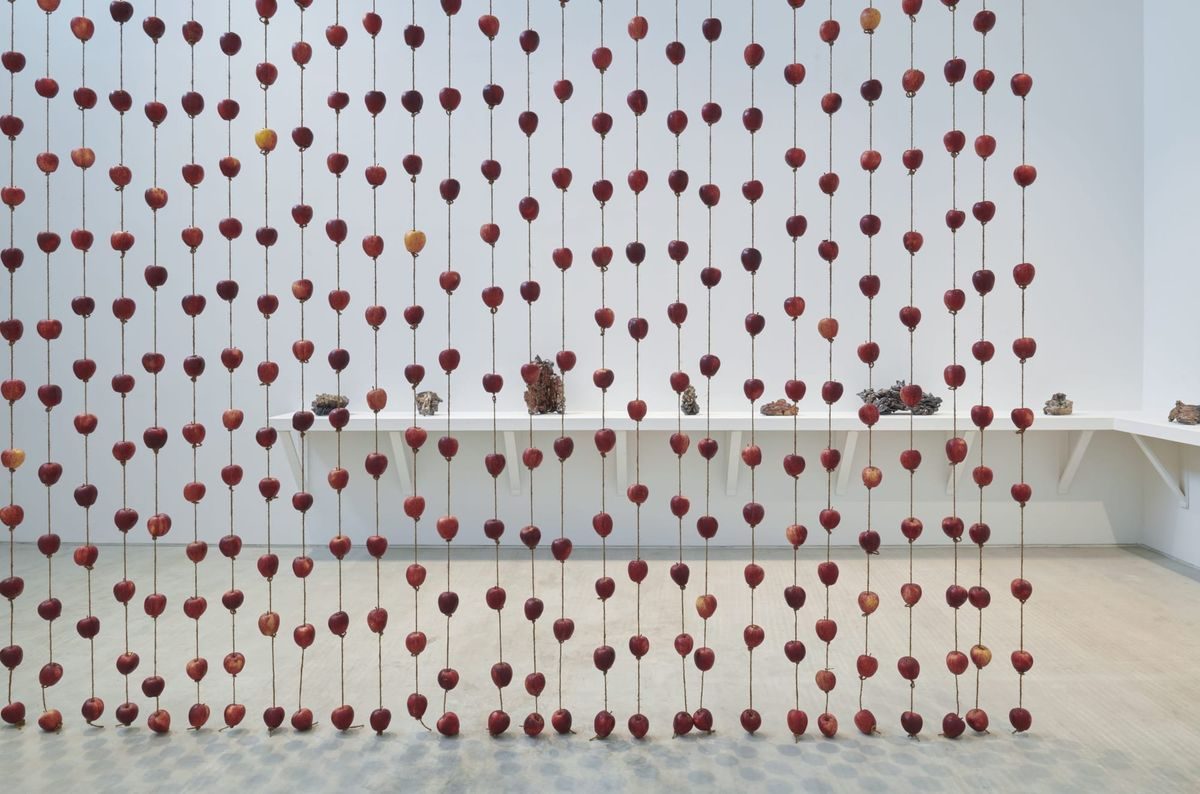
Gallaccio is known for organic materials: apples, flowers, trees, ice, wax, chalk, chocolate. She chooses them because they change during the life of the work, and she gives up control over that change. In Falling from grace, apples ferment and rot. In Stroke the change is slower and quieter, but it does not stop.
Chocolate is a special material because it arrives with a social life. It is a gift, a reward, something eaten in secret. Spread across an entire room, that familiarity becomes slightly too much. A bar of chocolate is pleasant. A whole room of it is close to suffocating.
Stroke stays with us because it refuses to choose between painting and sculpture, between looking and smelling. It is a colour field the visitor has to endure with the nose as well. And it shows something simple: when an object has a smell, people no longer keep a safe distance from it.
Olfactory Art