
Essays · Olfactory Art
Benitha Perciyal. The Fires of Faith.
A statue can smell, then crack, then be mended.
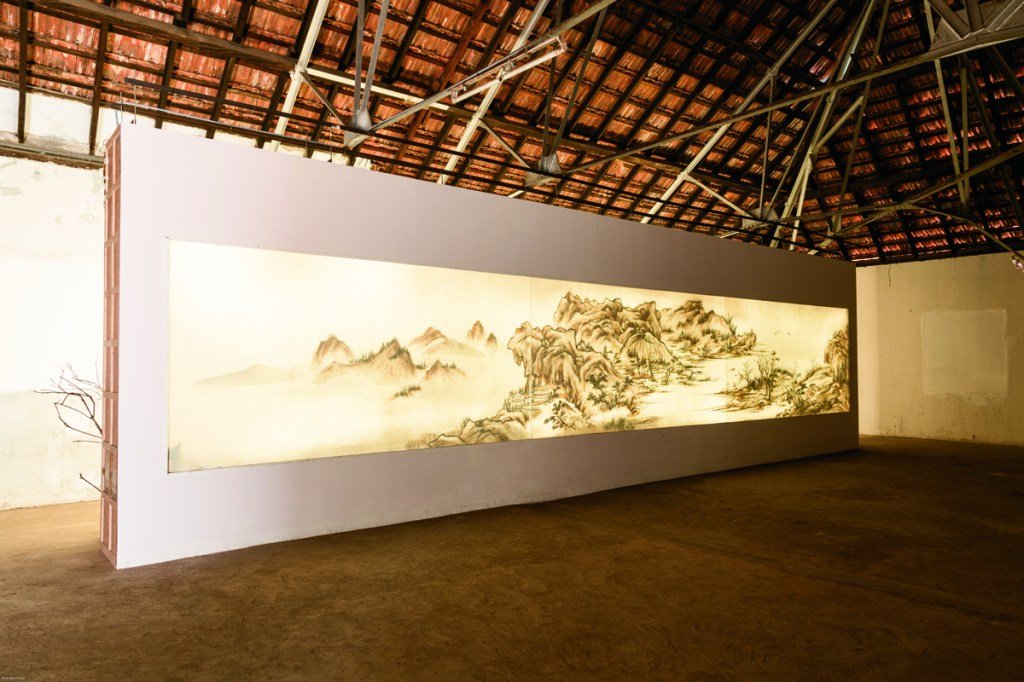
Kochi-Muziris Biennale 2014 (article illustration) · Art in America
A room at Pepper House
The 2014 Kochi-Muziris Biennale placed much of its work in old buildings along the port of Kochi, in Kerala, India. One of them was Pepper House, a sea-facing warehouse complex where pepper once waited for ships. Benitha Perciyal, a sculptor based in Chennai and a graduate of the Madras art college, was given a restored storeroom.
In the room stood human figures. Two near life-size statues of Jesus, one riding a donkey carved from fig wood. Mary. The apostles. Heads, hands, bodies standing still.
Visitors smelled the work before they saw it clearly. The figures gave off resin, bark and spice. No censer was burning. The statues were the incense.
Perciyal called the work The Fires of Faith. Yet there was no fire in the room. Only what fire would consume, if someone carried it to a temple.
Casting in incense
Perciyal makes her own material. She mixes bark powder with gum arabic as a binder, then adds herbs and spices: frankincense, myrrh, cinnamon, cloves, lemongrass, cedarwood, charcoal. The mix is cast into form, the way plaster or bronze is cast. The difference is that this powder, if lit, would turn to smoke. On the Japanese island of Awaji, incense makers also rely on bark powder to hold a scent in shape.
Around the statues were other things: dried gourds, leather, reused wood, essential oil bottles, perfume bottles, everyday objects. They were not decoration. They belonged to the same system of smell, where daily objects and sacred ones sit side by side.
The material is fragile. Incense is not stone. Over time the surfaces dry, crack, and the smell fades. Perciyal does not treat this as damage. To make an incense statue is to accept that it will need mending and restoring, and that it will never be quite what it was. Sculpting and repairing become one act.
The idea began in the antique shops of nearby Mattancherry, which sell Christian figurines from the colonial era, many missing arms or legs. Perciyal saw those broken figures not as damaged goods but as bodies that had passed through time.
St Thomas and the Malabar coast
The room at Pepper House points to an old Kerala story. According to tradition, the apostle Thomas reached the Malabar coast in 52 CE, only decades after the crucifixion, landing near Kodungallur, often linked to the ancient port of Muziris that gives the biennale its name.
Tradition holds that Thomas founded India's first churches in Kerala, then travelled on and died at Mylapore, near present-day Chennai. Perciyal lives in Chennai. Her work joins the two ends of that story.
What she brings into the room is not a history lesson. It is the smell of a coast that lived on spice. Cinnamon, cloves and pepper passed through these ports to Rome, Arabia, Europe. Religion arrived on the same ships. In The Fires of Faith, faith and trade share a smell.
Faith is not in the material
During the biennale, one visitor objected to a figure of Christ without arms. Perciyal stayed and talked. The argument moved from whether a sacred image may be incomplete to the many ways people express belief.
She told a local paper that faith is not about the material used in a work, but about sensitivity and sensibility. That explains the choice of incense. A statue of incense does not ask to be worshipped forever. It asks to be cared for, mended, smelled.
One small detail stays in the memory. The figure of Mary was made in incense to carry the sweet smell of a mother, as one account of the work put it. Not a shape, not a face. A smell. The thing a child knows before it can name anyone.
The Fires of Faith lasts in the mind because it lets a statue do what stone cannot: change. It smells strong when new. It cracks as it dries. It fades as the biennale season passes. A visitor at the close smells a different work from one who came on opening day.
Olfactory Art