
Essays · Olfactory Art
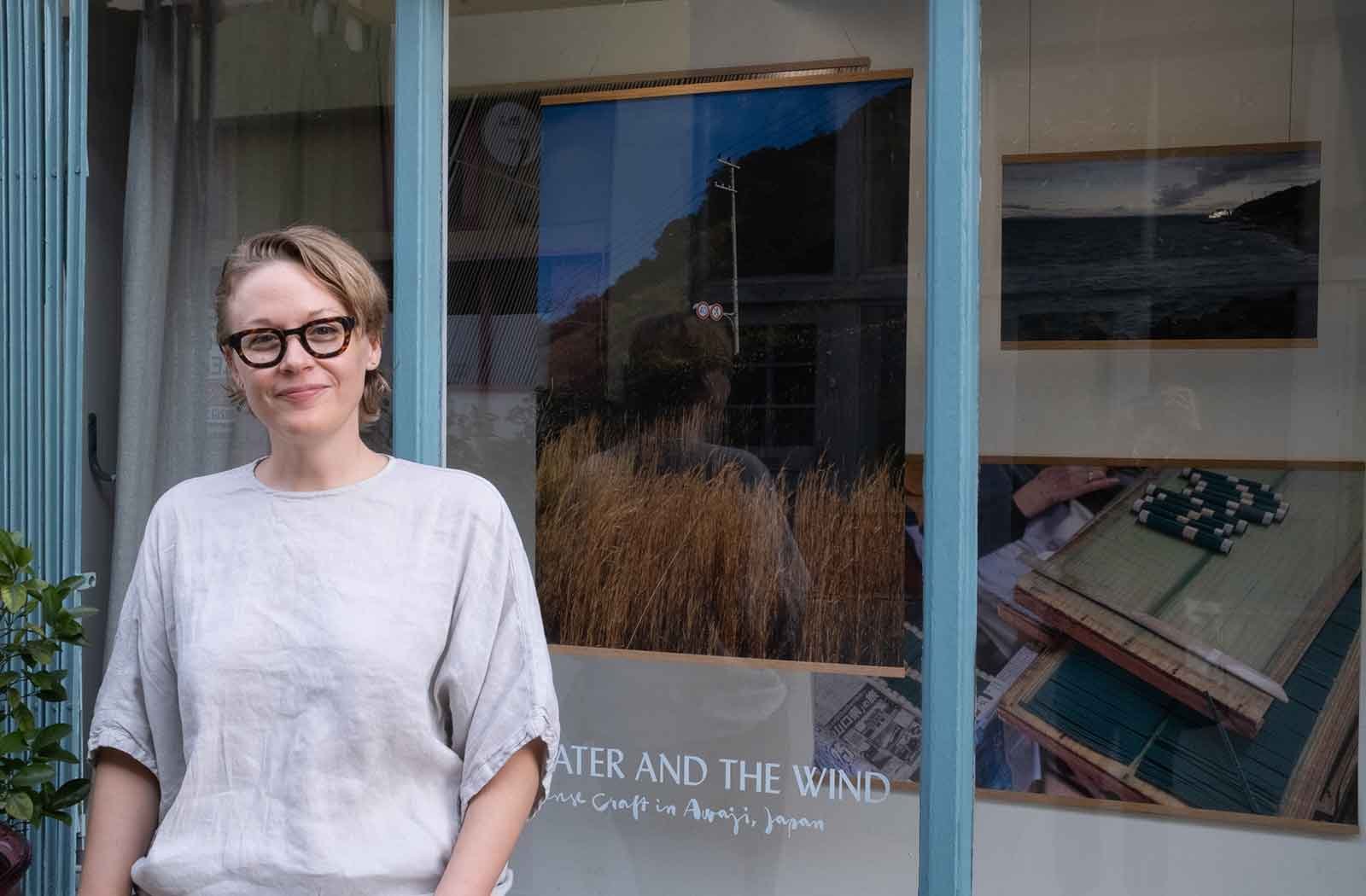
Arianna Petrich. The Water and the Wind: Incense Craft in Awaji, Japan.
The finest ingredients are not in the recipe.
The Institute for Art and Olfaction · The Institute for Art and Olfaction
A log washed ashore
Awaji is an island in Japan's Seto Inland Sea. According to the legend told in the exhibition, in the year 595 a piece of agarwood drifted onto its shore. The villagers did not know what it was. They burned it as firewood, and the smoke gave off a smell that stopped them.
What remained was presented to the Imperial Court, which had it carved into a statue and built a shrine to honour it. More than 1,400 years later, a shrine to the legendary wood still stands on the same beach.
The story is worth noticing because it puts the object before the person. No craftsman invented incense. A log arrived on its own, and people learned its value only after burning part of it.
An island that makes a nation's incense
Today Awaji produces around 70% of the incense burned in Japan. Production is overseen by 14 koh-shi, incense masters.
Arianna Petrich documented the whole process. Raw ingredients are kneaded into dough. The dough is extruded into strands with a machine built for udon noodles. The strands are trimmed, dried, weighed and packed. Each step is simple. The chain repeats every day.
The udon machine says something: incense on Awaji is not separate from daily life. The same way of pressing dough into strands makes food on one side and something to burn on the other.
Water and wind
When Petrich asked a koh-shi about local ingredients, the answer came in three Japanese words: kaze to mizu. The water and the wind. The exhibition takes its title from that reply.
It sounds like poetry but it is practical. Awaji is a port, which suits bringing materials in. It has strong easterly winds, which suit drying. Water binds the dough. Wind takes the water away. The stick takes shape between the two.
Many incense materials can come from elsewhere. Water and wind cannot be shipped. That is why the trade is bound to this island, and why an Awaji stick carries a little of Awaji wherever it burns.
The recorder
The Water and the Wind: Incense Craft in Awaji, Japan was shown at the gallery of the Institute for Art and Olfaction, 932 Chung King Road, Los Angeles, from October 4 to 25, 2024. The opening on October 4 was supported by Yaegaki Sake with its RITSU sake. The exhibition credits Kotaro Sugimoto with making the project possible.
Petrich is a Los Angeles based artist and visual and spatial designer, with an MFA from the School of the Art Institute of Chicago and a BA from Tulane University. Her work has been shown in the United States, Italy and India, and is in the permanent collection of the DePaul Art Museum.
Awaji was not her first stop. She has documented incense traditions in New Mexico, Rajasthan, Vietnam and Japan. Side by side, these places show incense as a trade found everywhere, done differently in each. An older image of the same trade is Puqua's Man Making Incense Sticks, a Canton export painting from around 1790.
Petrich's documentation does what visual memory does well: it keeps the gestures that vanish once a stick burns down. Whoever burns incense sees only smoke. The exhibition visitor sees the hands, the machine, the drying racks, and a wind that cannot be seen.
Olfactory Art