
Essays · Olfactory Art
Bjarne Melgaard, Bjørn Kristian Hilberg. Abuse Is the Beauty of the Working Class.
One scent made in the room, and another lying broken on the floor.
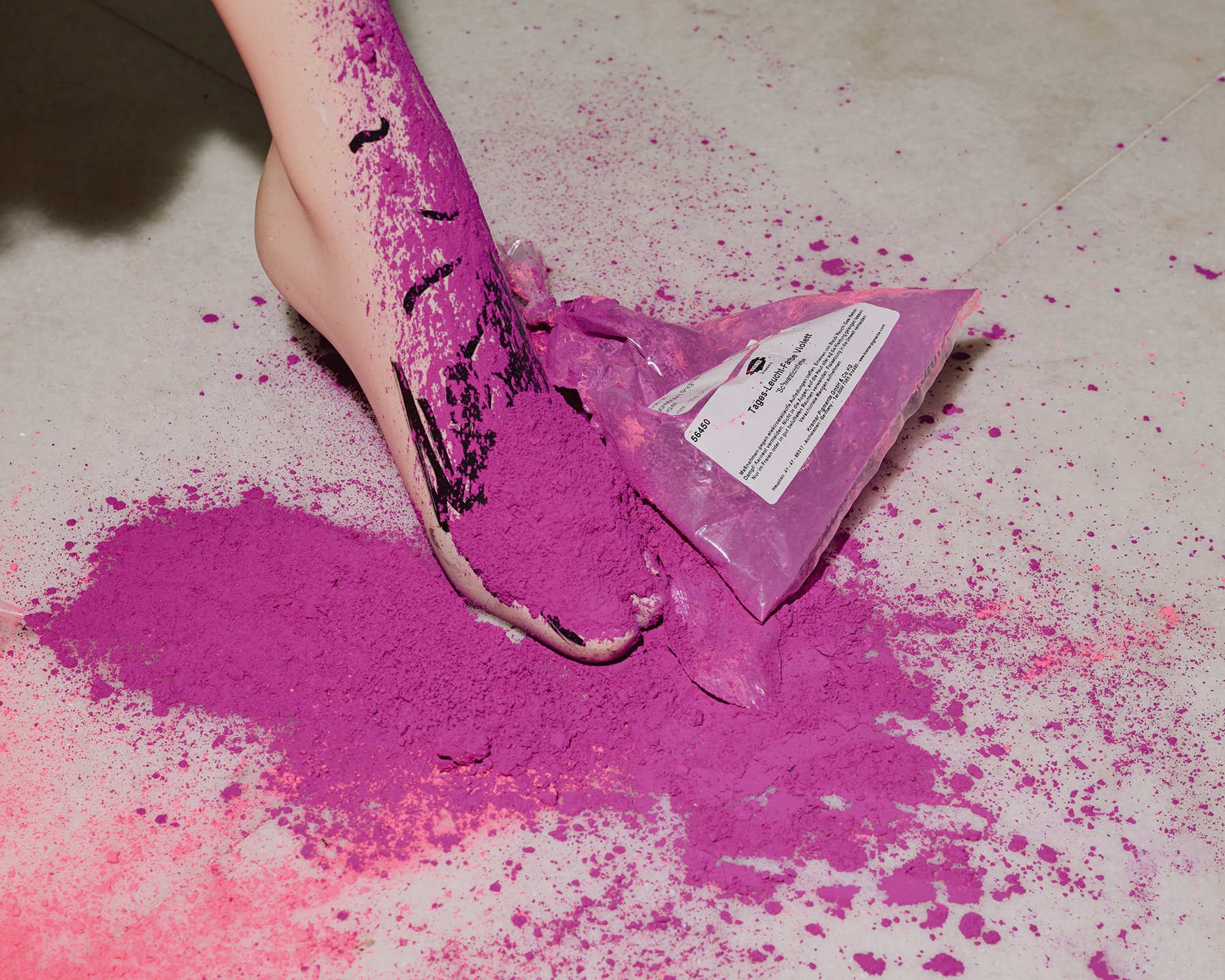
Photo: Ethan Floro. Courtesy the artists and VI, VII, Oslo · ArtReview
A launch inside a gallery
From 25 October to 15 December 2024, the gallery VI, VII in Oslo was staged as the launch of a perfume line. The line was called The End. It was made by the Norwegian artist Bjarne Melgaard with Bjørn Kristian Hilberg, founder of the Norwegian perfume house Malbrum.
The room held a scent laboratory that actually worked. Beakers, percolators, filling machines, bottled chemicals. Three finished perfumes stood on slabs of marble and limestone: Joey, Speedball, Stabfrenzy Forever. A fourth, Crispo, was being developed during the show.
A brand trailer was projected on the wall, mixing animation with found footage. It was the familiar language of the beauty business: product, plinth, video, name. But everything was slightly off.
The title, Abuse Is the Beauty of the Working Class, announced that from the start. It put side by side two words nobody wants on a perfume box: abuse, and the working class.
Four names on the label
The scents are not named after flowers or cities. Joey is a tribute to Joey Stefano, an adult film actor who has died. According to Matthew Rana's review in ArtReview, it is sweet, recalling lilies or bubblegum. Crispo is named after the late dealer Andrew Crispo, and carries patchouli and violets.
The other two names sound like street slang and violence. They need no explanation. Printed on a perfume label, they are enough to make a reader stop.
Then there was one more smell, without a name. Vials of essence smashed on the gallery floor left a thick, stifling floral smell across the room. It was not for sale. It existed only there, for the weeks the show was open, and then it was gone.
Around it were things familiar from Melgaard's world. Ink drawings of figures devoured by monsters, many on legal documents. Mannequins. Paintings like tombstones, crusted with ephemera. Beauty products, broken perfume bottles, psychiatric medication, stuffed animals.
Luxury goods with a smell of desperation
Melgaard has worked with fashion, and there, Rana writes, he turned the industry's codes upside down. With perfume the review finds him more reverent. He really did make a line of scents, with a real perfumer, in a real lab.
Yet the staging gave the luxury product a hint of desperation. Rana links the show to class tension and to the way artists exploit themselves. He also mentions the financial and legal difficulties Melgaard has faced.
What stays is that the exhibition does not stop at one person's pain. The names on the bottles, the drawings on legal papers, the pills: all point to something wider. There are systems that use people up, then package what is left as something beautiful to sell.
Perfume is the right object to say this. It is the smallest luxury, the easiest to buy, the closest to the skin. It promises a better version of whoever wears it. The End accepts that promise, then writes the names of the dead on the label.
Visitors who walked into VI, VII that winter probably carried a little of the floor's floral smell out on their coats. They bought nothing. But they left with a stain.
Olfactory Art