
Essays · Olfactory Art
Boris Raux. La Fabrique des Méduses.
Rinse water is a trace too.
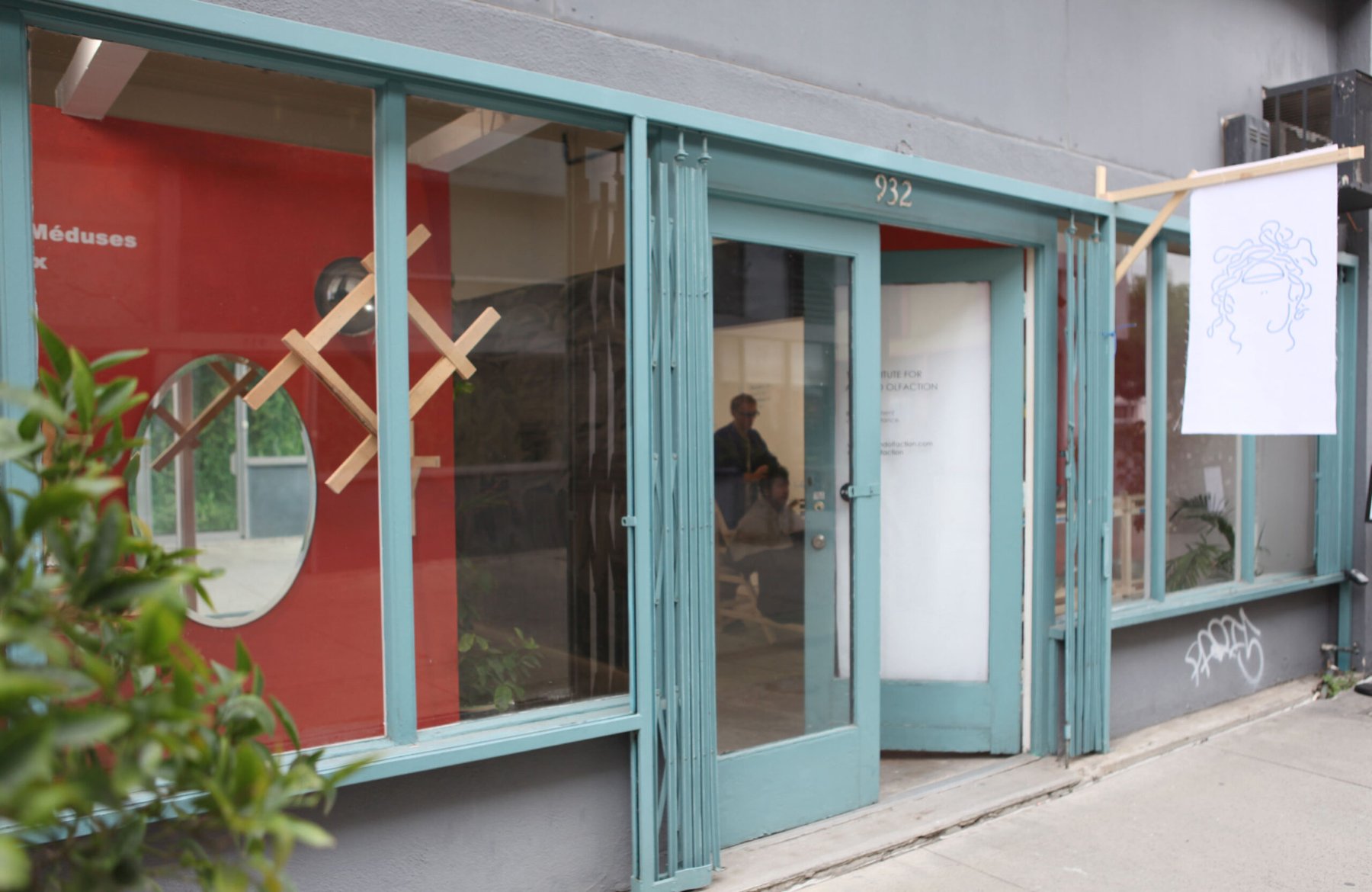
Institute for Art and Olfaction · Institute for Art and Olfaction
A hair salon in the gallery
In October 2022, for ten days, from the 21st to the 30th, the gallery of the Institute for Art and Olfaction in Los Angeles held a large wooden structure. On its shelves sat soft, translucent objects shaped like jellyfish. They had a smell.
The work is called La Fabrique des Méduses, the Jellyfish Factory. Its author is Boris Raux, a French artist based in Saint Étienne. But the wooden structure is only half of it. The other half is a performance.
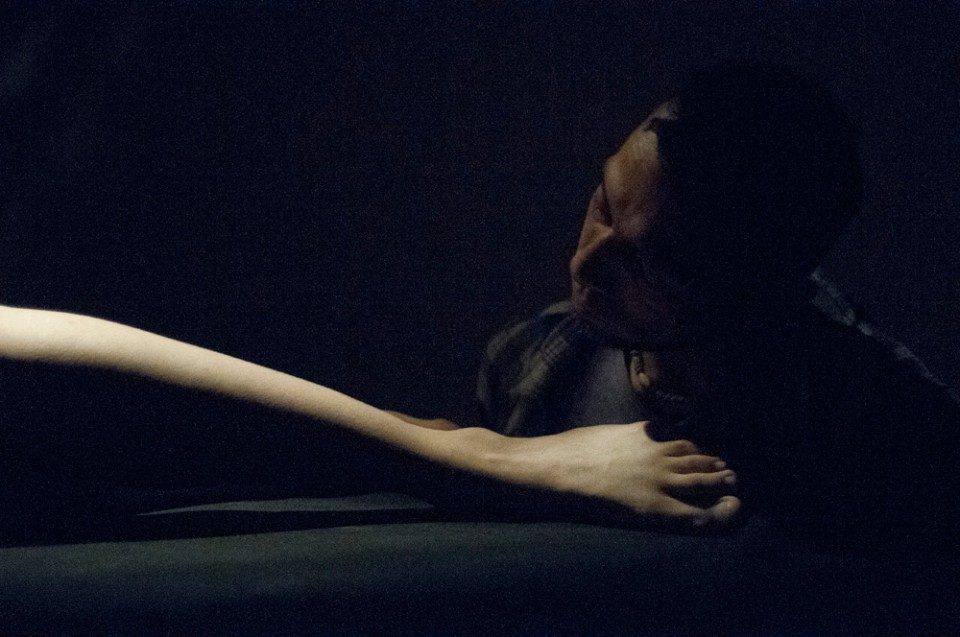
Visitors came one at a time and sat down at a wash station. Raux took the role of caretaker and hairdresser. He massaged their scalps and washed their hair. About three litres of water were used for each person. That water did not go down the drain. It was collected.
From rinse water to jellyfish
After each wash, the person's water was set into a gel. Each block of gel became a jellyfish, and each jellyfish was one person. They were placed on the wooden structure next to the jellyfish of others.
Then time did its part. The gel slowly evaporated. As the water left, the smell of the person who had been washed drifted into the space, slowly, over days. Visitors who came later never met those people. They only smelled something that remained of them.
The exhibition text says the work renews the Vanitas tradition. Vanitas is a genre of European still life that set skulls, guttering candles and wilting flowers side by side as a reminder that everything passes. Raux paints no skulls. He lets an object vanish in front of the viewer. The jellyfish shrinks every day. It is its own clock.
The name makes sense too. A jellyfish is almost nothing but water. No bones, no shell. One washed up on a beach dries out and leaves almost nothing behind. Raux's jellyfish follow the same path, except that along the way they leave a smell.
The artist as researcher
Raux studied fine art at Central Saint Martins in London. He approaches art with the methods of a scientific researcher: collect, process, observe. For him, scent is a creative and social tool that is too often overlooked.
He organises his practice around four olfactory themes: common goods, common bodies, common places and common fictions. All of it sits under one name, The Factories of Commons. La Fabrique des Méduses is one of those factories. Its raw material is the bodies of the people who come to see it.
The work was supported by the Institut Français and the city of Saint Étienne. It ran for only ten days. But for a work built on evaporation, ten days is enough to watch everything change.
Care as material
Washing someone else's hair is an intimate act. The person being washed has to trust the one washing, bare their neck, close their eyes, let water run near their face. In a salon it is a service. In Raux's gallery it is the condition for the work to exist.
Without visitors there are no jellyfish. The work cannot be finished before the opening. It grows one person at a time, one wash at a time, and at the same moment it is disappearing, one drop at a time.
What Penta finds memorable is its quiet. No portraits, no names, no stories about each person. Only a block of gel and a smell. We tend to think that remembering someone requires a photograph or words. Raux shows that sometimes all it takes is the water that touched their hair. Janine Antoni once bathed with soap busts cast from her own head, letting washing wear the portrait away. Raux goes another way: washing wears no one away; it makes a new object.
Olfactory Art