
Essays · Photography
Catherine Opie. 700 Nimes Road.
Objects stand in for the person.
© Catherine Opie; courtesy Regen Projects, Los Angeles and Lehmann Maupin, New York · Aperture
An address in Bel Air
700 Nimes Road was the address of Elizabeth Taylor's home in Bel Air, Los Angeles. Across 2010 and 2011, the photographer Catherine Opie returned to it again and again over roughly six months.
Three months into the project, Taylor died. The work did not stop, but its nature changed. Opie kept photographing as the house was slowly dismantled, as its contents were inventoried, packed and prepared for auction.
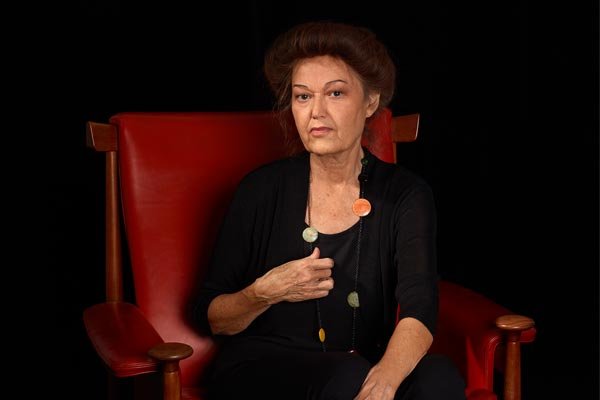
In the whole series, Taylor never stands before the lens. She appears only indirectly: in professional photographs of her and Richard Burton kept in the house, in clothes, in jewels, in the way a room was arranged.
The series became a book, 700 Nimes Road, published by Prestel, and was shown in several places, among them MOCA in Los Angeles and Lehmann Maupin in New York.
What is left on the table
Opie photographed very specific things. Hatboxes stacked on a thick lavender shag rug. Evening gowns lying in clear plastic boxes. Jewels in Lucite cases. A bedside table with its small objects. Pink curtains swagged into folds. The famous Krupp Diamond, pictured as one object among many.
Nothing is staged. The light is the light of the room. The camera is mostly level and calm, the eye of someone recording rather than celebrating.
That way of looking makes luxury strange. A box holding a gown, photographed head on, stops being a symbol of glamour. It is a box. It was opened, closed, put away and taken out by a real person, for years.
Before these pictures, viewers begin to rebuild the owner in their own minds. What colours she liked. What she kept by the bed. Whose photographs hung on her walls. The portrait is assembled in the viewer's head, from small pieces.
A lesson from Graceland
Opie has been clear about the source. 700 Nimes Road is understood as a response to William Eggleston's photographs of Graceland, Elvis Presley's home in Memphis. Eggleston did not photograph Elvis either. He photographed the house, and let it speak.
What Opie adds is time. Taylor's house is not a museum standing still. It is vanishing while it is photographed. The later pictures show objects labelled, lined up, readied to leave the place they had occupied for years.
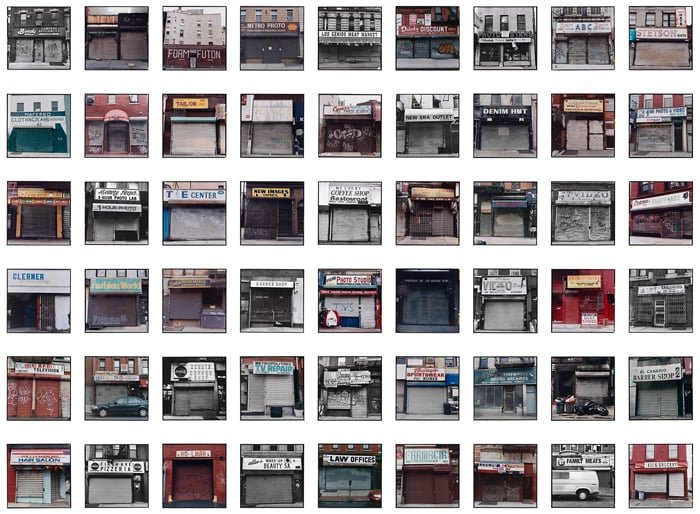
Opie is known for portraits of community and identity: the lesbian community of 1980s San Francisco, Malibu surfers, Los Angeles freeway overpasses, ice fishing houses in Minnesota. Her work often asks who gets seen, and how.
At 700 Nimes Road the question turns over. Here was a woman looked at too much, all her life. Opie chose not to look at her further. She looked at what she left behind.
Why it stays
A portrait is usually a face. 700 Nimes Road reminds us that a person is also the sum of the objects they keep close, and how they arrange them.
Beside the rooms of Larry Sultan's Pictures from Home, we see that photography can read a life through its interiors. Sultan photographed his parents' home while they were alive. Opie photographed a famous woman's home just after she was gone. Both knew that a room holds memory longer than a face.
Looking at the series now, we know the objects have scattered, each to a different house. The photograph is the only place they are still together.
Photography