
Essays · Olfactory Art
Cercle d'Art des Travailleurs de Plantation Congolaise.
The sweet smell of chocolate begins with the hands that grow it.
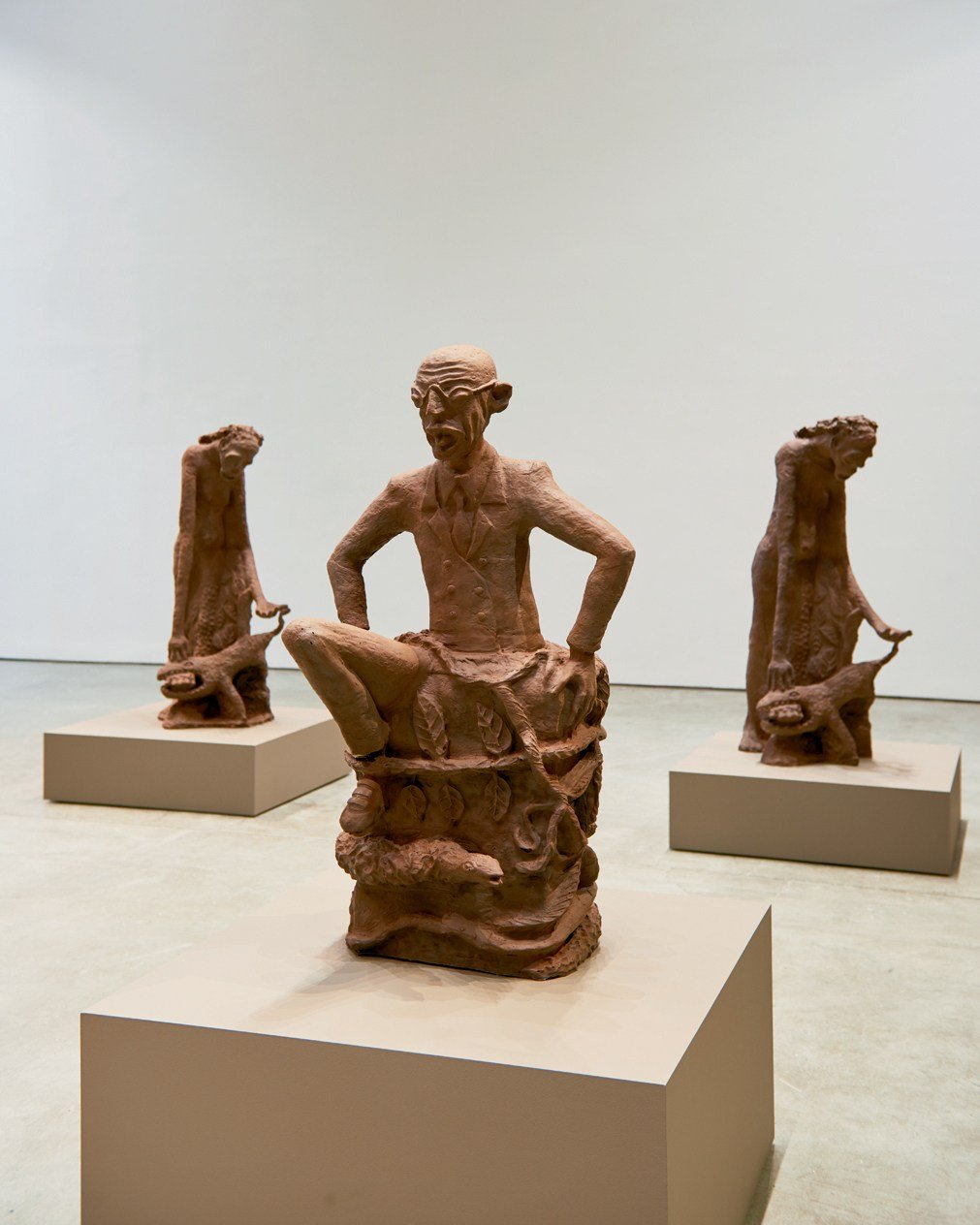
Cercle d'Art des Travailleurs de Plantation Congolaise, exhibition view, 2017, SculptureCenter · Art in America
Clay figures, recast in chocolate
From 29 January to 27 March 2017, SculptureCenter in New York presented the first US exhibition of the Cercle d'Art des Travailleurs de Plantation Congolaise, the Congolese Plantation Workers Art League, known as CATPC. It was curated by Ruba Katrib.
The room held a group of figures, some close to life size, some tabletop scale. They had a folk, slightly fantastic quality: bodies, faces, stories shaped into mass. All were made of one material: chocolate.
The process had several stages. Members modelled the figures in clay in Congo. The figures were digitised, 3D printed, then cast in chocolate. According to SculptureCenter, the cacao used came from plantations around the world. Up close, visitors smelled the sweet, faintly bitter note of cocoa, the smell we know from bars on supermarket shelves.
Lusanga, once called Leverville
CATPC was founded in 2014 in the Democratic Republic of Congo. Its leading figures are plantation workers: Djonga Bismar, Matthieu Kilapi Kasiama, Cedrick Tamasala, Mbuku Kimpala, Mananga Kibuila, Jérémie Mabiala, Emery Mohamba and Thomas Leba. With them are the ecologist René Ngongo and Kinshasa based artists Michel Ekeba, Éléonore Hellio and Mega Mingiedi.
They work in Lusanga, formerly Leverville. In 1911 Lever Brothers, later Unilever, founded its first palm oil plantation there. The old name says plainly whose land it was.
For over a century, plantations like this supplied raw materials for consumer goods sold worldwide: palm oil, cocoa, rubber. The growers stayed, on low wages and land that was not theirs. The value of the crop went elsewhere.
Bringing profit back to the plantation
CATPC works with the Institute for Human Activities, founded by the Dutch artist Renzo Martens and active since 2012. The institute is building a research centre on art and economic inequality on a former Unilever plantation in Lusanga.
The idea is direct. The Western art world has a great deal of money, and part of that money once came from plantation profits. Major museums have been funded by companies that earned from crops grown in Africa. CATPC reverses the flow: sell work to the art world, then bring the money home.
According to SculptureCenter, CATPC reinvests profits from sales in self owned agricultural production across Congo. Money from chocolate sculptures becomes land, trees, a plantation that belongs to no distant company.
A sweet smell with a history
Chocolate is a smell rarely suspected of anything. It belongs to gifts, Valentine's Day, childhood. But it travels a long road: from the pod on the tree, through the hands that pick, ferment and dry it, through ships, factories and shops. The eater usually meets only the last stage.
CATPC's sculptures join the first stage to the last. The forms belong to the growers. The material is what they grow. The smell is what buyers know. A visitor in New York smells something pleasant and, at the same moment, looks at the faces of the people at the other end of the chain.
Chocolate in a gallery is not new. Ed Ruscha once covered a room with sheets printed in chocolate in Chocolate Room. There, the sweet smell was a question about material. With CATPC, it is a question of ownership. Who gets to shape the form. Who gets to sell. Who keeps the profit.
Olfactory Art