
Essays · Photography
Chris Killip. In Flagrante.
A place changing, recorded by someone who stayed.
A region closing down
Chris Killip was born in 1946 on the Isle of Man, a small island between Britain and Ireland. From the early 1970s he began photographing the North East of England, where life revolved around shipbuilding, coal mining and heavy industry.
The years he photographed, roughly 1973 to 1985, were years of violent change there. Shipyards shrank. Pits closed. Steelworks shut down. Jobs vanished, but the people did not go anywhere.
Killip worked in Tyneside, Jarrow, Gateshead, Pelaw, Sunderland and North Shields. He worked in Skinningrove, a small fishing village on the North Yorkshire coast, and in Lynemouth, Northumberland, where there was a beach full of coal.
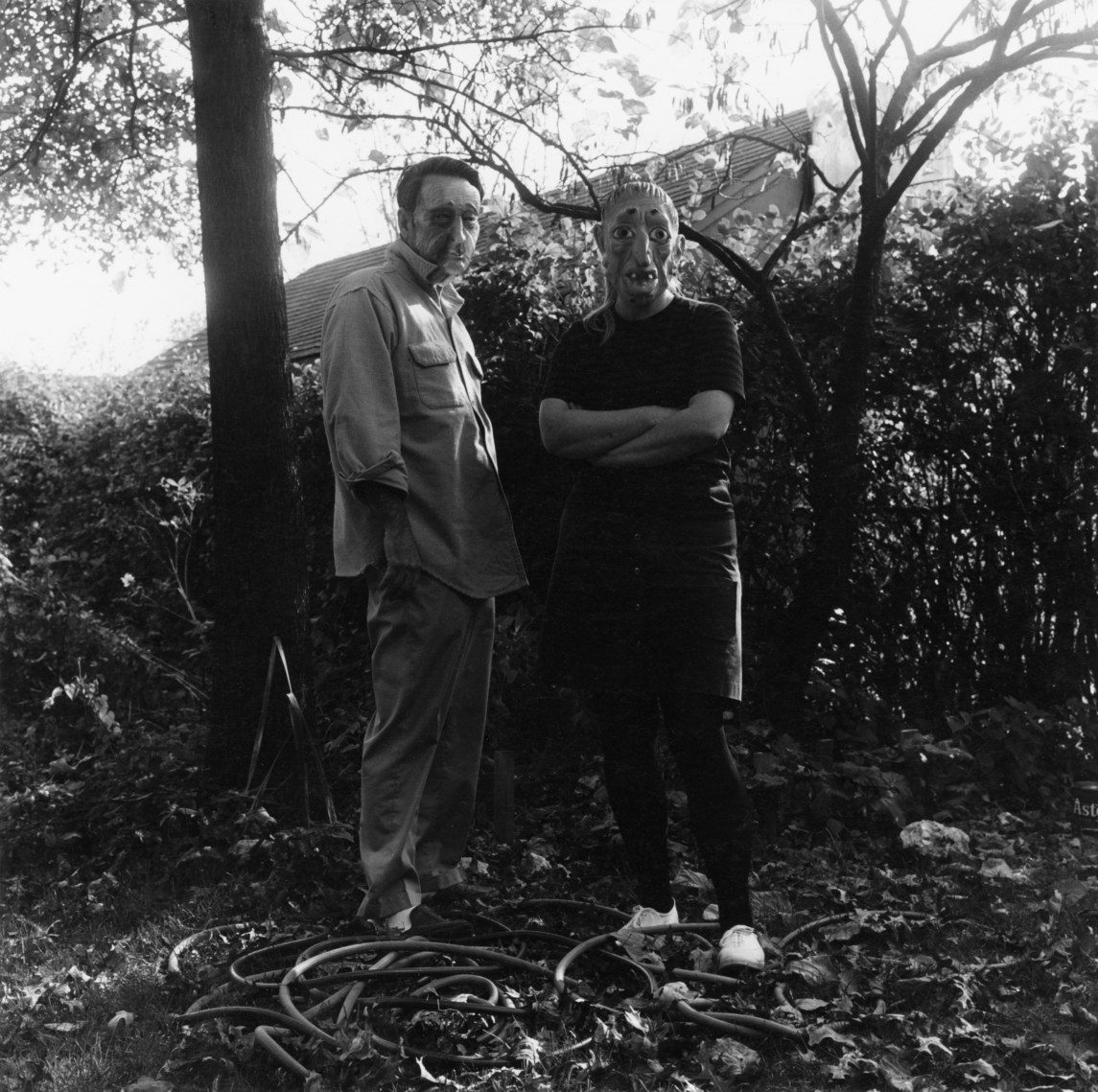
He did not photograph factories as symbols. He photographed people: children playing on waste ground, men standing on street corners, a family in a cramped kitchen. Ordinary lives, at a time that was not ordinary.
The coal beach and the fishing village
Two of Killip's best known groups of pictures belong to two small communities. At Lynemouth, people who gathered coal washed up by the sea lived in a camp near the beach. They went into the waves for coal, carried it off by horse and cart and sold it. Killip's pictures show hard work and a world almost cut off from the rest of England.
At Skinningrove he photographed fishermen in a village wedged between cliffs. A closed community, not quick to welcome strangers. It took Killip a long time to be accepted.
He returned to both places over many years, and both became separate bodies of work: Seacoal and Skinningrove. He went back to Skinningrove later still, and in 2013 a short film was made from those pictures.
That is how Killip worked. He did not hunt for moments. He stayed until the moments came to him.
Fifty photographs in one book
In 1988, In Flagrante appeared as a book of fifty black and white photographs. It was soon regarded as the most important photobook on what deindustrialisation did to working class communities in Britain.
The Latin title suggests being caught in the act, discovered right in the middle of something happening. The people in these pictures are caught in the middle of a change they did not choose.
In 2017 the Getty Center in Los Angeles held Now Then: Chris Killip and the Making of In Flagrante, from 23 May to 13 August. Alongside gelatin silver prints, the exhibition showed maquettes, contact sheets and work prints. Visitors could see how the book was selected, sequenced and weighed.
That matters. A photobook is not simply a collection of the best pictures. It is a sequence. Each image is placed next to another so that together they say something no single picture could.
Looking without judging
Killip's pictures are heavy but not sentimental. He does not turn his subjects into symbols of suffering. They still joke, still get angry, still look straight into the lens. Hardship is there, but so is dignity.
At the same time, another photographer in the north west of England was photographing working class life in bright colour: Martin Parr with The Last Resort. Side by side, the two works show two ways of seeing the same years: one looks at the day off, the other at the day the work disappeared.
Killip later taught photography at Harvard University for many years. But In Flagrante remains the work most tied to his name. It is evidence that a region, a period, really existed, and that someone looked at it long enough to keep it.

Photography