
Essays · Olfactory Art
Christophe Laudamiel. Phantosmia.
A formula is also a signature.
One week in Chelsea
In January 2012, Dillon Gallery at 555 West 25th Street in Chelsea, New York, opened a show that ran for exactly one week, from 25 January to 1 February. It was called Phantosmia. Its author was Christophe Laudamiel.
Laudamiel is not a painter or sculptor. He is a perfumer, the nose behind the Abercrombie & Fitch signature scent, who had also worked on products for Ralph Lauren and Tommy Hilfiger. Hyperallergic, covering the show, called him a former rock star of the perfume industry now turning to art.
The exhibition made a plain declaration: scent is an art form of its own, on par with sight and sound. Not an accessory to clothing. Not invisible makeup. An art.
To prove it, Laudamiel brought seven works he called scent sculptures.
Seven scent sculptures, six tents
The seven titles: At Your Own Risk. Fear. Fragile. The Last Virgin. The Monkey and the Banana. The Whip and the Orchid. Remembrance of Things Lost.
The gallery put up six plastic tents, one scent in each, so the smells would not mix. The seventh, Remembrance of Things Lost, had no tent. It filled the shared air of the room. One account from the time describes it as an homage to Marlene Dietrich.
Visitors followed instructions, read museum style explanations, then stepped into each tent. According to Hyperallergic, some pieces were figurative: The Monkey and the Banana needs little explaining. Others, like The Last Virgin, drifted toward something vaguer, warm memories and the smeller's own expectations.
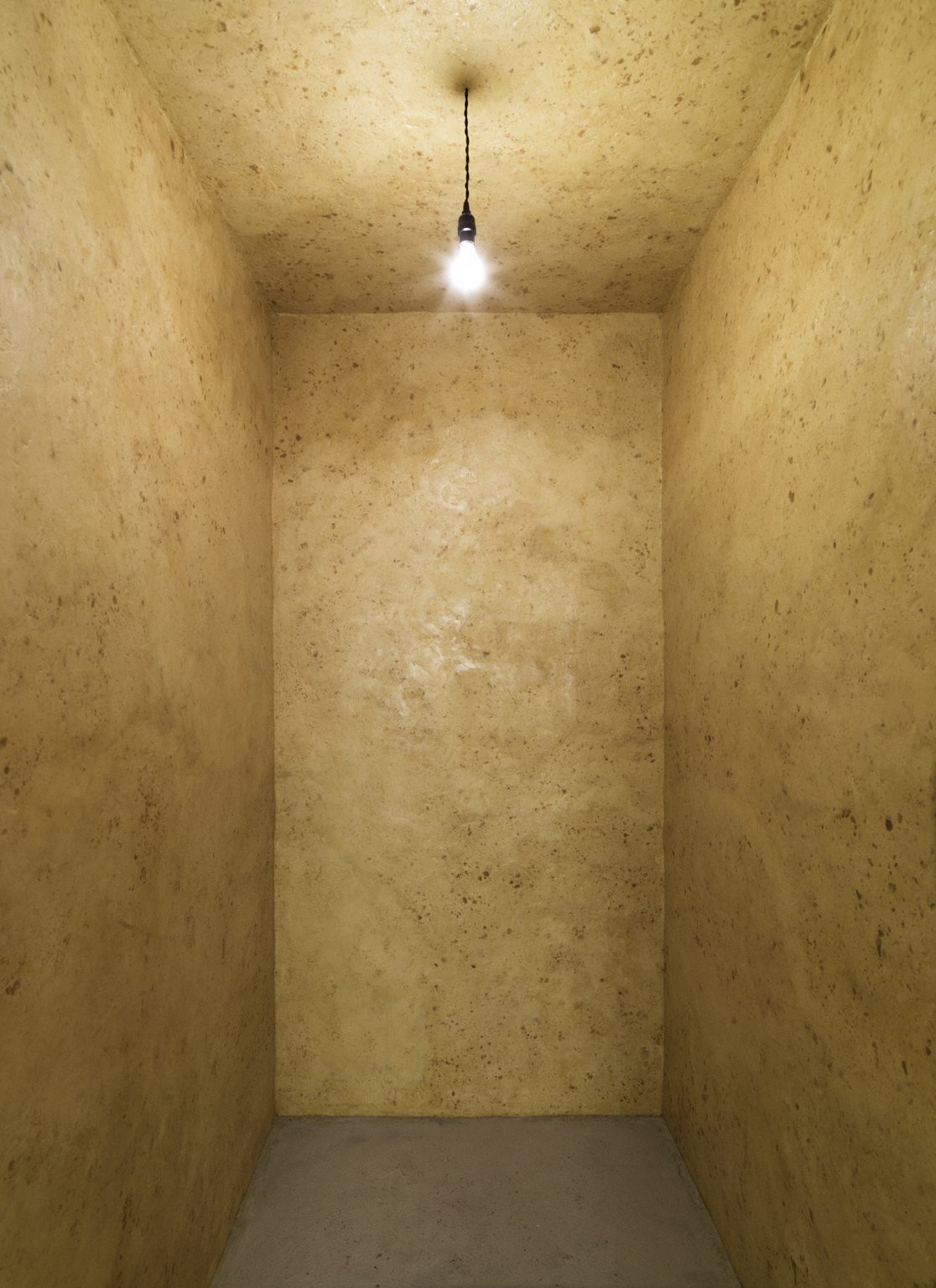
The plastic tent deserves attention. It is both plinth and wall. Paintings need light. Smells need boundaries. Without them the seven works would merge into one cloud, and no one could tell which smell belonged to which piece.
The formula on paper
The most striking act of Phantosmia happened outside the tents. Laudamiel published the formulas of all seven scents in print, so that they would qualify for copyright protection.
In perfumery, the formula is the most closely guarded asset. Reports at the time described this as the first time a perfumer had published his formulas. Laudamiel also said he intended to release the formula of The Whip and the Orchid into the public domain, a symbolic gesture to open up the practical side of a craft used to secrecy.
There is a neat paradox here. Copyright protects work fixed in a stable form. Smell is not fixed; it drifts away. For a scent to count as authored work, Laudamiel had to turn it into words and numbers on paper. Smell had to pass through text to be recognized.
A perfumer speaking as an artist
Laudamiel is not shy about ordinary things. He told Hyperallergic that he loves fabric softener. About Fragile, he explained that the industry limits the use of real lemon to avoid the cost of refrigerated transport. Such details show someone who sees smell from inside the trade, raw materials, costs, storage and all.
He was confident visitors would like the show. He said he was simply doing justice to the most underappreciated of the senses.
Later that year, The Art of Scent opened at a New York museum, placing twelve perfumes beside their authors' names. Phantosmia was smaller and shorter, one week in a gallery. But it came from the perfumer's side. Not a curator choosing scents to display, but the perfumer himself signing his name beneath his work.
Olfactory Art