
Essays · Olfactory Art
Cyrus Clarke. The Anemoia Device.
Missing a place you have never been.
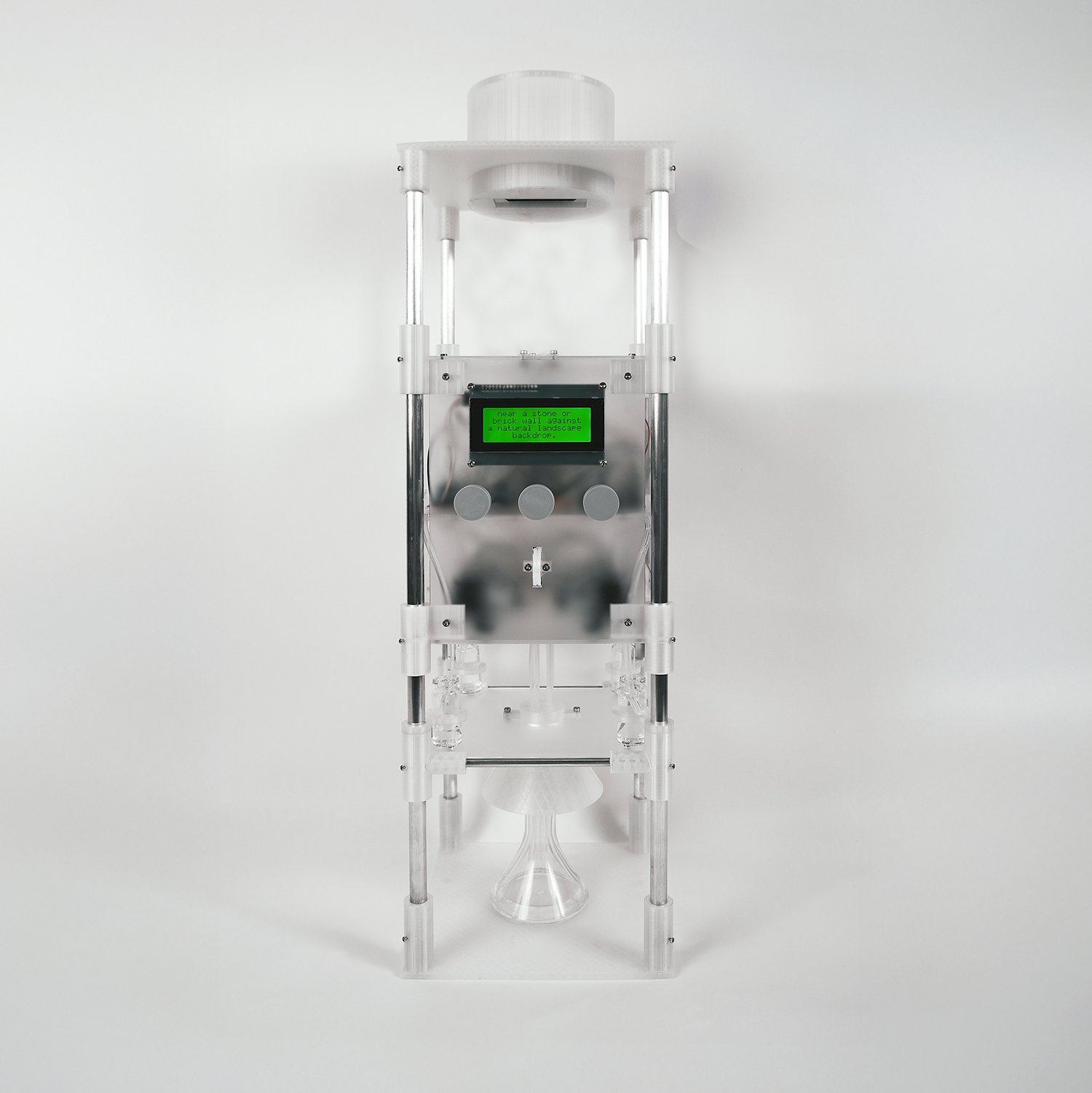
© Cyrus Clarke 2025 · Cyrus Clarke (official site)
Nostalgia for a time never lived
Anemoia is a recent word for the feeling of nostalgia for a moment you never lived. You look at a black and white photograph of a street in some year, and feel a longing for it, though you never stood there.
Cyrus Clarke takes that feeling as his brief. He built a machine that distils a film photograph into its own smell. Not the smell of the objects in the picture, but the smell of the moment the picture evokes.
The first version was made at MIT, in two courses: How To Make Almost Anything, and Tangible Interfaces at the MIT Media Lab. In 2025 the team presented a paper on the device at NeurIPS, one of the largest conferences on artificial intelligence. The co-authors include Nomy Yu, Melo Chen, Yuen Zou and Hiroshi Ishii, who leads the Tangible Media Group at the MIT Media Lab.
From image to words, from words to smell
The process runs in steps. The user places a film photograph in the machine. A vision language model reads it and writes a short narrative about it.
Then the user turns three dials. One for perspective: who you are in the scene, where you stand. One for time. One for mood. These choices frame the story, place the user inside the memory, and set the character of the smell.
The choices are gathered and passed to a language model, which turns them into a prompt. That prompt is the semantic ground for the final step, from text to smell. A knowledge base links cues in the story to scent profiles. The machine picks up to four scents from a library of forty four, then blends them by algorithm into the final composition.
The result is a smell made for one photograph, one viewer, one turn of the dials. Change the perspective, and the smell changes with it.
Hands on the machine
One design choice stands out: the dials are real objects. The NeurIPS paper calls the device a tangible AI system for co-creating synthetic memories through scent.
With most AI tools, users type. Here, users hold a photograph, feed it into the machine, and turn dials by hand. Each gesture is slower and has weight. It is closer to leafing through an old album than to giving a machine an order.
The tangible interface tradition at the MIT Media Lab argues for exactly this: put information back into objects, so people think with their hands. The Anemoia Device adds to that tradition a sense that computers rarely reach.
Synthetic memory
The phrase synthetic memories in the paper's title deserves thought. The smell the machine makes is not tied to anything that happened to the user. It is a memory produced from another person's photograph, through a model's words, through one's own choices.
That may make some people uneasy. But it touches an old truth: memory was never a faithful record. We remember through relatives' stories, through photographs at home, through the smell of a kitchen we may only have heard described.
Other artists have used machines to make smell from data, such as Refik Anadol with Machine Dreams: Rainforest. Anadol works with the data of an entire forest. Clarke works with a small photograph and one person standing before it. The scale differs; the question is close: what can a machine help us remember?
Olfactory Art