
Essays · Olfactory Art
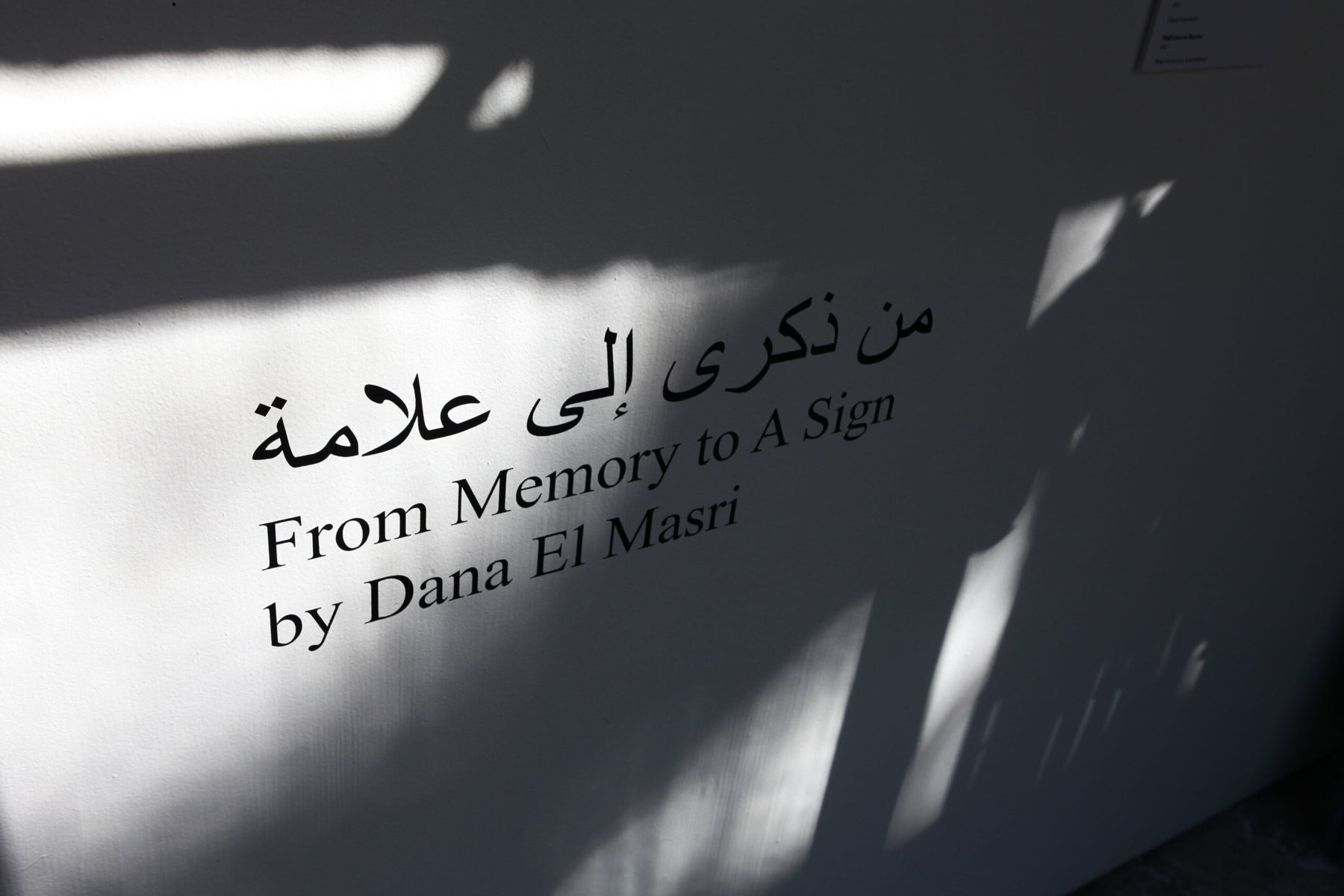
Dana El Masri. From Memory to A Sign.
Home is not on a map. It lives in the nose.
Institute for Art and Olfaction · Institute for Art and Olfaction
Seventeen years in one room
From Memory to A Sign, in Arabic من ذكرى إلى علامة, is Dana El Masri's exhibition at IAO Gallery on Chung King Road, Los Angeles, from 4 September to 23 October 2026. It opened on the evening of 4 September.
The show gathers works made between 2009 and 2026. Seventeen years. The materials are ceramics, flowers, sound and scent, alongside fragments of nature El Masri has collected across countries and years.
The gallery text calls it a living archive. The word living matters. An archive usually closes: the file is complete, the object rests in its box. Here, the flowers keep drying, the scent keeps evaporating, the sound plays again whenever someone enters. Memory is not framed. It keeps changing in front of the viewer.
A life in many places
Dana El Masri is of Egyptian and Lebanese descent. She was born in Budapest, grew up in Dubai, has lived in Montreal and New York, and is now based in Los Angeles. She studied communication, then trained in perfumery at the Grasse Institute of Perfumery in France in 2010.
In 2014 she founded Jazmin Saraï, a line of small batch, unisex perfumes and oils. Her work sits where scent, music and cultural stories meet, and it often questions the Eurocentric view of perfumery.
A life like this makes the familiar question hard: where are you from? No single city is enough of an answer. Perhaps that is why the show does not try to draw a map. It sets gathered fragments side by side and lets visitors see that home can be several places at once.
The word exotic
In the language of Western perfumery, the word exotic appears often. It is attached to materials from far away: resins, spices, flowers from hot countries. The word promises a journey, a mystery, a world other than the buyer's.
But exotic always speaks from a position. What is strange to one person is familiar to another. The flowers of a garden in Cairo are not strange to someone who grew up in that garden. They become strange only when bottled, labelled and sold to someone elsewhere.
From Memory to A Sign uses smell to question that definition. When scents often called exotic are presented as the memories of one specific person, they stop being a sales image. They return to what they are: the trace of a place, an afternoon, a person.
This is also how the show speaks of displaced identities. People who live far from where they started are often seen as outsiders in the new place, and sometimes become outsiders in the old one too. Scent is one of the few things that travels with them without papers.
From memory to sign
The title suggests movement. A memory is private, blurred, easily lost. A sign can be read, can point the way, can be shared. Moving from one to the other is what an artist does with a life.
The ceramics, the flowers, the fragments of sound in the room are such signs. Each was once a private moment. Placed in a gallery, they become something a stranger can stand before and recognise something of their own.
El Masri holds that scent can make people feel seen and can bring them together. In a show about displacement, the idea carries weight. Visitors may never have lived in Dubai or Budapest. But they know what it is to catch a smell far away and suddenly feel at home.
Smells crossing borders are also the subject of Oswaldo Maciá in Santa Fe, where large maps trace how scent travels across the planet. El Masri draws a smaller map: the map of one person.
Olfactory Art