
Essays · Olfactory Art
Ernesto Neto: the body that carries me.
The viewer does not stand before the work. The body is inside it.
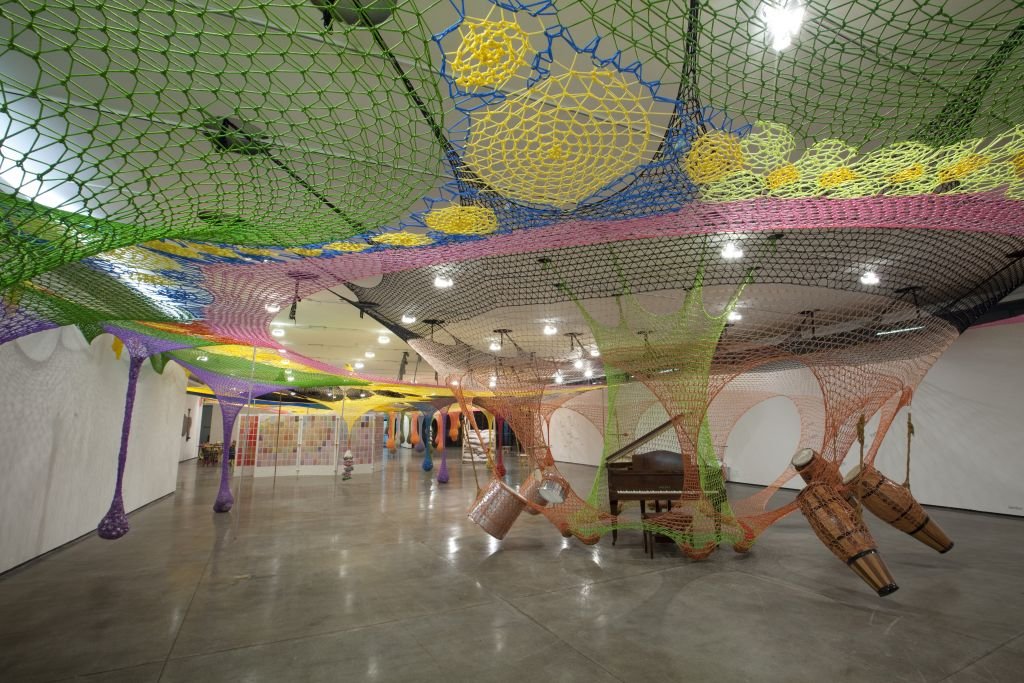
Guggenheim Museum Bilbao · Guggenheim Museum Bilbao
Nine spaces to walk into
From 14 February to 18 May 2014, the Guggenheim Museum Bilbao gave its second floor and its Atrium to Ernesto Neto. The exhibition, Ernesto Neto: the body that carries me, was sponsored by Iberdrola.
It began in the Atrium, with a work hanging from the ceiling called Why are you going to Rome again?. It then moved through galleries 202 to 209. Each room had a name that sounded like something said in passing: Candy Man Candy, Barter barter, Eating with the eyes, Tent of dreams, Sweet edge, Mountain brother, That's life, Nevermind the mess.
The names explain nothing. They are what a friend might say while showing you into their home. Understanding comes later. First, you step in.
The museum described the works as made to be walked through, inhabited, felt and even smelled. Staff stood ready in the rooms to help visitors take part.
Fibre, stone, drums and spice
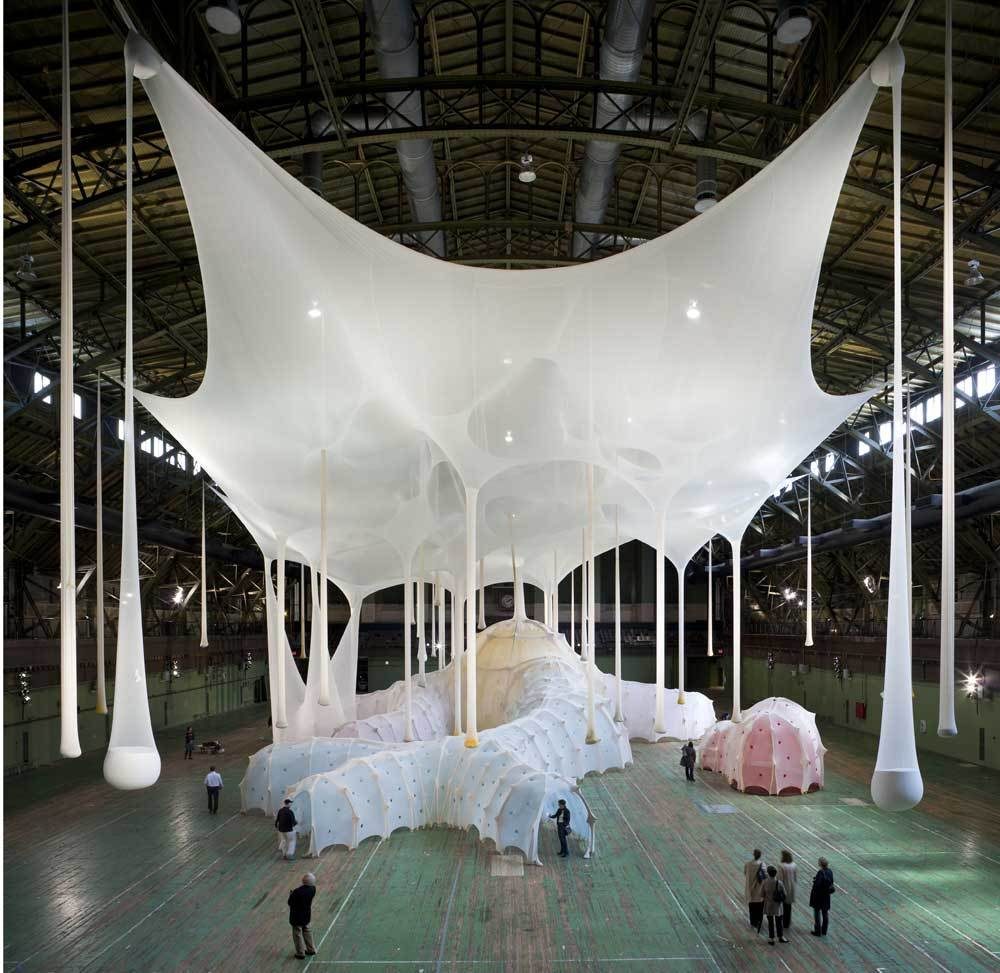
Neto was born in 1964 in Rio de Janeiro. His usual materials are soft and elastic: tulle, polyamide, stockings, crocheted netting. He stretches them into forms that feel both architectural and bodily, with chambers, tubes and pouches.
Drum (Tambor), made in 2010 and previously shown at the Museum of Modern Art in São Paulo, is one example. A crocheted net ten metres across in each direction, holding volcanic rock, river stones, a piano and Afro-Brazilian drums. Standing beneath it is like standing inside an instrument.
In other works the weight comes from spice rather than stone. One 2008 piece carries the long title Stone Lips, Pepper Tits, Clove Love, Fog Frog, made of tulle, stocking, fabric, wood, stones, black pepper and clove. The spices are packed into sagging fabric pouches. They hold the shape down and give off the smell.
As visitors moved through the tunnels of stretched fibre, the scent of turmeric and cumin spread through the room. There were wheeled hammocks fitted with binoculars and compartments of spice. Lying in one, you were invited to look, breathe deeply, and let the mind empty.
Notably, the spice was never separate from the form. No device tucked in a corner, no smell added at the end. The material that made the shape also made the scent. No one had to guess where the smell came from. They only had to come closer, lean in, and breathe.
Art as shelter
Neto has said that what people share matters more than what sets them apart. He also described the exhibition as a place where we stop thinking and take refuge in art.
It sounds simple, but it runs against the habits of museums, which ask us to stand still, keep our distance, read labels, think. Neto asks for something else: lie down, touch, breathe in. Thinking comes later, if at all.
Smell does what images struggle to do. You can look at a painting while thinking about something else. But when the smell of clove suddenly thickens, the body reacts first. It stops, turns, looks for the source. For those few seconds, the visitor is wholly in the room.
The title holds the whole idea. The body is not a tool for carrying the eyes to the work. The body is how we are present. The Bilbao exhibition was nine rooms to remind us of that, in fibre, in stone, and in the smell of spices held in cloth.
Olfactory Art