
Essays · Olfactory Art
Ferran Adrià. elBulli, Pavilion G at documenta 12.
Some works exist only where they are made.
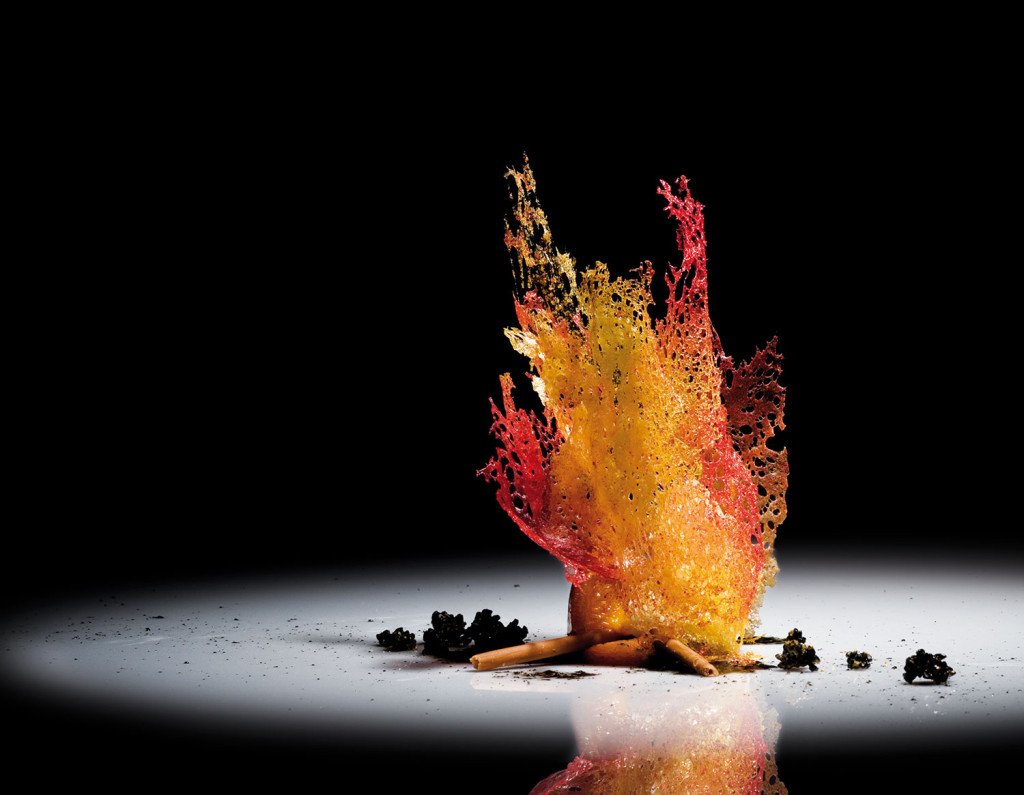
Flash Art · Flash Art
A pavilion more than a thousand kilometres from Kassel
documenta is one of the largest exhibitions of contemporary art in the world, held every five years in Kassel, Germany. Its twelfth edition opened on 16 June 2007 under the artistic director Roger M. Buergel.
Buergel invited someone the art world did not expect: Ferran Adrià, head chef of elBulli in Cala Montjoi, a small cove on the Catalan coast of Spain. According to Flash Art, Adrià was the first chef ever invited to take part in documenta as an artist.
What stands out is how he took part. Adrià did not build a kitchen in Kassel or display dishes behind glass. According to the elBullifoundation, the restaurant itself was treated as the exhibition's Pavilion G. The work stayed where it was made. The exhibition had to stretch its own map to take in a kitchen in another country.
Two people a day
A pavilion that far away needs a way in. According to the elBullifoundation, on each day of documenta two people came from Kassel to dine at elBulli. They were the thread joining two places: an exhibition city in Germany and a cove in Catalonia.
So most documenta visitors never tasted Adrià's work. They only knew it existed, somewhere, every evening. The two who went were witnesses. Everyone else had to trust their account.
This raises a question museums rarely face. If a work cannot be copied, cannot be shipped, and vanishes the moment it is enjoyed, what does it mean to exhibit it? documenta 12 answered simply: leave it where it belongs, and bring people to it.
Smell and taste are the hardest senses to exhibit. They do not stay on a wall. They need a body, a moment and a very short distance. elBulli at documenta accepted that limit rather than trying to overcome it.
Cooking as a new technique
According to the elBullifoundation, Buergel told Adrià that creating a new cooking technique was as complex and demanding as painting a great picture. For him, Adrià's work was a new artistic discipline, not a side branch of gastronomy.
elBulli was known then for treating the kitchen as a research room. It did not only serve food; it tested techniques, textures, temperatures, the way a dish changes in the mouth. That spirit of inquiry is what let a curator of contemporary art see a creative practice in it.
Years later, in a conversation with Maurizio Cattelan published in Flash Art in 2016, Adrià recalled documenta as a place with a little of everything, much like cooking. He said discovering the sensibility of the art world mattered to him. He also stressed that cooking has consequences beyond gastronomy, and that what he values most is creative freedom and emotion rather than money.
In 2011 elBulli closed as a restaurant. Pavilion G no longer exists. The meals of 2007 left no object to hang on a wall. They remain only in the memory of those who sat at the table, and in the question they left for the art world: can a work be eaten up?
Adrià was not the first to bring food into art. Many artists have used food as material, like Rivane Neuenschwander with her edible letters; see Eatable Alphabet. But at documenta 12, for the first time, a cook was invited in as an artist, and a kitchen was called a pavilion.
Olfactory Art