
Essays · Olfactory Art
Rivane Neuenschwander. Eatable Alphabet.
Each letter is a smell from the kitchen.
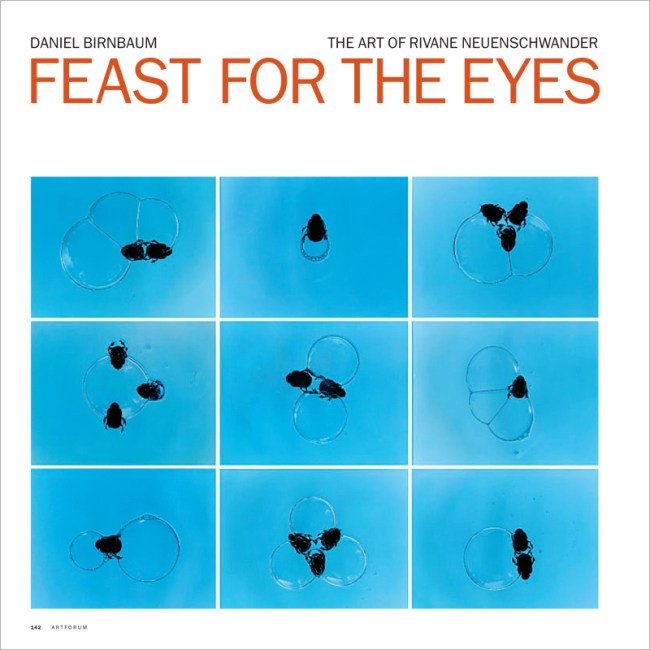
Artforum · Artforum
Twenty six panels, twenty six powders
Eatable Alphabet, in Portuguese Alfabeto comestível, was made by Rivane Neuenschwander in 2001. It consists of twenty six panels, each about 71.5 by 50 centimetres. The ground is white PVC. On it run coloured horizontal stripes.
The colour is not paint. It is food powder and spice, held to the surface with clear adhesive tape. Each stripe is a band of powder under a band of tape. The method is almost a child's game, yet the result looks exactly like serious geometric abstraction.
The twenty six panels match the twenty six letters of the Latin alphabet. Each letter is given a powder, in alphabetical order, but the names come from different languages. The series begins with açafrão, Portuguese, then black pepper, passes through anis, chile, dill and gergelim, which is sesame, and ends with za'atar, the Middle Eastern herb mix.
Some panels use orange powder, some Indian curry. What separates one letter from another is the colour of each powder, and the powder itself.
A system, softened
The alphabet is one of the most rigid systems we learn as children. A before B. B before C. No negotiation. Neuenschwander keeps the order but gives each place an unexpected content. The letter S is no longer a sound. It is a powder with a taste, a smell, a homeland.
The names cross languages too. One letter in Portuguese, the next in English, the next in something else. The Latin alphabet, used to write so many tongues, becomes a spice market where every language sets out its stall.
Linking the smallest unit of writing to spices from around the world opens free association. A viewer can read each letter as a dish, a region, a memory of a meal. The system is still there, only now it is seasoned.
The Brazilian artist, born in Belo Horizonte in 1967, often works with small, perishable things: soap bubbles, ribbons, food. She once let snails eat rice paper, leaving holes that read like lines of text. Eatable Alphabet belongs to the same thread. Writing and food meet, and either can be eaten away.
The eye sees stripes, the nose sees a kitchen
In front of the series, sight finds what it is used to: rhythm of stripes, contrast, white space. Looking alone, one could walk past all twenty six panels and take them for a colour exercise.
But the material carries more than colour. Pepper, curry, sesame, anise and herbs are things we know by nose and tongue before we know them by eye. Once you know the material is spice, the looking changes. Two brown panels may be two very different things in a kitchen. What tells them apart is no longer colour but the memory of smell and taste the viewer brings along.
This is where the work turns the usual gallery hierarchy over. Sight is invited in first, but smell is the sense that understands. An abstract painting becomes a spice cupboard.
In 2014 the series was shown in mal-entendidos, Neuenschwander's large exhibition at the Museu de Arte Moderna de São Paulo. It sits close to other practices that use spice as sculptural matter, such as Benitha Perciyal's figures cast from incense, herbs and spices. In both, kitchen powder is raised into something to look at, yet never stops being something to eat and to smell.
Olfactory Art