
Essays · Olfactory Art
Filippo Tommaso Marinetti and Fillìa. La cucina futurista.
The dinner table as a laboratory of the senses.
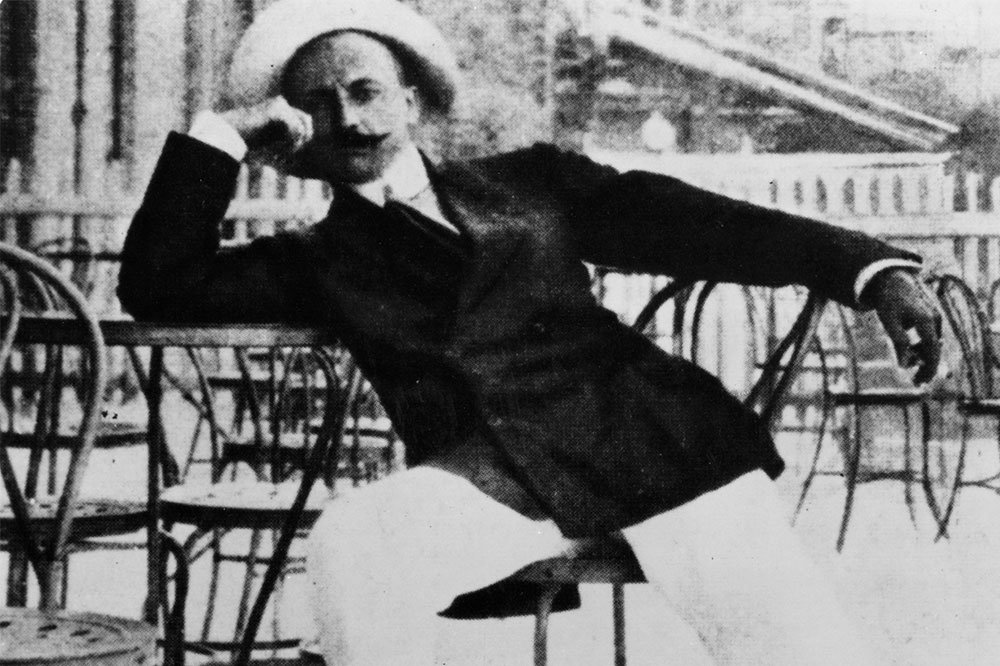
Getty Images, via Apollo Magazine · Apollo Magazine
A manifesto against pasta
In December 1930, Filippo Tommaso Marinetti, founder of Futurism, and the painter Fillìa published the Manifesto della cucina futurista, the Manifesto of Futurist Cooking. Twenty years after praising speed, machines and the city, the Futurists turned to the dinner table.
The first target was pasta. Marinetti argued it made people heavy, sluggish and unmanly. Pasta eaters, he said, were shackled to tradition, and the food was so soft that people did not chew enough. To an Italian this was close to an insult. That is exactly why everyone talked about it.
But the manifesto did more than reject. It proposed another way of eating: the meal as a work of art, using every sense and not only the tongue.
Behind the jokes lay a more serious idea. The Futurists held that modern people lived and thought faster, so eating had to change as well. A meal was no longer a family habit. It became something to design.
Taverna del Santopalato
The idea had an address. At midnight on 8 March 1931, Fillìa opened the Taverna del Santopalato, the Tavern of the Holy Palate, at Via Vanchiglia 2 in Turin, near Piazza Vittorio Veneto. It was the first Futurist restaurant in Italy.
The dining room was clad in shining aluminium. The opening banquet offered fourteen new dishes. The tavern did not want to be only a place to eat; it wanted to be an arts centre, with poetry evenings, exhibitions and fashion shows.
One famous dish that night was aerofood: black olives, fennel hearts and kumquats, eaten with the right hand while the left hand stroked sandpaper, silk and velvet. There was also chicken served with steel ball bearings.
Plates hard to forget
In 1932 Marinetti and Fillìa published La cucina futurista, the Futurist Cookbook. It gathered the manifesto, menus, model banquets and recipes with strange names.
Sardines with pineapple. A sandwich of mustard, banana and anchovy. Simultaneous ice cream, dairy cream with squares of raw onion. Sculpted meat. And a dish called the excited pig: a slice of salami soaked in hot coffee flavoured with eau de Cologne.
Fillìa also wrote dinner programmes of his own, such as a geographic dinner in which the food carried diners across different lands.
Many of these dishes sound like jokes. Some surely were. But they did something clear: they pulled smell, taste and touch out of their familiar pairings and put them back together to shock.
Smell at the Futurist table
The excited pig is where smell shows most plainly. Coffee smells roasted. Salami smells of fat and salt. Cologne smells of citrus and flowers. Three smells that never share a plate are forced together. The diner smells before tasting, and the nose objects before the tongue does.
Many artists later followed that idea: smell does not serve the dish, smell is part of the work. The meal becomes a performance. The diner becomes the audience.
The context must be remembered too. Marinetti's culinary project carried the nationalist edge of the Fascist era: praise for Italian produce, French kitchen terms replaced with newly coined Italian words. The book cannot be read without that.
Nearly forty years later, in Düsseldorf, Daniel Spoerri opened a restaurant of his own and served foods people do not usually eat. The wish to turn the table into art had changed shape, but it went on.
Olfactory Art