
Essays · Photography
Gabriele Basilico. Milano. Ritratti di fabbriche.
A building has a face too, if we care to look.
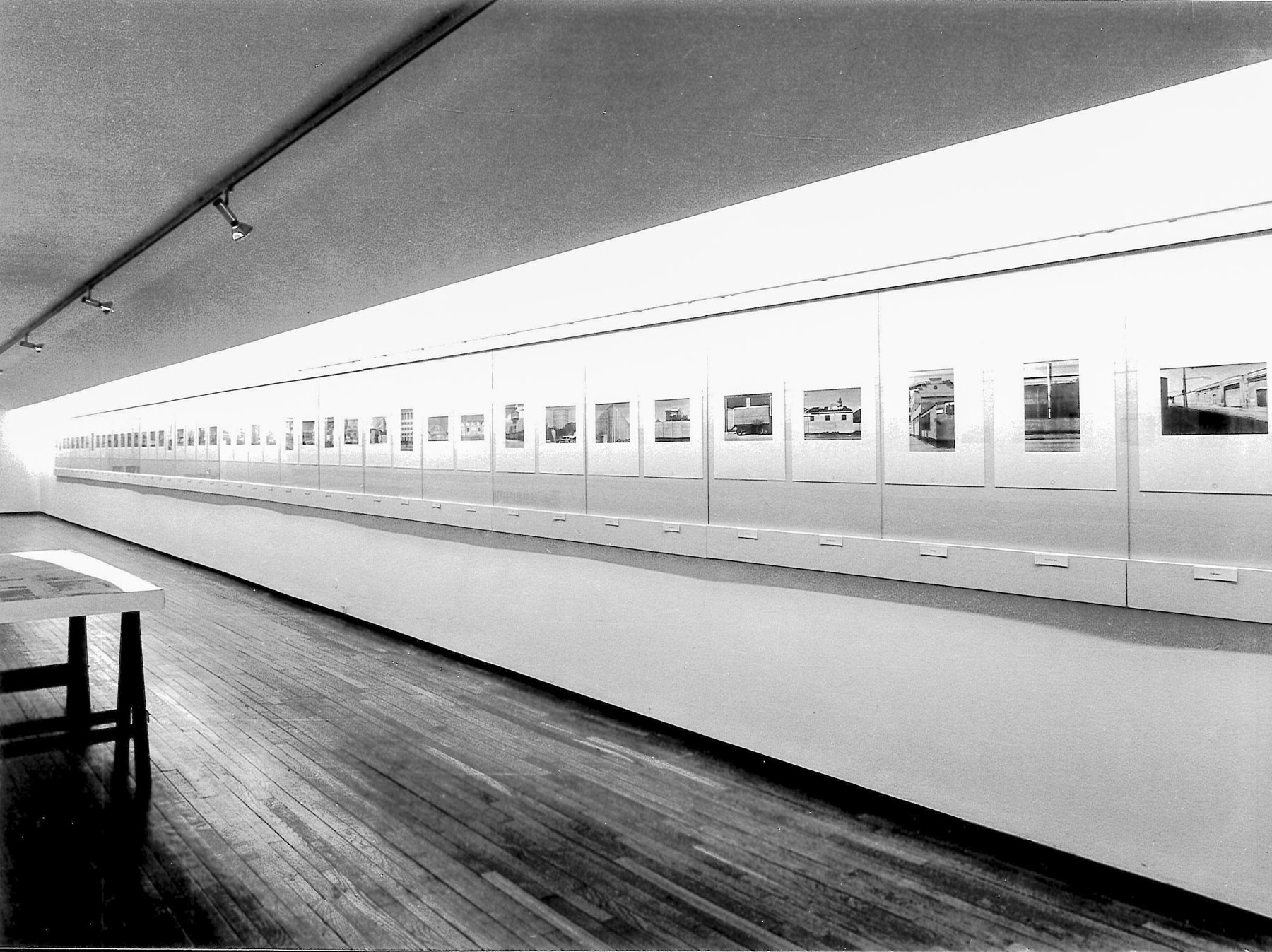
PAC Milano · PAC Milano
Portraits of factories
Gabriele Basilico was born in Milan in 1944 and died in 2013. He studied architecture before turning to photography, and that training stayed with him all his working life: an attention to mass, to façades, to how a building stands in space.
From 1978 to 1980 he travelled across the industrial districts of Milan. He photographed factories still working and factories abandoned, large works and small workshops, brick fronts, iron gates, chimneys.
The project was called Milano. Ritratti di fabbriche, Milan. Portraits of factories. The word portrait was deliberate. Basilico did not photograph factories as a backdrop to a story about labour. He photographed them as subjects, the way one photographs a face.
The whole project was a systematic survey. It worked like an identity card for the city's industrial fabric: each building recorded, one by one, before the city changed.
Hard sun, holidays, no people
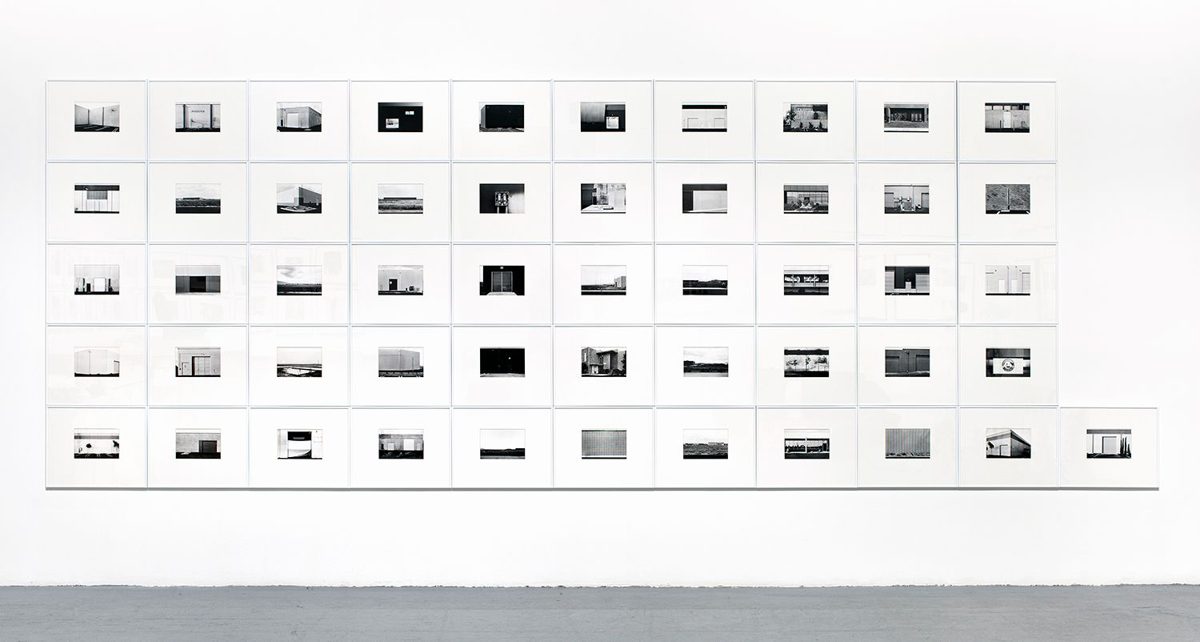
Basilico set himself strict conditions. He photographed in bright sunlight, so that shadows fell sharp. He photographed on public holidays and days off, when the streets were empty of cars and people.
The result is a set of very still black and white images. The factory fronts appear clearly, divided into clean areas of light and dark. The shadows of roofs, columns and chimneys cut across the walls like drawn lines. Nothing moves.
That absence of people does not make the pictures cold. It makes the building the only character. The viewer is not distracted by a car or a passing worker. Only form and light remain.
The hard sunlight is a notable choice. Many architectural photographers prefer overcast skies for even light. Basilico did the opposite. He let strong light reveal the essence of the architecture, the way a direct lamp reveals the lines of a face.
The 1983 exhibition
From 10 March to 11 April 1983, PAC, the Padiglione d'Arte Contemporanea in Milan, held a solo exhibition of the project. One hundred photographs were chosen from more than two hundred, printed in black and white at 30 x 40 cm.
The project also became the book Milano, Ritratti di Fabbriche was published by Sugarco Editore, with texts by Carlo Tognoli, Marco Romano and Carlo Bertelli.
PAC presented the project as a meeting of two approaches. One was documentary method: systematic coverage of an entire urban area. The other was interpretive vision: using light to reveal what architecture is. That meeting is what makes the series both a record and a work.
The approach recalls Bernd and Hilla Becher with their water towers, who also photographed industrial architecture with great consistency. But where the Bechers chose grey skies so every structure shared the same light, Basilico chose hard sun so each building had its own face.
A city before it changed
In the late 1970s Milan was still an industrial city. In the decades that followed, many factories closed, were demolished, or were turned into offices, housing and cultural spaces. The industrial landscape Basilico photographed gradually lost its old shape.
So the series, first a survey, slowly took on another meaning. It records a city as it once was. Some of these buildings now exist only in those 30 x 40 cm prints.
Basilico went on to photograph many other cities and became one of Italy's most important urban photographers. But it began here, on the empty streets of Milan on a holiday, in front of factory walls in the sun.
Photography