
Essays · Photography
Hiroshi Sugimoto. Dioramas.
Close one eye, and the fake comes alive.
Fraenkel Gallery · Fraenkel Gallery
A newcomer in New York
In 1974 Hiroshi Sugimoto arrived in New York. He was in his mid twenties, born in Tokyo in 1948. One of the first places he visited in his new city was the American Museum of Natural History.
There he found the diorama halls: habitat scenes behind glass, with stuffed animals set among artificial plants before a curved wall painted with landscape. They were built so visitors could see an animal in its environment without travelling to Africa or the Arctic.
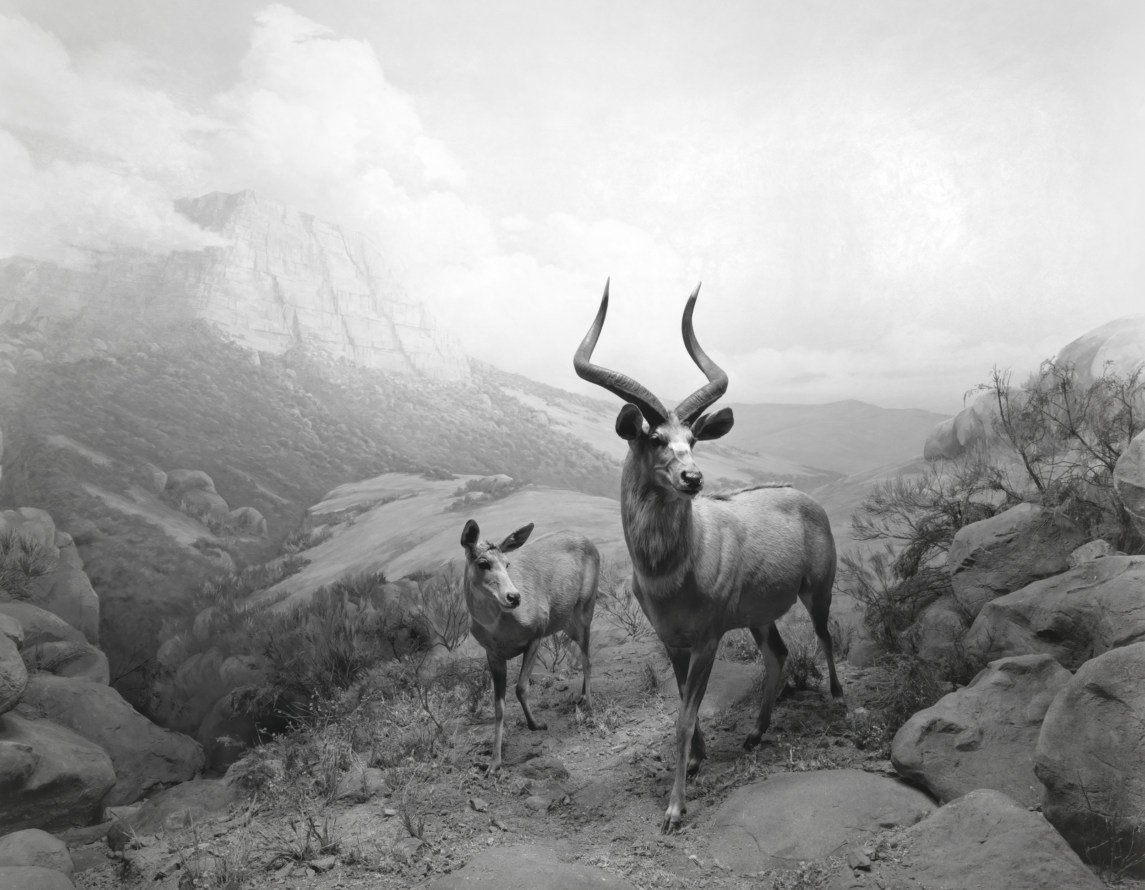
Sugimoto noticed something. Seen normally, the dioramas looked entirely fake. The lighting was unnatural, the animals rigid, the seam between real ground and painted backdrop visible. But when he closed one eye, the scene suddenly became real. Without the depth of two eyes, the brain could no longer separate the three dimensional animal from the flat landscape behind it.
The camera has one eye
A camera also sees with one eye. Sugimoto realised he had found a way to see the world as a camera does. As he put it, however fake the subject, once photographed it is as good as real.
The Dioramas series grew from that idea. He set his camera before the glass and printed in black and white gelatin silver. Without colour, the clues that betray artifice fade too: faded fur, a backdrop painted too bright. In black and white everything merges into one scale of grey.
The results look like photographs taken in the wild. Nyala, Mountain Lion, Galapagos, Double Wattled Cassowary, Mandrill, all from 1980. The animal stands in the frame, sometimes looking straight out, sometimes bending down. Nothing in the frame announces a museum. Only the context of the series tells the viewer so.
The series is not only animals. Pennsylvanian Bay of 1980 and Ordovician Period of 1992 are models of ancient seas, reconstructing eras hundreds of millions of years ago when no one existed to photograph them. Neanderthal of 1994 shows a model of prehistoric humans. Here the question of real and fake is sharper still: there is no original scene to compare.
The museum is a photograph too
Dioramas is often read as a clever joke about photography. But it also speaks about the museum itself. A habitat diorama is one way a museum represents the world: choose a moment, frame it, put it behind glass, light it. That is exactly what photography does.
Sugimoto photographs something that is already a three dimensional photograph. Two layers of representation stack on each other, and the result comes closer to the feeling of reality than either layer alone. It makes the viewer ask: how many images have I believed simply because they were framed the right way?
One small detail is worth thinking about. The animals in the dioramas were once alive. They were hunted, skinned, stuffed and set in poses chosen by the builders. Their death is real; their life in the scene is staged. Sugimoto's photograph holds both in one frame without saying so.
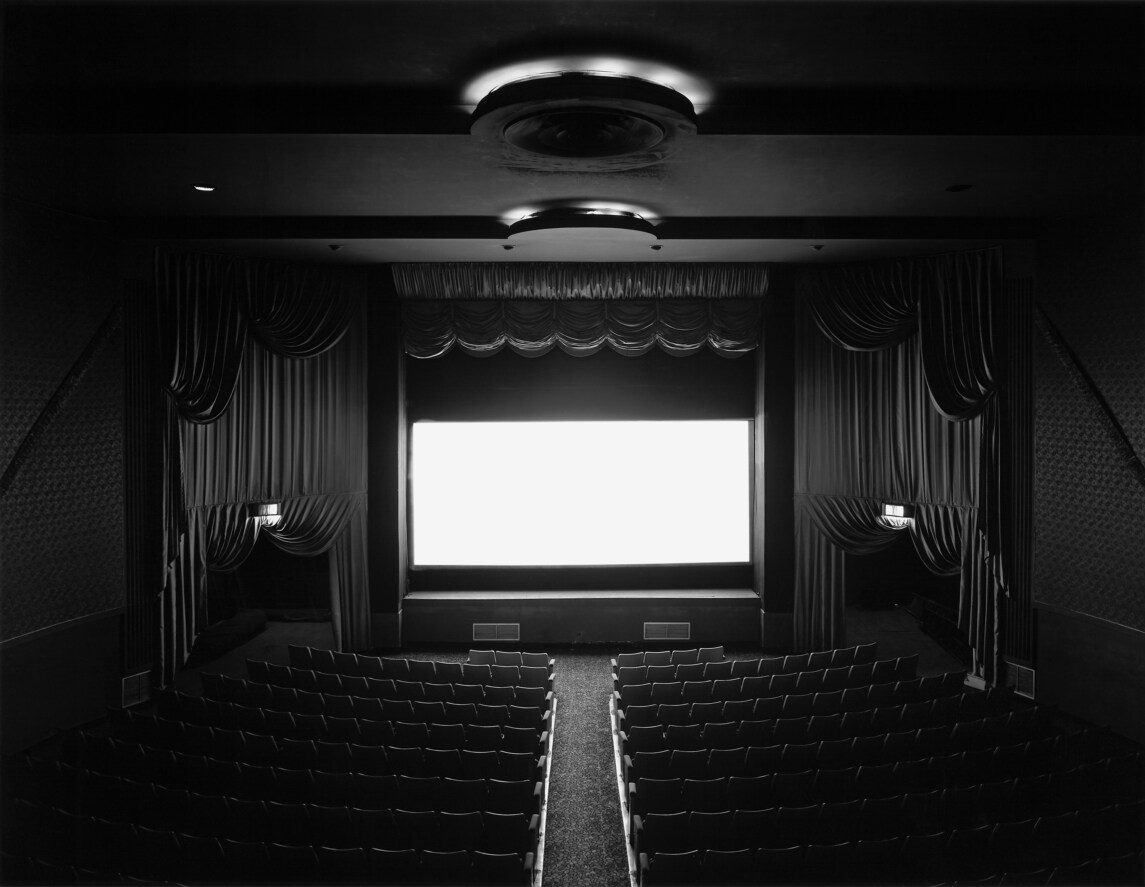
He continued the series for years. California Condor, Lion and Gorilla are all dated 1994. Dioramas is also often seen as Sugimoto's earliest series, the doorway to everything that followed, from cinemas to Seascapes. In the sea pictures he looks for a view unchanged across every age. Here he photographs scenes built to look as if they never change. The two series stand on either side of one question about time and the real.
Photography