
Essays · Photography
Hiroshi Sugimoto. Seascapes.
The sea is a view the first humans and we still share.
Fraenkel Gallery · Fraenkel Gallery
One composition, many seas
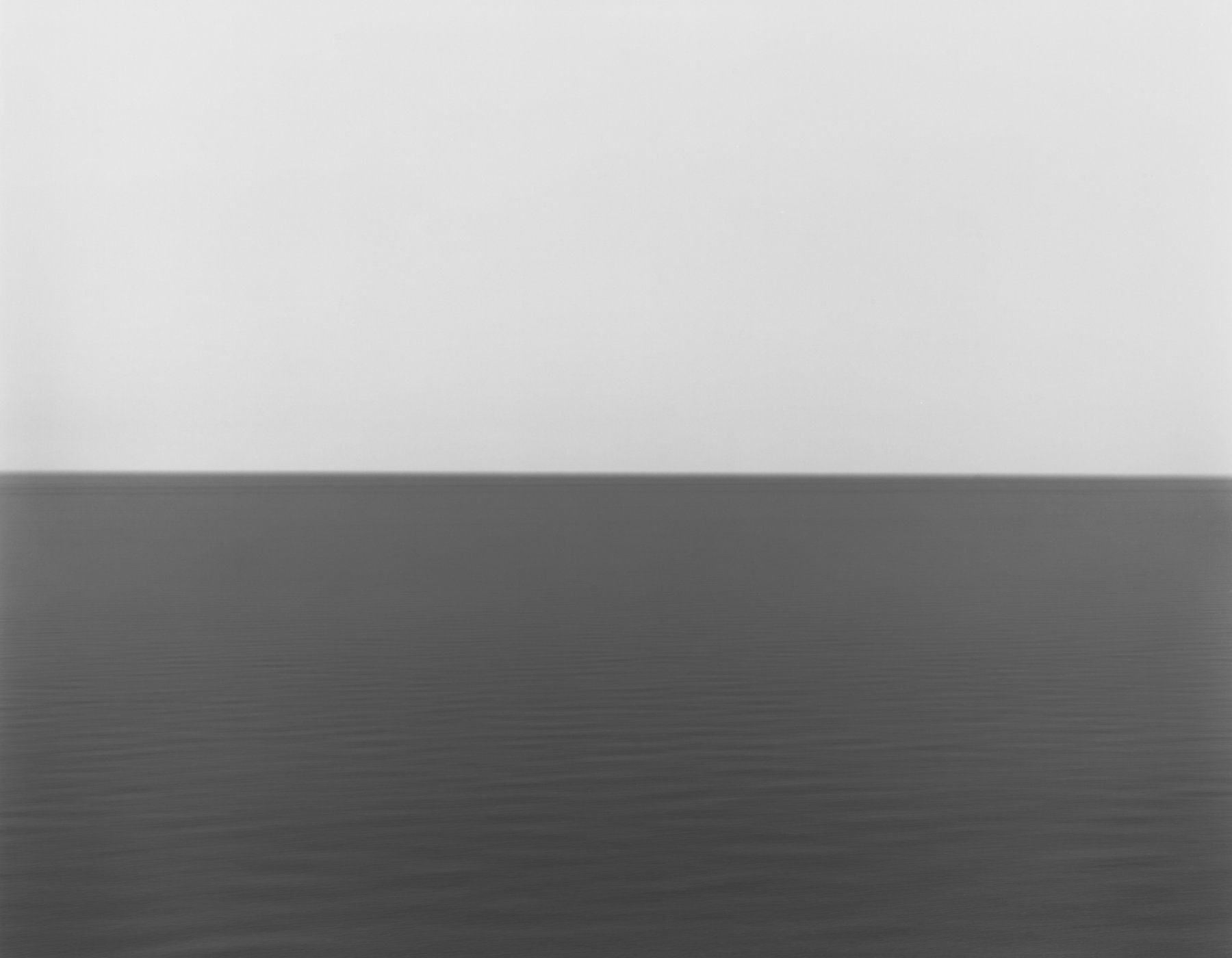
Hiroshi Sugimoto began Seascapes around 1980 and has not stopped. For more than forty years he has travelled to seas and great lakes around the world to photograph one thing: the horizon where water meets sky.
The rules are strict. The horizon must be sharp. The sky must be cloudless. The frame is divided almost exactly in half, sky above, water below. No shore, no ship, no bird, nothing for the eye to hold. The prints are black and white gelatin silver, mounted at 20 by 24 inches, each in an edition of 25.
Each title names the body of water and the place. Yellow Sea, Cheju, 1992. Ionian Sea, Santa Cesarea, 1993. North Pacific Ocean, Stinson Beach, 1994. Sea of Japan, Rishiri Island, 1996. Bass Strait, Table Cape, 1997. Lake Superior, Cascade River, 1995 and 2003. Bay of Sagami, Enoura, 2022.
Read the list and the distances are enormous: Korea, Italy, California, Japan, Australia, North America. Look at the pictures and they are nearly indistinguishable. That sameness is what the series is about.
Erasing the signs of time
A landscape photograph usually carries many clues. The shape of a boat tells the era. Buildings on the shore tell the culture. Clouds tell the weather, the season, the hour. Sugimoto removes all of them. What remains is a scene whose year cannot be fixed.
Sugimoto has written that when he looks at the sea his thoughts travel back to the origins of human consciousness, and that the sea reminds him his blood still carries traces of hundreds of thousands of years of evolution. That thought explains why he needs to remove everything belonging to the present. He does not want to photograph a beach in 1994. He wants the view an early human standing on the shore might also have seen.
Rock changes, coasts erode, cities rise and vanish. But a flat stretch of water under an empty sky, seen from far enough away, must look much the same across a great many centuries. Seascapes puts the viewer exactly there: someone looking at the sea, and nothing else.
So before a Seascape, viewers often stay silent longer than they expected. There is nothing to read, no detail to find. The eye travels along the horizon from left to right and stops. The looking slows, the way breath slows after sitting a long time on an empty beach.
Repetition as a practice
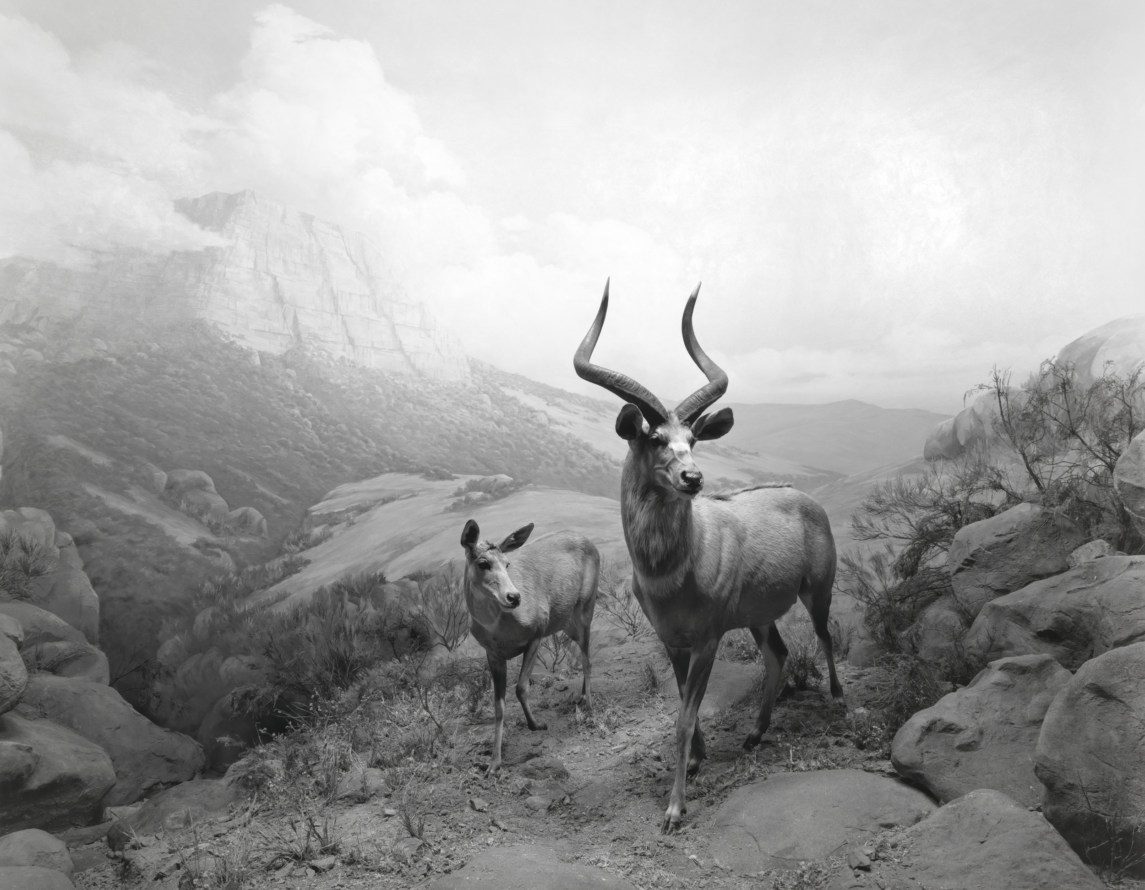
Sugimoto was born in Tokyo in 1948 and lived for many years in New York. He works in series, and many of them run for decades: cinemas, museum dioramas, buildings. But in Seascapes repetition is perhaps most visible.
Why take the same picture so many times? Because each time is different. Some days the water is flat as glass, some days finely rippled. Some skies are bright white, some deep grey. In some the horizon is sharp as a blade, in others it dissolves into haze. Only when everything else is held fixed can the viewer see such small differences.
The last title on the list, Bay of Sagami, Enoura, has a particular weight. Enoura is where Sugimoto built the Enoura Observatory, an art site looking out over Sagami Bay near Odawara. After forty years travelling the world's seas, he built a place where others can stand and see the very view he has spent a life photographing.
In the same spirit, in Theaters, Sugimoto uses the camera to compress a whole film into one image. In Seascapes he does the reverse: he uses one image to open a span of time longer than history.
Photography