
Essays · Olfactory Art
Incense Burner in the Form of a Duck.
The bird makes no sound. It breathes out scent.
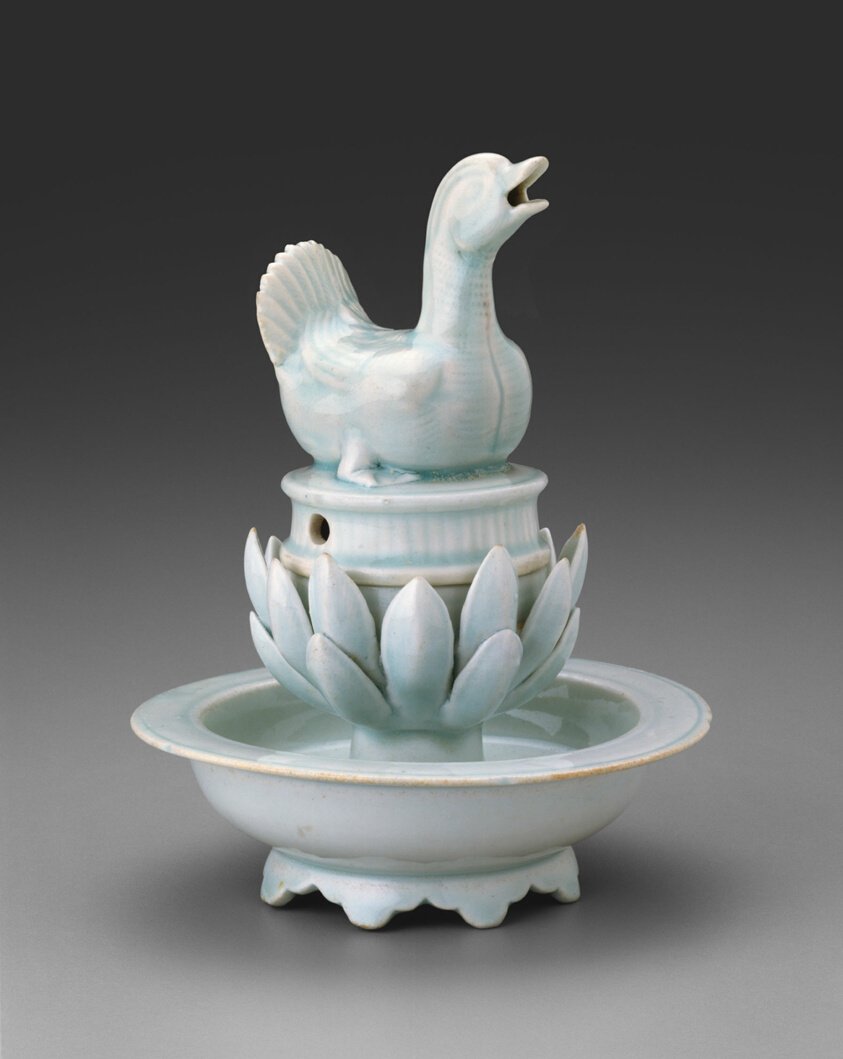
The Art Institute of Chicago, Gift of Russell Tyson · The Art Institute of Chicago
A bird on a lotus
The Art Institute of Chicago holds a Song dynasty incense burner from the 12th century, 19.1 cm high and 15.1 cm across. The museum's title calls it a duck. In its description the word is broader: a waterfowl.
It reads from the bottom up. A lobed foot raises a basin. In the basin sits a lotus whose small pointed petals open in two tiers, like an artichoke. On the lotus stands a delicately carved waterfowl.
Incense burned below. Fragrant smoke left through the bird's mouth and through two small holes pierced between its feet. So the bird is not a finial. It is the exit for the scent.
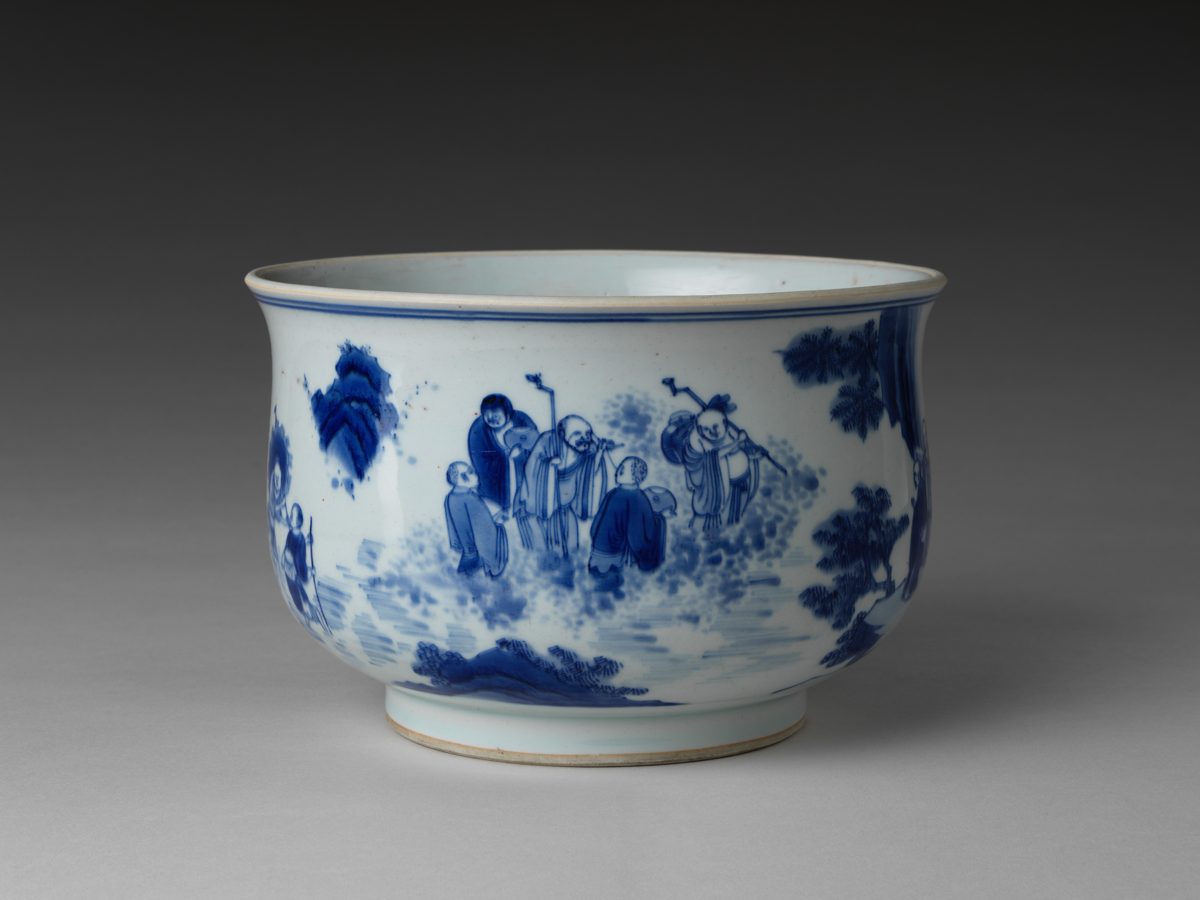
It was given to the museum by Russell Tyson, who also gave Chen Mingyuan's Yixing tripod burner. Five centuries apart, the two burners share a collection.
Qingbai from Jingdezhen
The material is not bronze. The museum is precise: qingbai ware, porcelain with moulded and carved decoration under the glaze. Qingbai means bluish white. The glaze is thin and clear, turning blue where it pools, like deeper water in a pond.
According to the museum, pieces of this extraordinary quality are attributed to the kilns at Jingdezhen in southeastern Jiangxi, which later became China's leading centre of ceramic production. In the 12th century it was already making objects this thin and fine.
The glaze suits the subject. A waterfowl, a lotus, and a glaze the colour of water. Nothing needs to be painted on. The material already holds the scene.
Choosing porcelain over metal also changes how the object sits in a room. Bronze is heavy and dark. Qingbai is bright and seems to take light inside. Pale grey smoke from a water coloured bird: everything is light.
One more detail. The bird is finely carved, not only moulded. The blade comes first, the glaze after. On qingbai, glaze tends to pool in carved lines as deeper blue. Up close, the carving shows through the thickness of the glaze itself, not through paint.
The scent of the Song educated class
The museum places the burner in a specific social world. Its understated elegance reflects the taste of the Song cultural elite: members of the court, and newly affluent, well educated merchants and officials.
Song poets and painters, the description notes, praised incense for stirring creative work, and connoisseurs treasured its equipment as fine domestic furnishing. Scent was not confined to temples. It moved into studies, reception rooms, desks.
The bird burner belongs to those rooms. It is not large and asks for no ceremony. It wants to sit where people stay a long time, releasing smoke slowly and evenly from a small beak.
Penta notices that here scent is handed to a living creature. Not a mountain, a tower or an abstract pattern, but a bird, something that flies and breathes. The Song seem to have wanted smoke to have a living source, even an imagined one.
The idea outlasted the Song. Three centuries later, early Ming casters made a bronze incense burner in the shape of a goose, its smoke also leaving through the beak. Different material, different scale. The breath is the same.
Olfactory Art