
Essays · Photography
Joel Sternfeld. American Prospects.
Standing far enough back to see the ordinary and the strange.
A large format camera on the road
In the late 1970s Joel Sternfeld received a Guggenheim Fellowship and began travelling across the United States. He carried a large format camera and colour film, photographing landscapes, towns and people from the East Coast to Alaska. The trips ran for years, from 1978 into the early 1980s.
In 1987 the pictures were published as American Prospects. A prospect is both a view into the distance and an outlook, a future. So the title reads two ways: scenes of America, and what lies ahead for it.
The book was soon counted among the early landmarks of colour photography. At the time colour was still seen by many as the stuff of advertising and family snapshots. Sternfeld's pictures, with those of a generation of colour photographers, helped carry it into museums.
The burning house and the pumpkin
The best known picture from the series was made in McLean, Virginia, in December 1978. In front is a pumpkin stand. A firefighter is choosing a pumpkin. Behind him a house is burning, fire trucks parked nearby.
The picture needs no explanation to work. A first time viewer does not know whose house it is or how the fire began. They see two things in one frame: a disaster, and a man doing something entirely ordinary. The gap between them produces a strange calm.
That irony runs through the series. The Space Shuttle Columbia lands at Kelly Air Force Base, San Antonio, in March 1979, in the middle of an everyday scene. An abandoned freighter sits at Homer, Alaska. A scene in Canyon Country, California, in 1983. Each scene is ordinary, and each is slightly off.
Critique and affection
American Prospects sees much that is not pretty about America: industrial decline, land cut into lots, big projects among small lives. But Sternfeld does not mock. No one in the pictures is made a joke.
The Bruce Museum, presenting the series again, spoke of the balance between critique and affection in how he looked at his country. He saw the absurd, and also the resilience of people living in it.
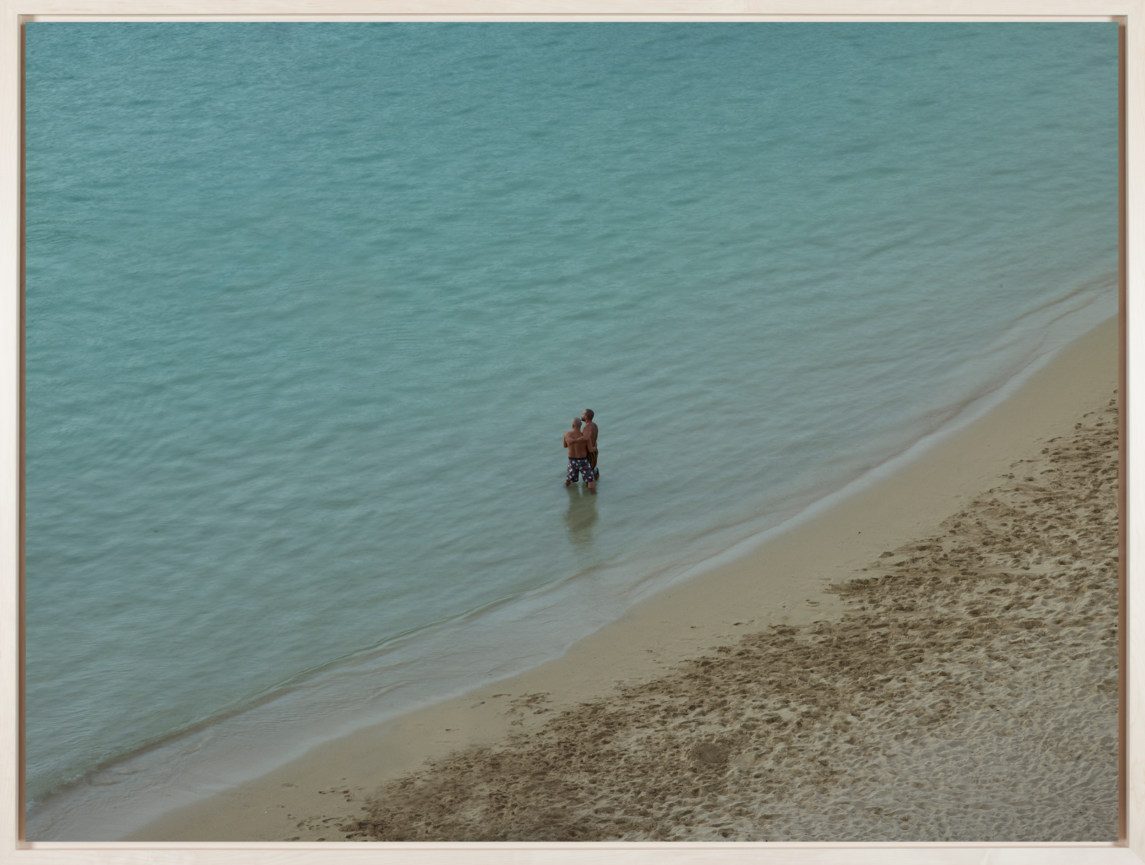
The camera's distance helps. From far away people become small but are not abandoned. They are part of the scene, like trees, houses, sky. The seasons are present too: snow, autumn leaves, summer light, like chapters of a long year.
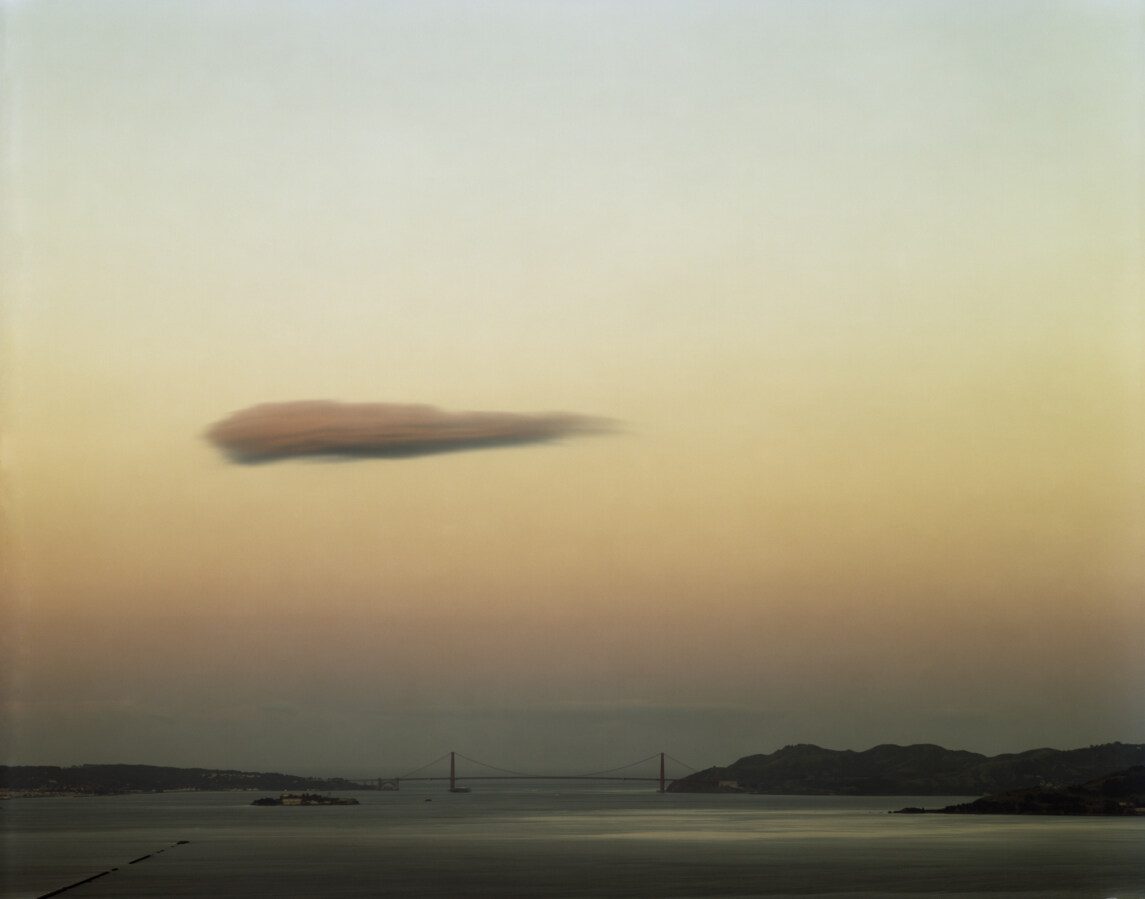
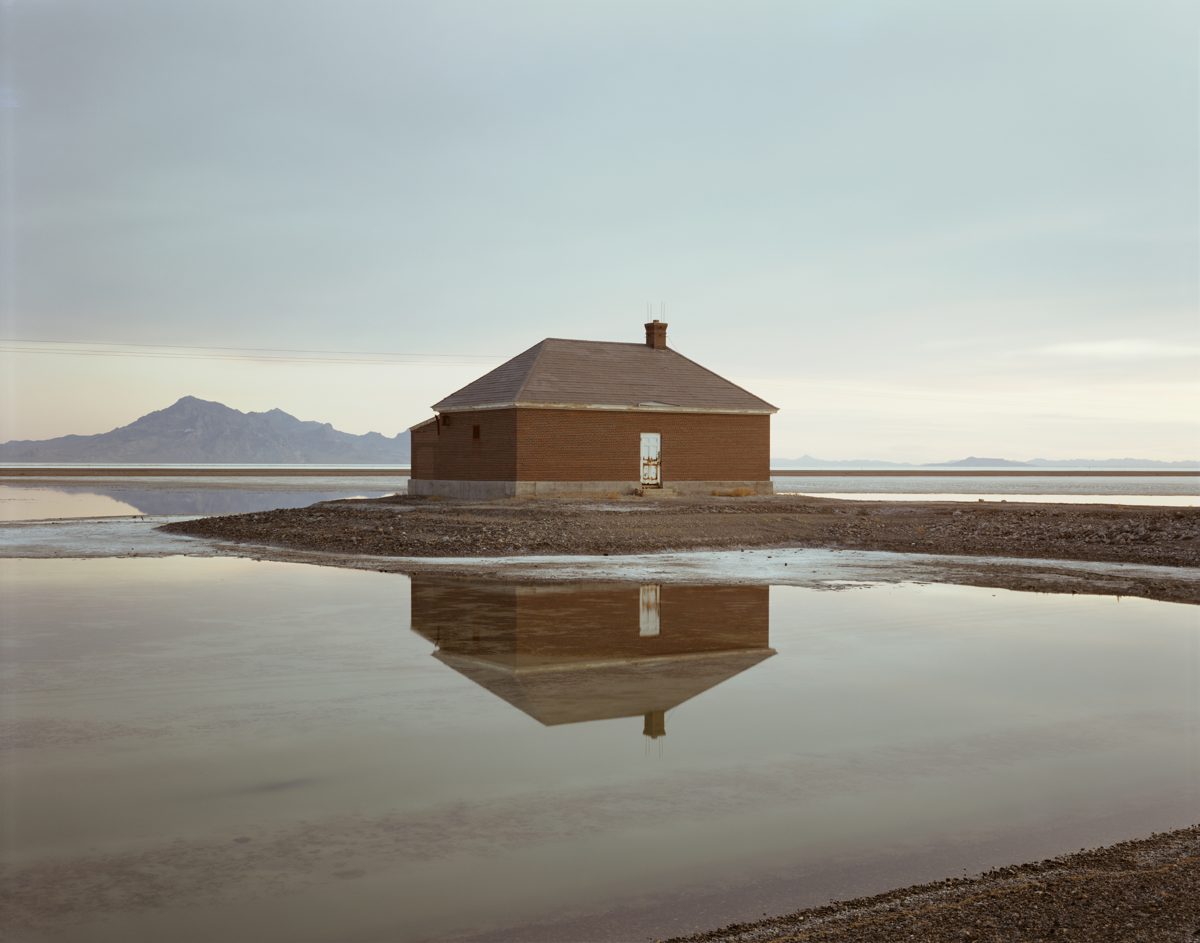
Call it slow looking. No grabbing the moment, no hunting for oddities. The photographer stands still, lets everything in the scene be present with equal clarity, and leaves the viewer to find what is off. The irony is not pointed at. It simply waits.
Looking back after forty years
From October 2024 to January 2025 the Bruce Museum in Greenwich, Connecticut, showed more than forty large colour prints from American Prospects, including famous images and pictures never exhibited before. The show was guest curated by Robert Wolterstorff. Steidl published a new edition of the book at the same time.
The new prints are large, some about 50 by 60 inches. At that size a viewer can walk into the picture and find details a book page cannot fully show.
Forty years on, many of the places have changed. The way of seeing still holds: step back, wait, let the scene reveal its strangeness. A contemporary who also took the long road with a large camera was Stephen Shore; see Stephen Shore. Uncommon Places.
Photography