
Essays · Olfactory Art
Jónsi. Í blóma, Hvítblinda, Svartalda.
Listening with the nose, smelling with the ears.
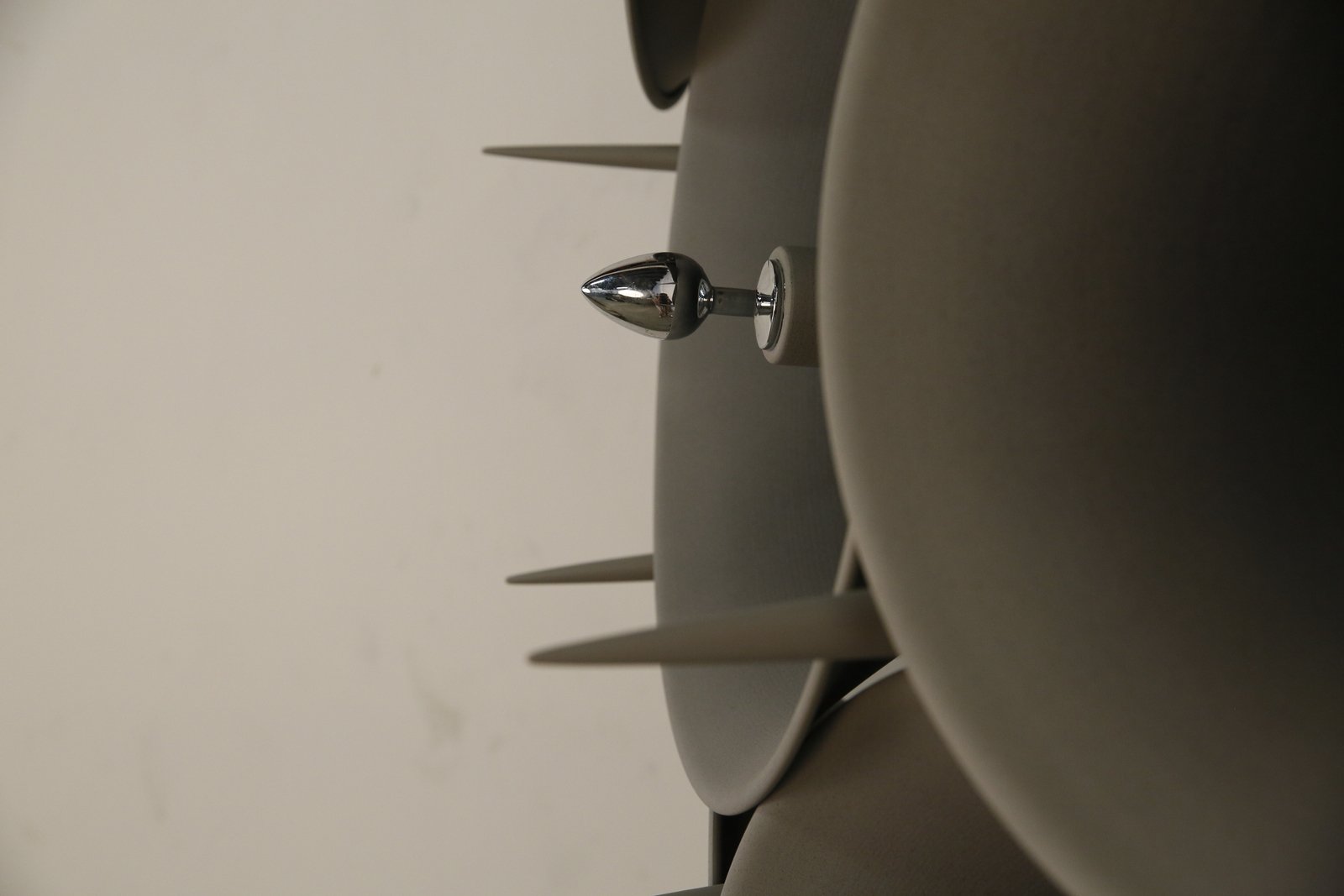
© Jónsi · Jónsi (official site)
From the stage to the gallery
Jónsi, full name Jón Þór Birgisson, is an Icelandic artist best known as the singer of the band Sigur Rós. In late 2019 he opened a solo exhibition at Tanya Bonakdar Gallery in Los Angeles, on 16 November.
The show held three sound installations. Each came with its own smell. No paintings on the walls, no songs to hear in full. Visitors moved from room to room and met three spaces, three sounds, three smells.
According to writing on the exhibition, Jónsi used a perfume organ, the tiered desk of raw materials perfumers work at, to develop the smells himself. He was not after pleasant smells. He wanted smells that exist in nature, including difficult ones.
In 2020 the work received the Sadakichi Award from the Art and Olfaction Awards, given for experimental work with scent.
A flower that smells of flesh
Í blóma, meaning in bloom, is made of fourteen institutional public address loudspeakers arranged in the shape of foxglove leaves. Chrome plated objects stand in for the stamen.
The sound is layered vocals by Jónsi, woven with processed field recordings of flower sounds. A flower sings in a human voice.
The smell is cadaverine, a compound common to decomposing flesh and also present in semen. It is pungent and hard to stand. Before a flower of elegant form, visitors smell the body and decay.
The choice is not random. In nature, some flowers give off the smell of rotting meat to attract pollinating insects. Foxglove is known for its toxins. Jónsi puts beauty, death and reproduction into one object. The flower stops being a sweet symbol. It becomes a body with a smell.
Whiteout and dark wave
Hvítblinda, whiteout, is a nearly empty room. White walls, white light, bright to the point of glare. Ten hidden speakers and two subwoofers play a multichannel composition in which the artist's voice drifts into the white void. Jónsi was thinking of whiteout in nature, when earth and sky blend until the horizon disappears. The smell in the room is ozone, the smell that arrives just before rain begins.
Svartalda, dark wave, goes the other way. On the ceiling, eight black panels undulate like a wave, driven by an electric motor. Each carries a hyper directional speaker. The sound is whispering, ocean waves and an Icelandic poem about the sea, close to ASMR recordings. The smell is seaweed.
Three rooms, three weathers. A flower opening and withering. A white sky before rain. A dark sea at night. Sound gives visitors a rhythm; smell gives them a place. Together they blur the line between hearing, smelling and touch.
Readers interested in smell unfolding in time might turn to Wolfgang Georgsdorf's scent organ. Georgsdorf built an entire machine so smell could have rhythm like music. Jónsi, a musician, went the other way: he placed smell inside sound, so the music would have somewhere to stand.
Olfactory Art