
Essays · Olfactory Art
Lauren Jetty. Notes.
A song that plays only once, because the record is melting.
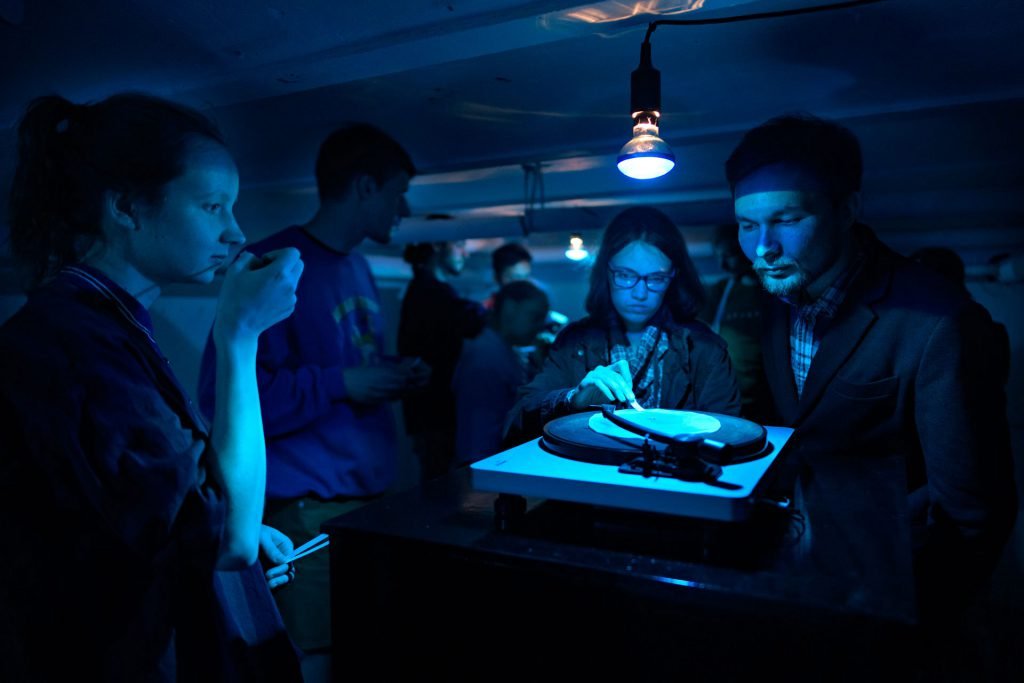
© Lauren Jetty · Lauren Jetty (official site)
Three records made of ice
Notes is a work by Lauren Jetty, begun in 2019 and still ongoing. It consists of three records, cast not in vinyl but in ice. The work has two strands, each in three parts: a storm scent held in the ice, and a vocal piece played from the record.
The ice does two jobs at once. It is the object that plays the sound, and it is an image of sound and scent. Visitors see the record, hear it, and smell it from the same frozen block.
Jetty developed the scent with Renske van Vroonhoven of Attic Lab. In 2020 Notes was a finalist for the Institute for Art and Olfaction's Sadakichi Award for experimental work with scent.
As the record turns and melts
The work unfolds in time. The record turns, and the ice starts to melt. The sound opens with a haunting voice threaded with the crackle of ice. The crackle grows. The voice thins, then goes. In the end only the rhythm of the ice remains, steady as a heartbeat.
The scent follows a similar path. First ozone and fresh water, the smell in the air just before rain. Then damp leaves with a slight floral edge. Finally wet earth and wood. Together they rebuild the tension of a storm about to break.
No two performances are alike. The ice melts with the room's temperature, with the hands that touch it, with things the artist cannot control. Jetty describes her role as facilitating rather than directing. The ice decides how the work goes.
The audience takes part. They touch the ice, speed its melting, and in dissolving the work they reassemble its smells and sounds in a new order.
Smell and sound, one nature
The first question Notes raises concerns the crossing of two senses. Smell and sound are both invisible, both spread through air, both pass through the body of whoever hears or smells. Both need time to be perceived. A note must last to become a sound. A smell needs a few breaths to be recognised.
Jetty puts the two into one material and gives them one fate. As the ice goes, sound and scent change together. The audience feels time passing not by a clock but by a voice fading and the smell of wet earth rising.
The title has two meanings: musical notes, and written notes. The work is both. A piece of music, and a record of something disappearing.
A storm in the palm of the hand
The second question is about climate. Jetty draws on the philosopher Timothy Morton's idea of hyperobjects: things too vast in space and time for people to grasp whole, such as climate change. Morton also writes about grief work in the face of such loss.
Notes shrinks a hyperobject to something within reach. The ice melts, and we hear and smell it melting. The storm scent announces weather on the way. The last heartbeat of the ice links the brevity of one life to far larger scales of time.
The work does not lecture. It lets the visitor stand beside something that is disappearing, and feel it through ear and nose before thinking it in words.


Olfactory Art